We’re almost ready to release our long-awaited CMG report. That’s looking like a banger. But before we do (and honestly, to buy a little time), we wanted to share a few insights we’ve been collecting on how SpaceX has cheated us all.
By now, I’m sure you know that the stock market, at least in its short-term moves, is pretty rigged. You can easily check the volumes to understand the price fluctuations.
As shareholders in several companies ourselves, this saddens us deeply.
But reality is what it is. We cannot escape the truth, but we can choose the games we participate in.
That is why I choose not to play the game of SpaceX. Let me explain exactly why.
Quick pause before we move on. If you want to join our community of investors, this is your chance.
A few days ago, the single biggest initial public offering in human history officially hit the stock market. Space Exploration Technologies, ticker symbol “$SPCX” made its public debut on the NASDAQ, raising a jaw-dropping $85 billion in a single morning.
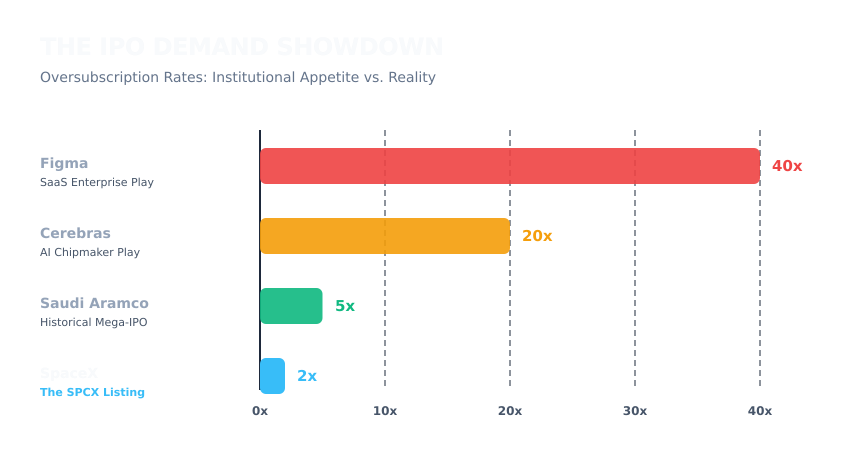
To put that into perspective, the previous all-time record holder, Saudi Aramco, had to pump oil for 80 years and possessed $20 trillion in proven reserves before orchestrating its legendary listing.
SpaceX achieved this while bleeding billions in cash.
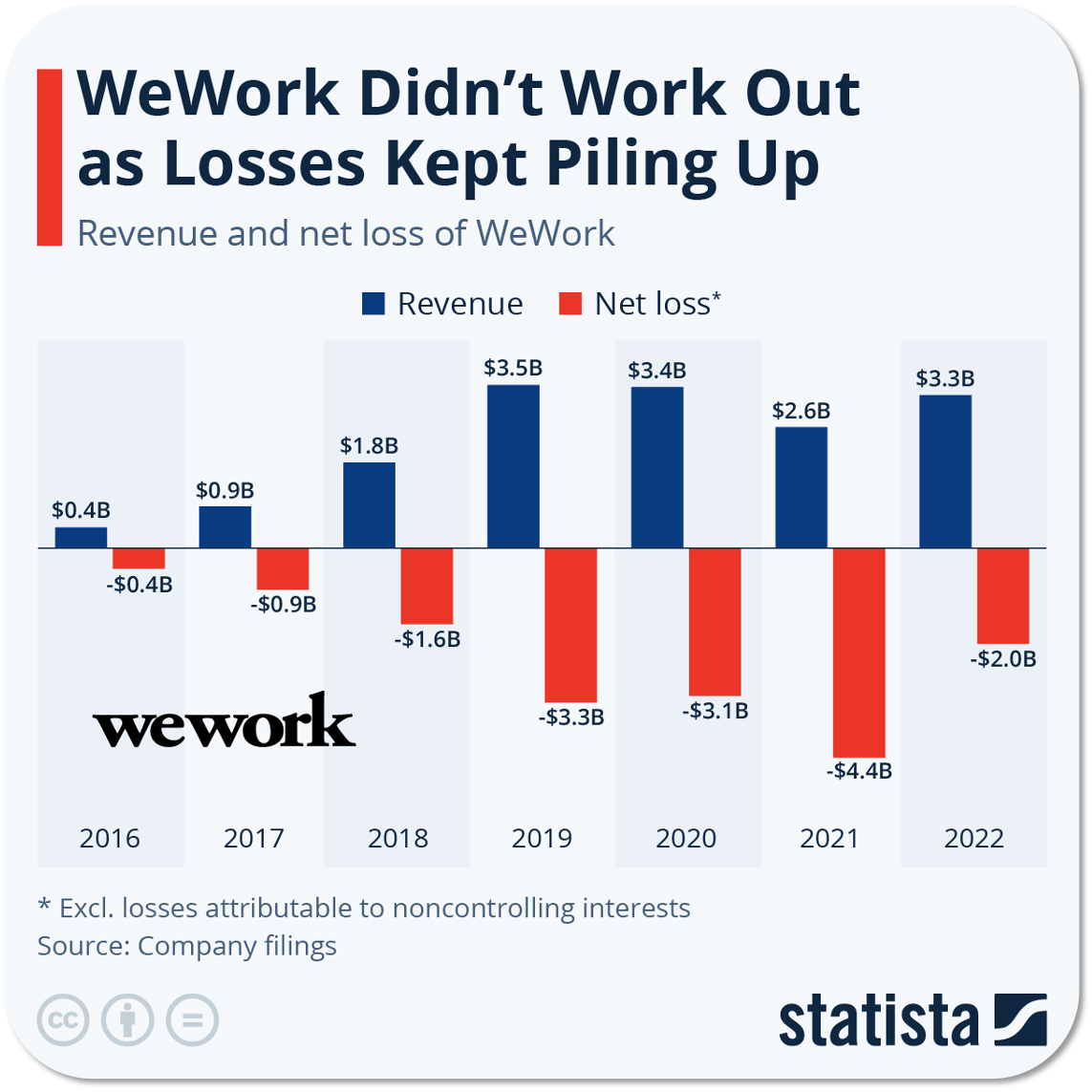
I know it’s totally unrelated, but I can’t help but think about WeWork whenever hyper-popular companies like this show up
If you ask the financial media, they’ll tell you this is the corporate event of the decade. They’ll show you cinematic footage of booster rockets landing vertically on ocean platforms and talk about the democratization of space travel.
But if you actually sit down and read through all 300 pages of the SEC prospectus (which we did), a completely different story starts to emerge.
That’s a story where the rules of Wall Street were bent at the last minute, where the physics of the universe are fighting the valuation, and where millions of everyday people are about to find out they bought into this hyper-speculative asset without ever hitting the “buy” button.
This isn’t just a story about rockets. This is the structural anatomy of a trillion-dollar corporate trap.
Breakfast. Bending the Listing Rules
Let’s start with Svetlana (I know a very Slavic name, you’re welcome).
Svetlana doesn’t really pick individual stocks. She doesn’t spend her weekends analyzing dual-class share structures or operating margins. She simply contributes a few hundred dollars every single month to her retirement account, trusting a passive index fund like the QQQ to grow her savings safely.
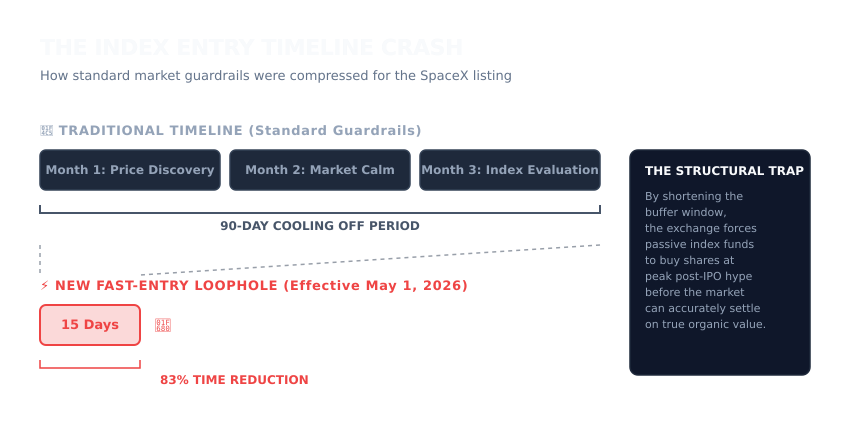
Historically, Svetlana was safe from sudden, speculative IPO manias. Under long-standing Wall Street rules, a newly listed company had to undergo a mandatory three-month “seasoning period” before it could even be considered for inclusion in the premier NASDAQ 100 index.
That buffer exists for a vital reason: it gives the free market time to digest the initial hype (and manipulation), look at the actual balance sheet, and figure out what the company is truly worth away from the cult of personality surrounding its founder.
But SpaceX and its executive team didn’t want to wait three months. They wanted trillions in passive institutional capital flowing into their stock immediately.
Because the NASDAQ and the New York Stock Exchange were locked in a desperate, behind-the-scenes bidding war to land the historic listing, SpaceX held all the leverage. Missing out on the largest IPO in history would mean a lot of exchange executives getting fired. So, NASDAQ gave in first.
Effective May 1, 2026, NASDAQ quietly introduced a brand-new corporate loophole called the “Fast Entry Requirement”. Under these amended rules, an extraordinarily large company can bypass the three-month seasoning period entirely and gain entry into the elite NASDAQ 100 within just 15 trading days after its IPO.
Lunch. The Forced Buyer Loophole
Think about the terrifying downstream implications of this rule change.
The NASDAQ 100 is more than just a list of names. For starters, it is tracked by hundreds, maybe thousands, of massive investment products globally, including the QQQ ETF, which commands over $600bn in assets under management alone.
When a stock is fast-tracked into that index, every single fund manager, pension protocol, and automated ETF tracking the index is legally obligated to buy that stock.
Keyword here: Required.
Our take: SpaceX essentially bullied a major stock exchange into rewriting its regulatory handbook. By forcing fast-track index inclusion, they created an artificial, multi-billion-dollar demand floor.
They didn’t need to convince seasoned asset managers that their valuation made sense; they just needed to trigger the automatic purchase algorithms built into the global passive investing framework.
A move equal parts smart and scammy.
Dinner. The Retail Allocation Red Flag
This brings us to THE anomaly of this listing: retail investor allocation.
In a typical, high-quality corporate IPO, institutional giants (sovereign wealth funds, massive endowments, and pension funds) fight tooth and nail to grab every single share available.
They want to buy (and, allegedly, hold) these cash-generating assets forever. As a result, everyday retail investors are usually left with a tiny fraction of the offering, typically sub 5%.
They, however, flipped the chessboard.
They reserved an unprecedented 30% of their total issued stock specifically for retail investors.
On the surface, the business media framed this as a magnificent act of financial democratization. I hate that word. Got to love a populist gift from the tech-emperor himself.
But if you look at it through a cold, analytical lens, it screams a warning of weak institutional demand.
For a company seeking a multi-trillion-dollar valuation, a measly 2x non-binding oversubscription rate is a massive flashing red light.
It indicates that smart, institutional capital refused to fully back the listing price, forcing the underwriting investment banks to launch aggressive digital advertising campaigns and rely on retail brokerages to absorb a staggering $22 billion chunk of the offering.
What’s the phrase? When something’s free, you're the exit liquidity… or something like that.
Regular retail investors aren’t being invited to the Alex Hormozi wealth-generation party.
They are being used as an exit strategy and insurance for early insiders who negotiated unique governance clauses that allow them to sell off their equity far faster than traditional market norms permit.
Part #2. Rollercoaster-ing
If you want to understand just how fragile the hype driving this entire market is, you only have to look at what happened during the first few days of trading.
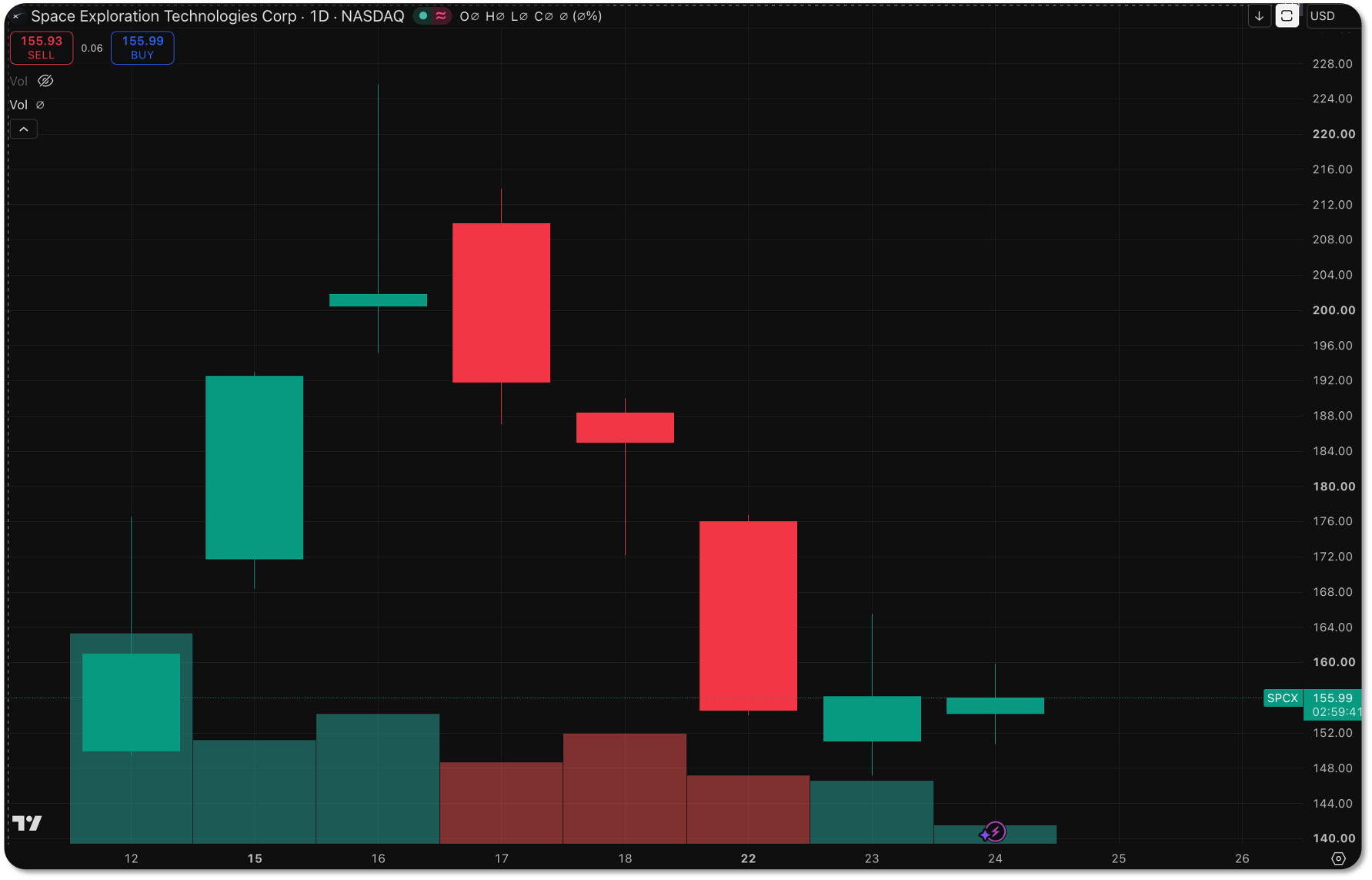
When SpaceX first went public at that pre-set price of $135 a share, it triggered an absolute retail feeding frenzy. Within just four days of hitting the market, the stock went vertical, soaring all the way to a peak of $225.64 per share.
At that exact moment, on paper, this loss-making aerospace company was temporarily worth more than both Microsoft and Amazon.
Let that sink in.
Twitter callback
A business that is actively bleeding cash was being valued higher than the foundational infrastructure of the modern internet.
But reality has a way of catching up to hype. Almost immediately after hitting those dizzying highs, the momentum broke. The stock reversed course and plunged for three consecutive days, culminating in a brutal 16% single-day crash on Monday.
These swings are… normal. But then again, maybe not so much for something that will equal roughly 4% of the entire U.S. total market index (unadjusted for free float).
The $20Bn Debt Trap
So, what caused the floor to fall out from underneath the world’s most celebrated IPO?
It wasn’t a rocket explosion or a satellite failure. It was a filing that exposed the massive financial strain hidden beneath the surface.
On the morning of the crash, SpaceX blindsided the market by announcing a massive $20bn bond offering.
The stated goal of this massive debt raise?
To pay off an outstanding bridge loan the company used to fund its recent acquisition of xAI, Elon Musk’s chatbot startup.
Now, to an amateur investor, refining short-term bridge debt into long-term investment-grade bonds sounds like standard corporate plumbing. But to seasoned analysts, this announcement triggered alarm bells.
BS (Balance Sheet) Paradox: According to its pre-IPO marketing, SpaceX claimed to be sitting on a war chest of over $100bn in cash on its balance sheet.
If the company is genuinely flushed with that much liquidity, why on earth are they rushing to capital markets to raise $20 billion in high-interest corporate debt just days after a historic equity raise?
The answer points to the fact that SpaceX’s actual day-to-day capital needs are astronomically higher than investors were led to believe.
The Massive Cash Burn Rate
When you look past the cinematic launch videos, the underlying numbers are a financial black hole. In its own prospectus, SpaceX explicitly warns investors: “We have a history of net losses and may not achieve profitability in the future.”
The sheer velocity at which this machine burns through capital is staggering:
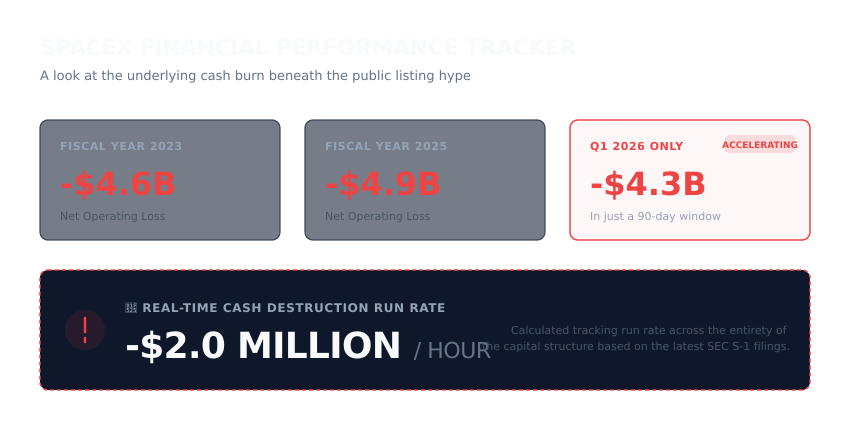
The company lost $4.6bn in 2023.
It lost another $4.9bn in 2025.
In just the first three months of 2026, it posted a net loss of $4.3bn.
That means SpaceX is burning through money at a rate of $2m every single hour, day, and night. In total, the company has accumulated over $41 bn in losses so far.
I know what you’re thinking…
What a fantastic tax asset investment.
Perhaps not.
Seriously though, the overwhelming retail base that bought in at $200-plus a share is beginning to realize that Starlink (satellite internet arm that generates 70% of the company’s revenue) is carrying the financial weight of an incredibly expensive, multi-headed corporate monster.
What are you actually paying for?
Part #3. Space Data Centers
How exactly do you justify an $1.8tn market cap for a business that loses $2m every single hour? The answer is simple: you don’t build a valuation model based on what the company is doing today. Instead, you sell an absolute blockbuster dream about where the entire global economy is going.
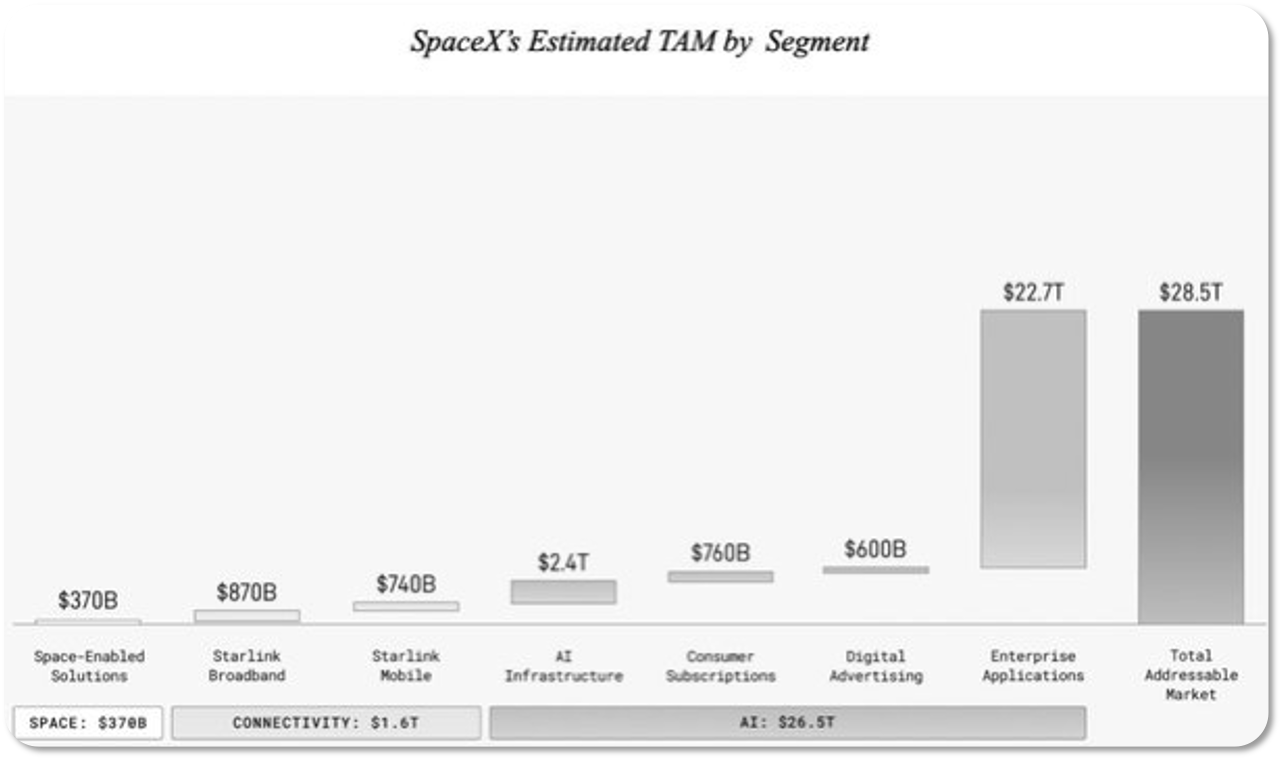
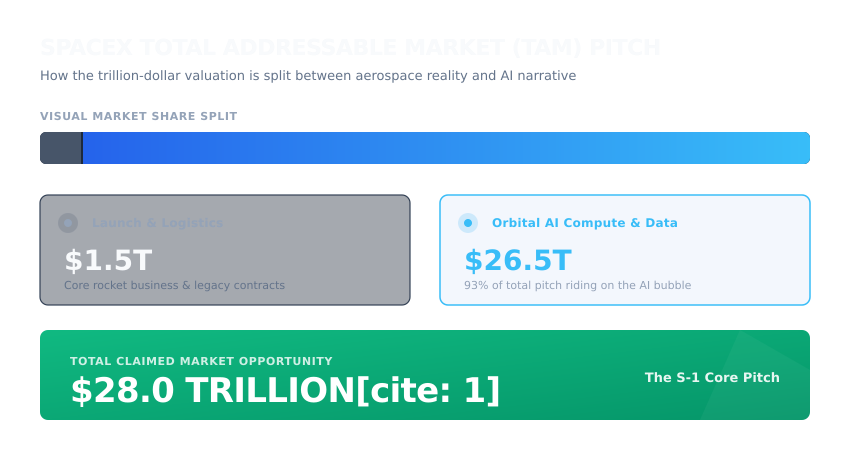
According to the SpaceX S-1 filing, the company claims its ultimate total addressable market is a staggering $28tn.
No biggie… It’s only the size of the entire US economy.
And an overwhelming 93% of that figure, or $26.5tn, rides completely on one sector: Artificial Intelligence.
The pitch Elon Musk is making to Wall Street is beautiful in its simplicity. On Earth, AI is running headfirst into a catastrophic physical wall: land, power, and water. A single, large-scale AI data center devours as much electricity as 100,000 normal households.
Worse, to keep those servers from melting, evaporative cooling systems must swallow between 5,000-9,000 gallons (multiply by 4x for liters) of fresh water every single day for every single megawatt of power.
Because of this, data centers are actively draining local grids, driving consumer electricity bills up across America, and drying out water tables.
SpaceX’s solution?
Move the data centers into orbit. In space, solar panels trap sunlight 40% more effectively than they do on Earth because there are no clouds, no weather, and no atmosphere to get in the way. It sounds like a sci-fi masterstroke: infinite free energy, zero terrestrial water footprint, and unlimited space.
But this is where the laws of physics collide violently with corporate marketing.
Cosmic Thermodynamics Oopsie
Every investor piling into this IPO because of the AI hype is ignoring an elementary school science reality: Space is a vacuum, and a vacuum is a perfect insulator.
Think about a standard thermos. It keeps your coffee boiling hot for hours by utilizing a double-walled vacuum layer that prevents heat from escaping. An orbital data center is facing that exact same trap… on a planetary scale.
On Earth, computers stay cool because heat can hitch a ride on moving air or water molecules via conduction and convection. But in the empty void of space, there are no molecules. The only way for heat to escape a satellite is to radiate away as infrared light.
To make that happen, you need massive, hyper-expensive cooling structures called radiators. And the engineering math on this is absolutely brutal:
The International Space Station produces a modest 70 kilowatts of heat, yet its thermal radiator arrays are massive, weighing a whopping 7,000 kilograms (7 tons).
Scale that up to a commercial, 1-megawatt AI data center cluster. To cool just 10 tons of advanced AI processors, you are forced to launch 100 tons of dead-weight radiator panels into orbit with it.
The Starship Bottleneck
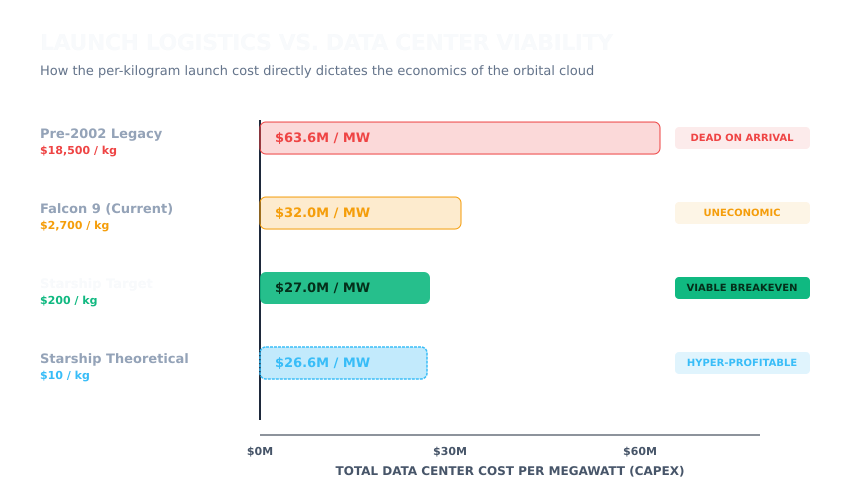
This extreme weight penalty brings us directly to the single most critical number in this entire financial equation: $200 per kg.
Right now, utilizing a standard Falcon 9 rocket, launching a payload into orbit costs roughly $2,700 per kilogram. At that rate, the astronomical weight of the required radiator systems pushes the cost of building a space data center to over $32 million per megawatt.
Compared to the $12 million to $15 million it costs to build on land, the space data center is completely dead on arrival.
The entire trillion-dollar valuation of SpaceX hinges on the unproven promise that their new, gargantuan rocket system (aka Mr. Starship) can successfully drop that launch cost down by 93%, hitting that magical $200 per kilogram threshold.
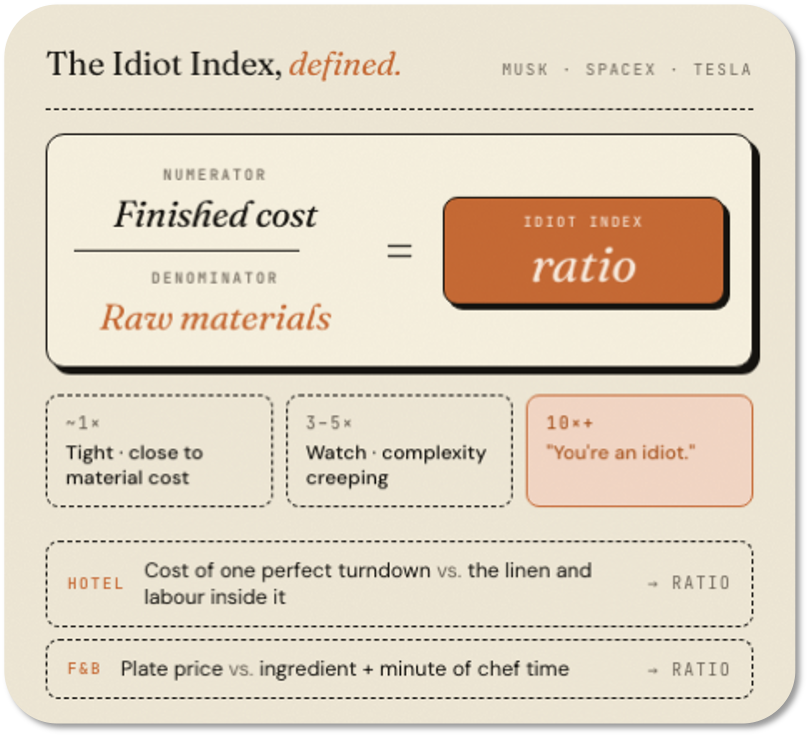
Note: I won’t go on about that idiot index here, but you should totally google it.
But as tech and aerospace analysts point out, Starship is still an experimental vehicle currently grinding through a highly volatile flight test campaign. To unlock those rock-bottom prices, SpaceX has to achieve a series of engineering milestones that have never been pulled off in human history:
They have to achieve 100% rapid reusability of the upper Starship spacecraft, catching it mid-air using giant launch tower mechanics.
They must master automated, orbital cryogenic refueling, meaning they have to pull off high-stakes, super-chilled propellant transfers in the middle of a vacuum just to get these massive payloads out of low Earth orbit.
If SpaceX misses these targets by even a fraction, the cost of space launch stays high, the orbital data center dream falls apart, and $26.5tn of AI addressable market vanishes into thin air.
Part #4. Mars… the Broken Promise
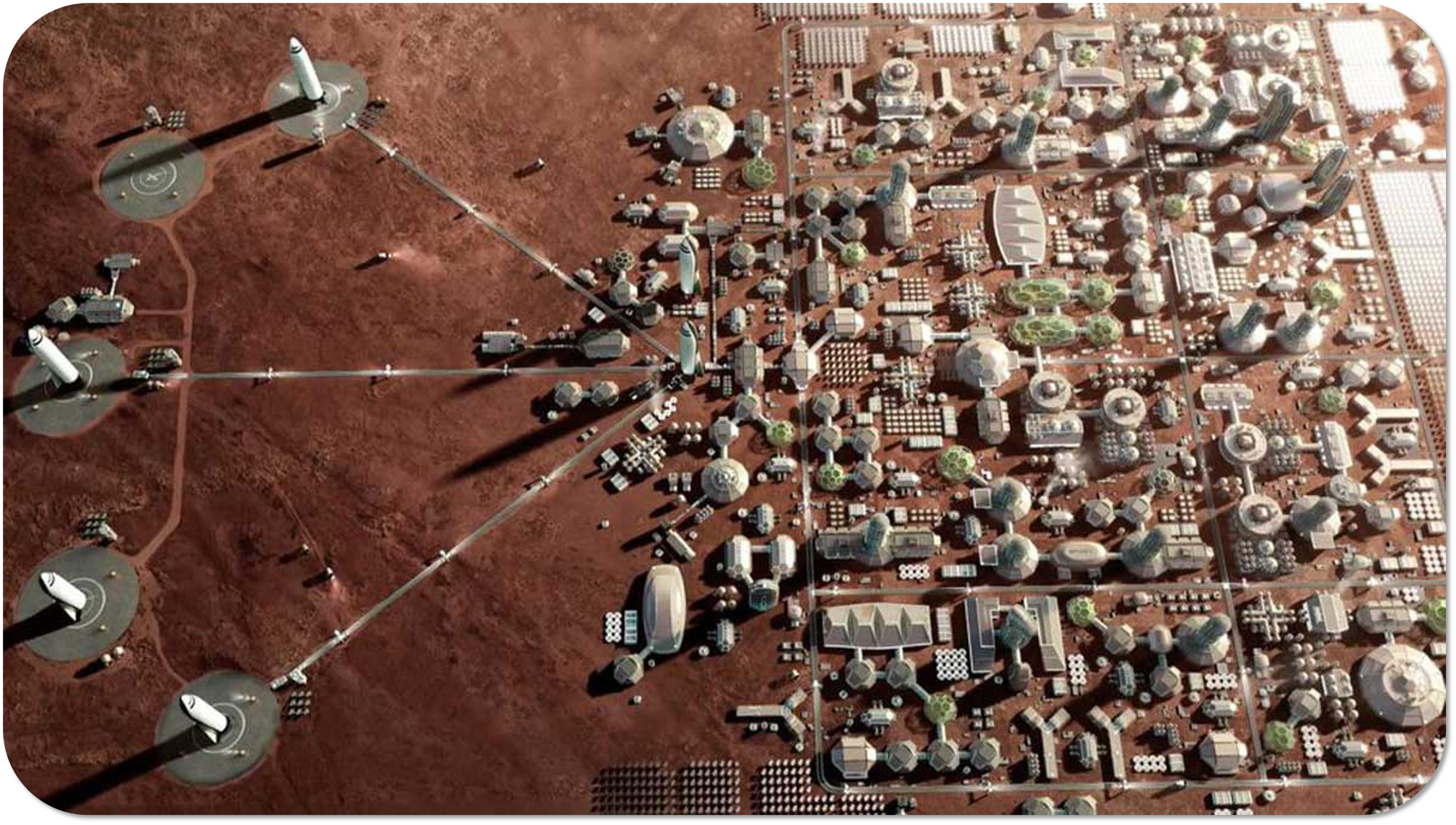
To understand the true cost of this IPO, you have to look past the financial engineering and look at the cultural soul of the company itself. Because for more than a decade, Elon Musk sold a grand, civilizational mission.
And he gave one specific, unwavering promise to his employees and followers: SpaceX would never go public until human survival on the Red Planet was guaranteed.
Back in a famously leaked 2013 internal email, Musk explicitly warned his team about the dangers of Wall Street. He wrote:
“Creating the technology needed to establish life on Mars is and always has been the fundamental goal of SpaceX... If being a public company diminishes that likelihood, then we should not do so until Mars is secure.”
For years, that single-minded focus was SpaceX’s greatest superpower. It allowed them to ignore quarterly earnings reports, out-engineer massive government contractors, and attract the absolute best aerospace minds on the planet.
But as the 2026 prospectus makes glaringly obvious.
Instead of waiting for Mars to be secure, SpaceX engineered a corporate pivot. They swallowed xAI whole, grabbed AI coding tools like Cursor, and repositioned themselves to catch the trending AI venture capital wave.
The dream of making humanity multi-planetary has been effectively traded in for the immediate satisfaction of an $85 billion stock market payday.
The $7.5tn Joke
If you want to know how the company’s new Wall Street backers view the Mars mission, you only have to look at how they structured Elon Musk’s new compensation package buried deep inside the S-1 filing.
According to the legal prospectus, Musk is slated to receive a historically unprecedented $7.5tn pay package.
Note: he only unlocks the full amount if SpaceX successfully establishes “a permanent human colony on Mars with at least one million inhabitants.”
Now, to a casual fan, that looks like ultimate alignment with the core mission. But corporate finance experts aren’t buying the hype.
Jay Ritter, a prominent finance professor at the University of Florida who directs the IPO Initiative market research program, flatly told the media: “These are just jokes. I can’t think of any other example.”
While including a literal punchline inside a legally binding SEC financial prospectus is wild, it serves a deeply calculated corporate purpose.
It acts as a clever marketing smoke screen, a bit of narrative nostalgia to assure the public that the old “North Star” still exists, even while the actual cash flows are being aggressively diverted into terrestrial AI infrastructure and corporate debt management.
The Fanbase Fracture: Space Purists vs. Stock Bros
This radical shift from deep-space exploration to speculative financial engineering has triggered a massive identity crisis within the SpaceX community.
Online forums and space subreddits, which spent the last 15 years obsessively tracking every minor engineering update to rocket heat shields and engine nozzles, have devolved into absolute battlefields.
The community has fractured into two bitter, opposing camps:
The Space Exploration Purists: Hardcore space advocates who feel fundamentally betrayed, watching their beloved engineering powerhouse get distracted by the next shiny Silicon Valley tech trend.
The Meme-Loving Stock Bros: A new wave of speculative retail investors who couldn’t care less about Martian atmosphere physics and are purely here to flip shares for quick post-IPO profits.
The despair among the old guard is tangible. One viral post on a prominent SpaceX subreddit, which quickly amassed over a thousand upvotes, captured the mood perfectly. It featured a classic four-stage meme of a person slowly applying full clown makeup.
The caption read simply: “My journey as a SpaceX fan the last 15 years.”
The Lunar Pivot
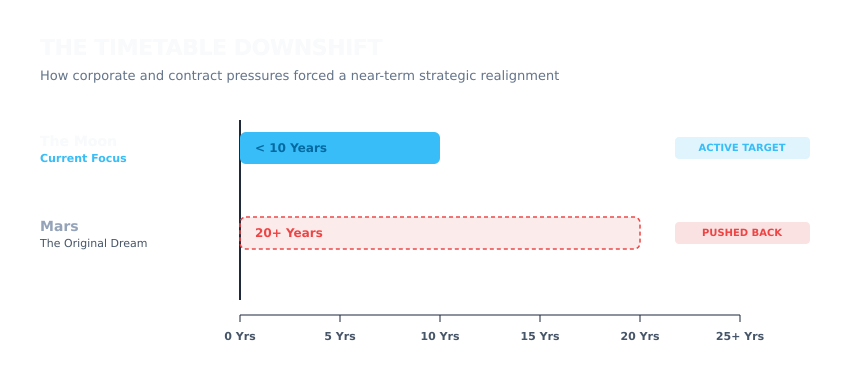
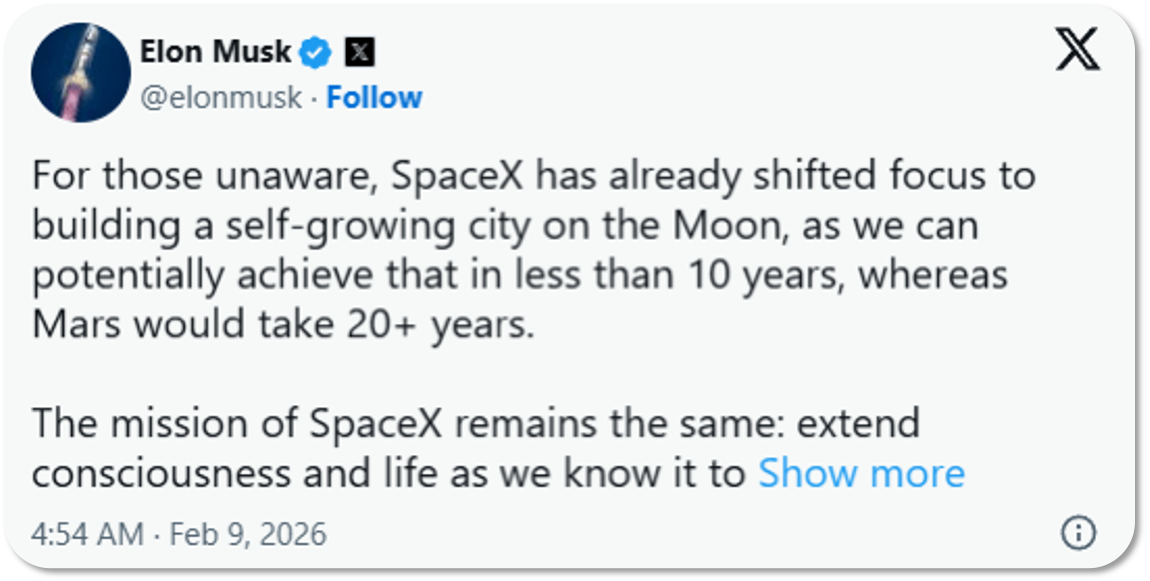
If you think the internet forums are overreacting, you only have to look at Elon Musk’s own public statements. In a telling post on X, Musk openly admitted that the company’s near-term operational focus has been quietly stripped away from Mars and locked onto something much closer to home. Musk wrote…
This sudden shift in priorities isn’t a natural evolutionary step; it’s a response to intense political and financial pressure. Back in 2021, SpaceX secured a crucial $2.9bn lunar lander contract with NASA.
As the global space race heats up with China aggressively targeting the lunar south pole, Washington has been publicly turning up the heat on SpaceX to pick up the pace and deliver on its hardware promises.
SpaceX simply cannot afford to alienate its biggest government client while burning $2m an hour on an unproven AI play.
So, Mars gets pushed to the back burner, the Moon becomes the immediate target, and the ultimate vision of making humanity a multi-planetary species gets indefinitely delayed by the harsh realities of public market expectations, geopolitical competition, and corporate survival.
Conclusion. Siphoning in Space
So, what is the ultimate truth of the SpaceX IPO?
If you look past the flag-waving corporate cheerleading and the breathless media headlines, you arrive at a reality that is as brilliant as it is terrifying. SpaceX is no longer a space exploration company. It hasn’t been for a long time.
Today, SpaceX is a giant, trillion-dollar financial siphon designed to do two things: transfer structural investment risk away from early venture capitalists and onto the public balance sheet, and use a profitable satellite monopoly to keep Elon Musk’s bleeding AI dreams on life support.
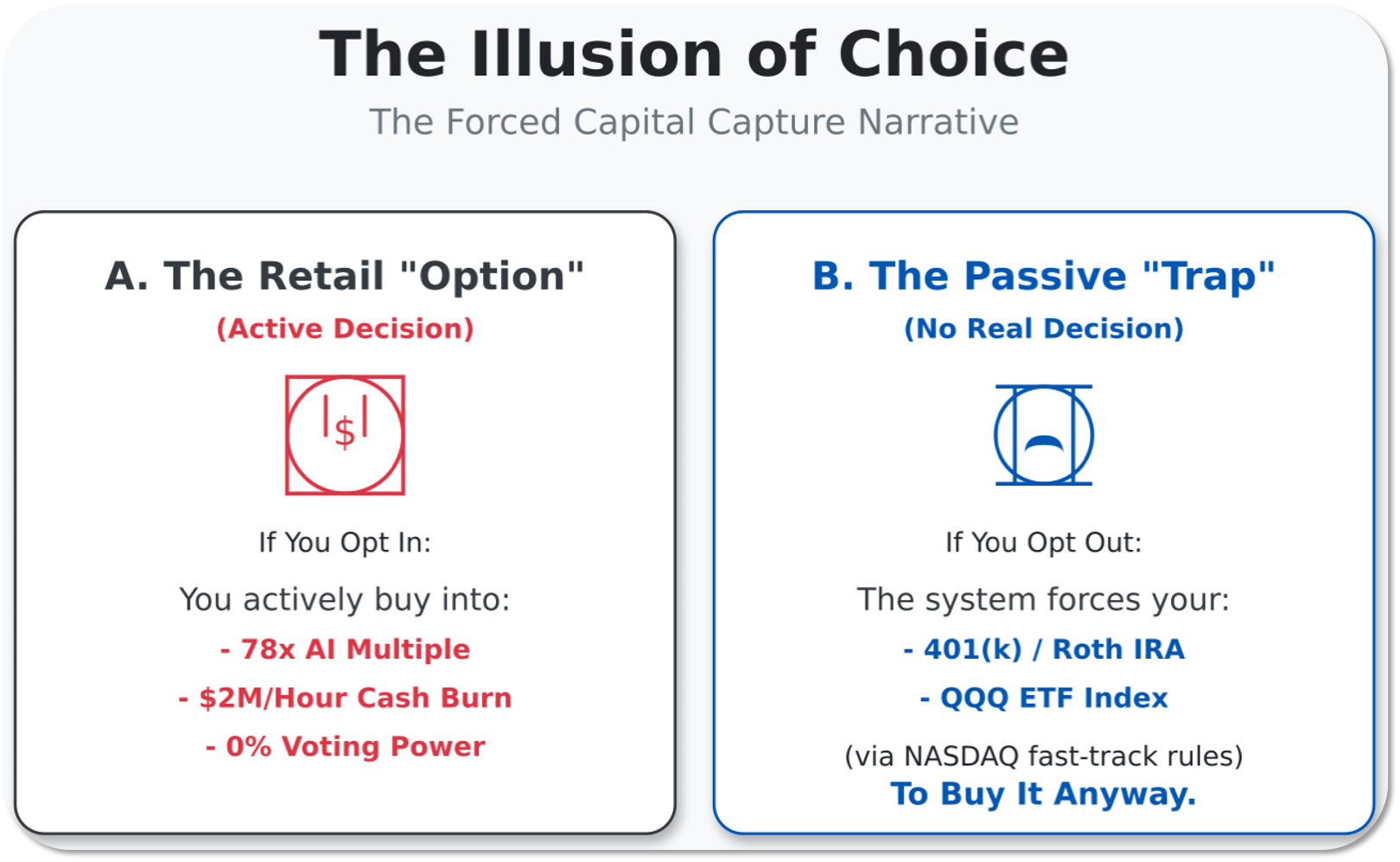
The most controversial part of this entire machine? You don’t even have a choice.
But by forcing the NASDAQ to rewrite its handbook, SpaceX successfully tapped into the global passive investing framework.
Whether you are a hardcore space enthusiast or a conservative retiree who thinks colonizing Mars is a childish delusion, your hard-earned money is now directly weaponized to bankroll Elon Musk’s corporate empire.
The Ultimate Venture Capital Dump
This isn’t the democratization of finance. It is the institutionalization of a meme stock.
When early insiders and institutional giants realize a capital-intensive project is getting too expensive to fund privately, they look for an exit door. Historically, they had to wait for a company to prove its profitability. But in 2026, all you need is a massive cult of personality, a 300-page prospectus filled with unproven sci-fi initiatives, and an exchange willing to fold under pressure.
SpaceX may very well succeed in landing hardware on the Moon, and they might even find a way to make space data centers a viable business down the line. But as the stock’s immediate, violent post-IPO whiplash proves, the market is beginning to realize that peak hype has a brutal expiration date.
If Starship hits that magical $200 per kilogram target, this will be remembered as the greatest corporate gamble ever won.
But if it misses, if the physics wins and the AI bubble bursts, millions of everyday savers like Svetlana are going to wake up and realize they were forced to pay for a set lunch menu they never ordered, holding an empty bag while the techno-emperor keeps the stars.
The chaos of the SpaceX IPO is officially open. Watch your pockets.
If you found value in this analysis, please hit the ❤️ button and share your thoughts in the comments. It helps us bring institutional-grade research to a wider audience.
And if you liked this post, we’re confident you’ll love this:










I'd love to hear your take. Did you buy at the IPO? Are you a long-term believer? Did reading this article change your perspective?
The average American hates Elon and will not give him even the out of circulation, left over Pennies in their junk drawer.