


Welcome back dear fellow 🧙♂️ Hermits 👋
🧙♂️ First time here? → This 3-Minute Crash Course Will Save You Hours
🇦🇷 Argentina Is Heating Up → Dive Into the Latest Reforms & Market Signals
💡 New Series Launch → Discover Our First Pick of the Week

This is quickly becoming a monthly habit. Argentina just keeps serving up economic best practices and drama that’s too juicy to ignore.
There’s always something fascinating going on, and we can’t help but dig in.
For the past couple of months, we’ve been quietly brewing a deep dive on Argentine debt, specifically the 5- and 10-year issuances, that’s shaping up to be less of an article and more of a masterclass on how to actually assess sovereign paper.
That might be our next release (unless Argentina surprises us again, which... let’s be honest, it probably will).
In the meantime, we hope you enjoy this edition… it’s packed with golden nuggets, wrapped in a TL;DR-friendly format, and spiced with just enough context to keep your inner macro nerd fed.
📌 Brief
Argentina is staging a bold economic turnaround. Inflation has cooled dramatically, dropping to a 1.5% low in May and trending toward a year-end target of around 28–30%.
The government has slashed public-sector jobs by nearly 20%, shedding over 20,000 roles to shrink the state and signal fiscal discipline, though this has intensified informal and multiple job-holding across the economy.
Labor unions remain defiant, responding to deregulation with strikes, but a new wave of business-friendly unionism is beginning to emerge. Meanwhile, Argentina maintains its title as the world’s most therapy-loving nation, boasting the highest number of psychologists per capita.
At the Central Bank, reserves are recovering thanks to a $2 billion repo deal and a $1 billion bond issue, though rising imports are testing those buffers. It’s a high-stakes balancing act between austerity, stabilization, and social strain.
🧠 Psychologists: The Couch Nation Phenomenon
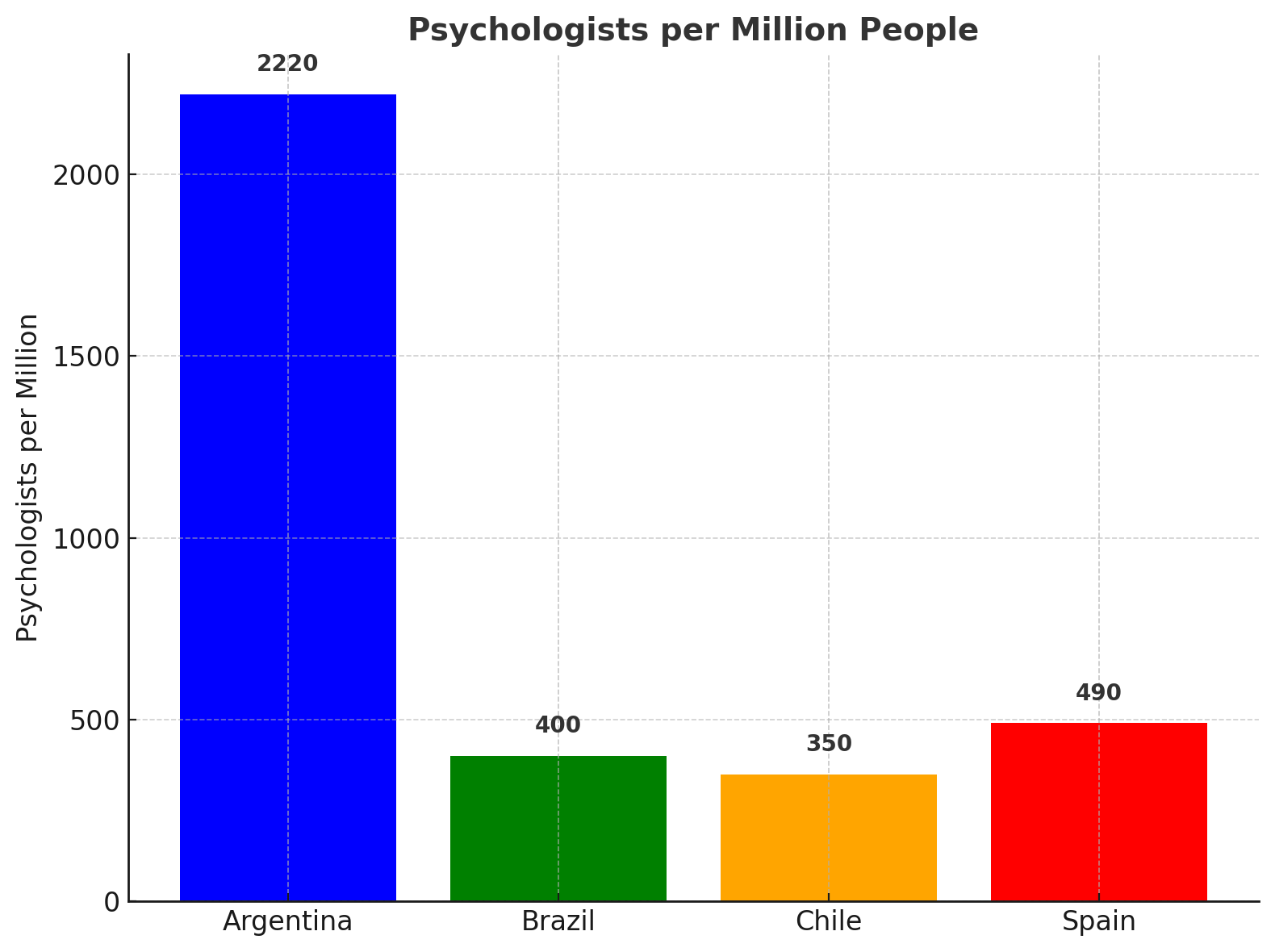
Let’s start with a fun fact: Argentina isn’t just warm-blooded, it’s therapy-obsessed. With around 222 psychologists per 100,000 people, the country dwarfs France (49/100k), Spain (49/100k), Brazil (40/100k), and the U.S. (30/100k). On a per-capita basis, Argentina is in a league of its own.
And it’s not simply about mental health needs. This passion is cultural. We’re going to blame it all on football fanaticism 😂
Psychoanalysis has long been part of Argentine identity. Buenos Aires alone is said to have the highest density of therapists anywhere in the world. The pandemic only deepened the trend: online therapy exploded, private practices multiplied, and Argentina leaned further into its reputation as the global capital of psychoanalysis.
Draw your own conclusions… we just thought it was wild.
🇦🇷 Inflation: The Swooping Tango
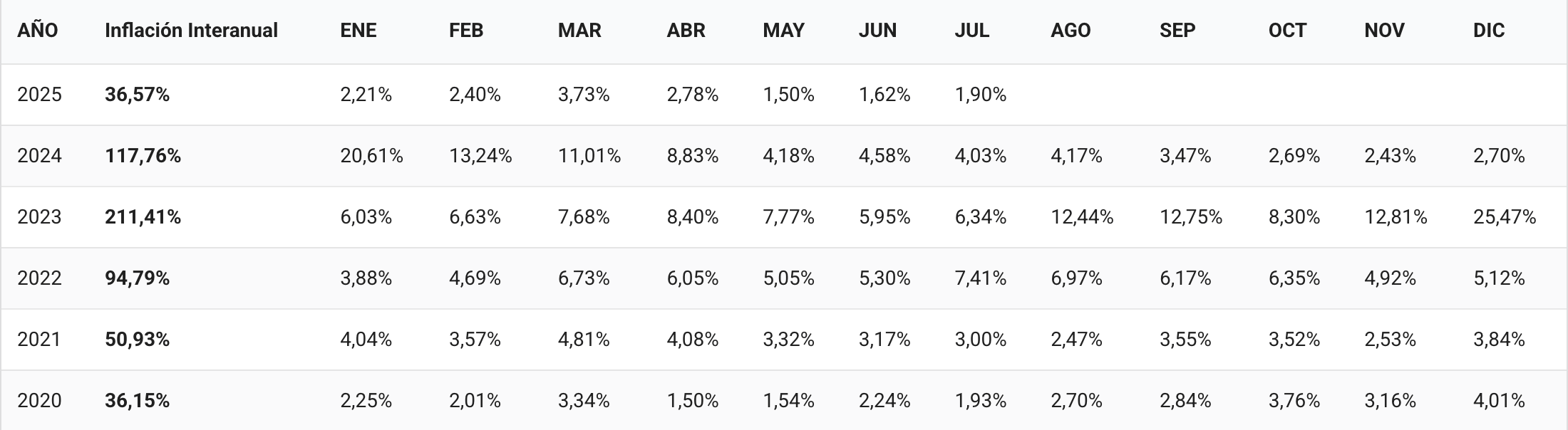
May 2025 marked Argentina’s inflation pirouette: +1.5% monthly, the lowest since May 2020 and far below forecasts hovering around 2%. Even core inflation, stripping out volatile goods, cooled to +2.2% in May.
On the annual stage, inflation decelerated to 36.6% in July, down from 43.5% in May and from 47.3% in April. That’s a pretty clear downwards slope.
Despite this drop, inflation remains stubbornly double-digit annually and painfully so for households still buying groceries amid an economic dark tango.
President Milei’s “shock therapy”, floating the peso, slashing public spending, tightening monetary emission, and locking in a US$20 billion IMF deal, has become the key conductor of this macroeconomic symphony.
Analyst predictions suggest inflation will end the year around 28.6%, and reputable domestic trackers are even flirting with optimism at ~23.2%.
🏛️ Public-Sector Employment & “Pluriempleo”: The Double Shift
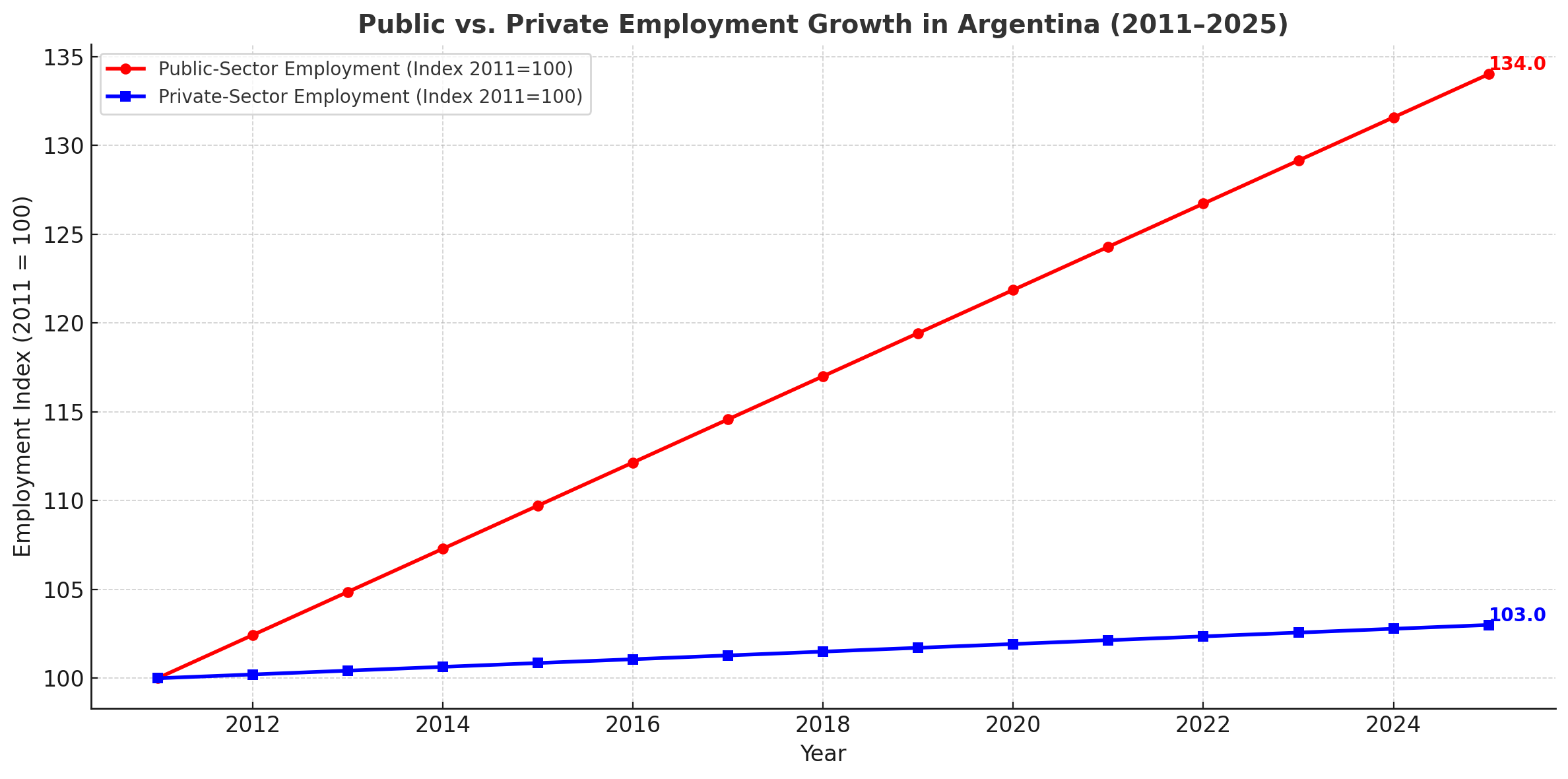
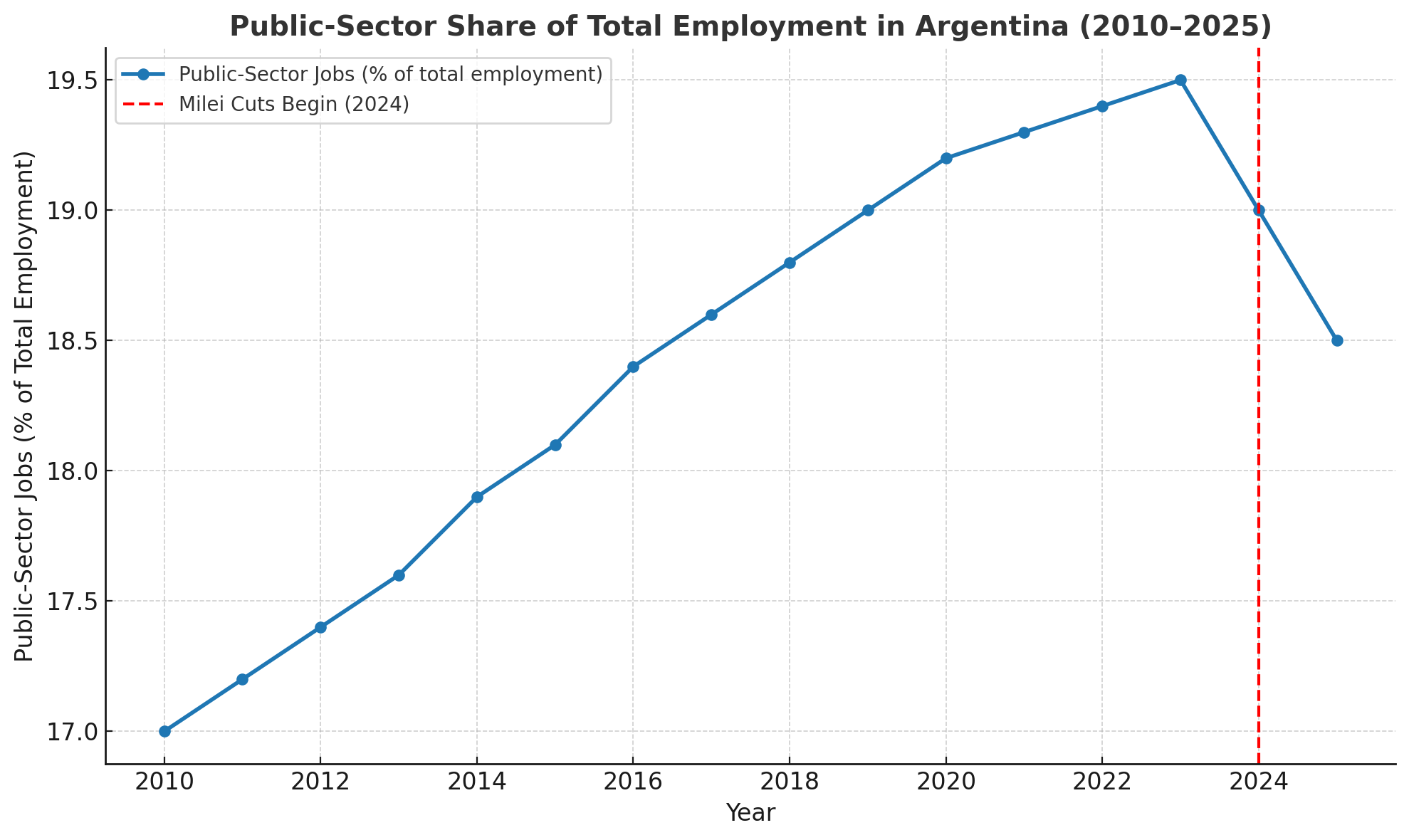
Public employment has long been Argentina’s political hot potato. In 2022, it comprised 19% of total jobs, well above the Latin American ballpark of 12%.
Between 2011 and 2022, public payroll surged by 34%, while private-sector jobs limped ahead by a meek 3%.
Enter Milei, wielding his fiscal scalpel: since late 2023, the state has shed 20,000–24,000 public jobs (a structural cut of roughly 20%), pruning a number of agencies like the AFIP.
Multiple Job-Holding (“Pluriempleo”)
Argentina lacks up-to-date official metrics, but social-program data shed light: among Potenciar Trabajo recipients, 78% report working, with 37.6% performing the role as their main job and 40.4% treating it as a side gig.
Not exactly the ghost shifts of the gig economy, but enough to suggest widespread pocket-lining behaviour amid economic stress.
🛠️ Union Dynamics and the Labour Movement
One of the wildest rabbit holes we’ve gone down lately is unions… what a mess.
Argentina’s labor system is unique in that it revolves around mandatory union representation. Unlike in countries where multiple unions can compete freely within the same industry, Argentine law designates a single “representative union” (sindicato único) for each sector or trade.
Once the Ministry of Labour grants this special status, known as personería gremial, that union becomes the sole bargaining agent for every worker in the sector, whether they are dues-paying members or not.
In practice, this means union membership is almost unavoidable: if you work in a given field, the collective agreements negotiated by its guild automatically apply to you.
The creation of these guilds follows a defined process. Workers in a specific trade or company can form an association and register it with the Ministry of Labour. To be elevated to full “representative” status, however, they must demonstrate that they represent the largest share of workers in that activity.
Competing unions may still exist under a lighter registration (inscripción simple), but only the dominant guild has the legal authority to negotiate sector-wide agreements, set wage floors, and enforce conditions. This “winner-takes-all” model consolidates power in the hands of a few large organizations. 💩
Structurally, Argentine unions are organized in three layers. At the base are company or branch unions, representing workers in a single firm or trade within a province. These feed into federations, which coordinate activity across the same industry at the national level. At the top sit the confederations, umbrella organizations that unite multiple federations.
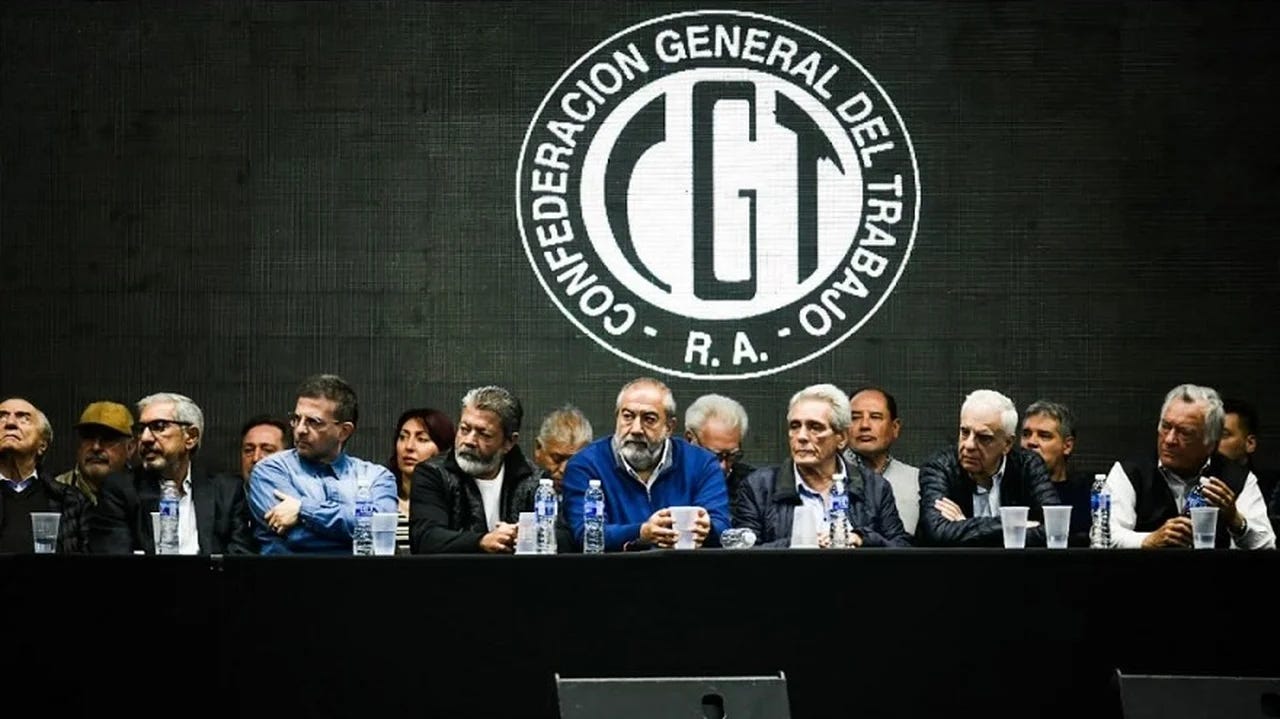
The most powerful is the Confederación General del Trabajo (CGT), historically aligned with Peronism and often acting as both a labor body and a political machine. The CGT’s infamous January 2024 general strike signaled high-pitched discontent with state job cuts and labour deregulation.
Alongside it are the Central de Trabajadores de la Argentina (CTA) and smaller autonomous movements, though their influence is more limited.
Internally, most unions are run democratically in theory, with leaders such as the secretary-general elected by members. In practice, many leaders (known as “barons of the unions”) have remained in power for decades, entrenched through networks of patronage and political alliances.
Financing is also guaranteed by law. Unions collect mandatory dues deducted directly from workers’ paychecks, and even non-members must contribute through so-called solidarity contributions if they benefit from a union contract.
This steady flow of resources makes Argentine guilds some of the most financially secure and politically powerful in the world.
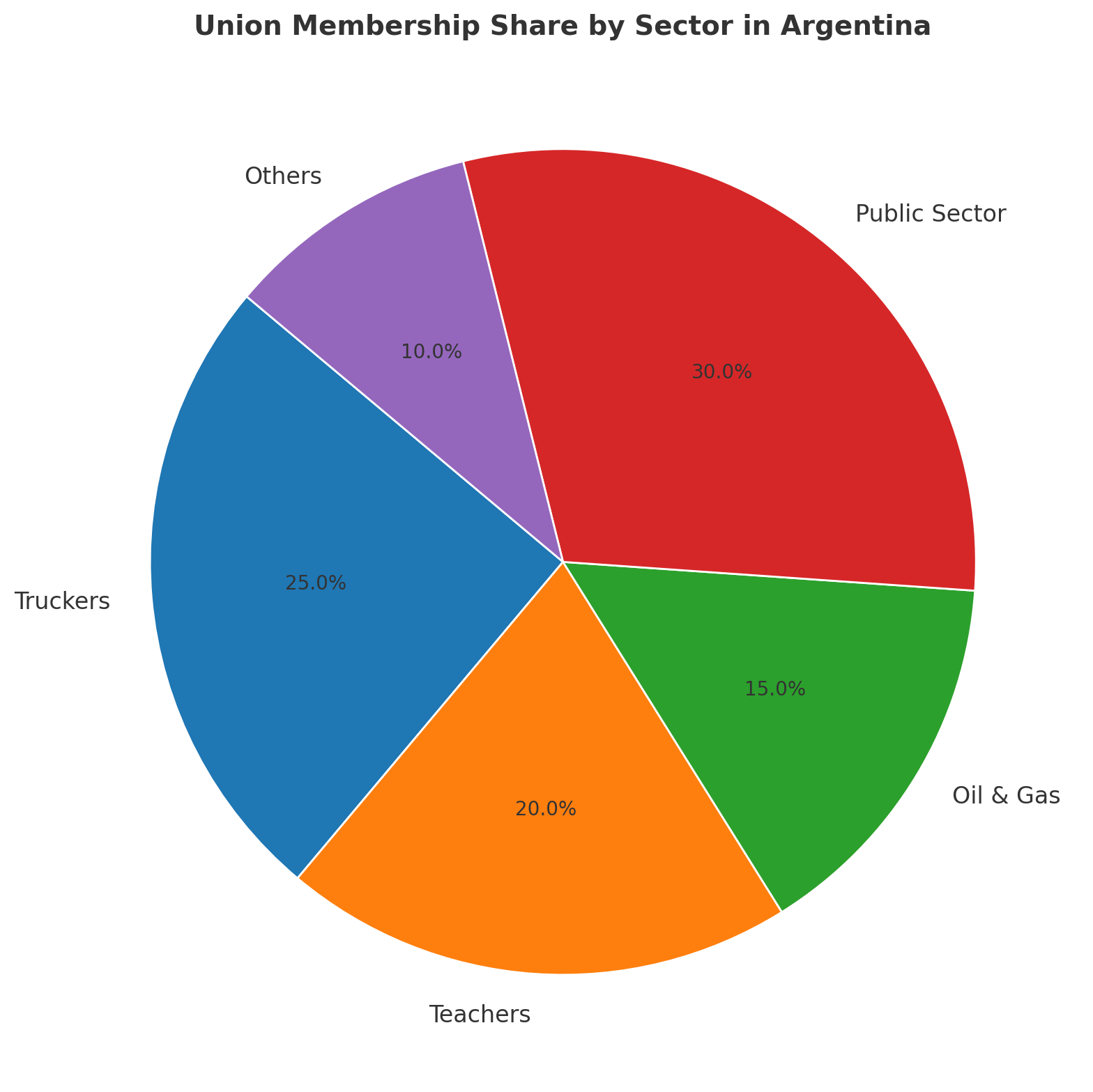
The result is a labor system where unions are not just workplace advocates, but central political actors. Truckers, teachers, and oil-and-gas workers’ guilds can bring entire sectors of the economy to a standstill with a strike.
The CGT in particular has been instrumental in both supporting and resisting governments, often shaping the course of economic policy as much as elected officials themselves.
Milei’s government deployed a sweeping “mega-decree” to recalibrate labour laws, loosening hiring/firing rules, diluting seniority protections, and laying the groundwork for more flexible union certification. Expect this hybrid union structure (traditional plus business-aligned) to chime differently in future rounds of strikes or bargains.
This is another attempt at combating entrenched system corruption. Go Milei!
🥖 Poverty Stats
Argentina’s poverty story over the past 18 months has been nothing short of whiplash. At the start of 2024, things looked dire. Poverty surged to over 52%, with some surveys putting the number as high as 57%, a level not seen since 2004. Families were struggling to keep food on the table, and the country was teetering on the edge of a full-blown social crisis.
Then came Milei’s shock therapy. Painful as it was, the mix of fiscal cuts, deregulation, and a brutally tight monetary stance began to change the macro picture. By the second half of 2024, official stats showed poverty falling to 38%, with independent universities tracking a similar trend. In some cases, the rate even dipped closer to the mid-30s. For a country that just months earlier was in free fall, the reversal was staggering.
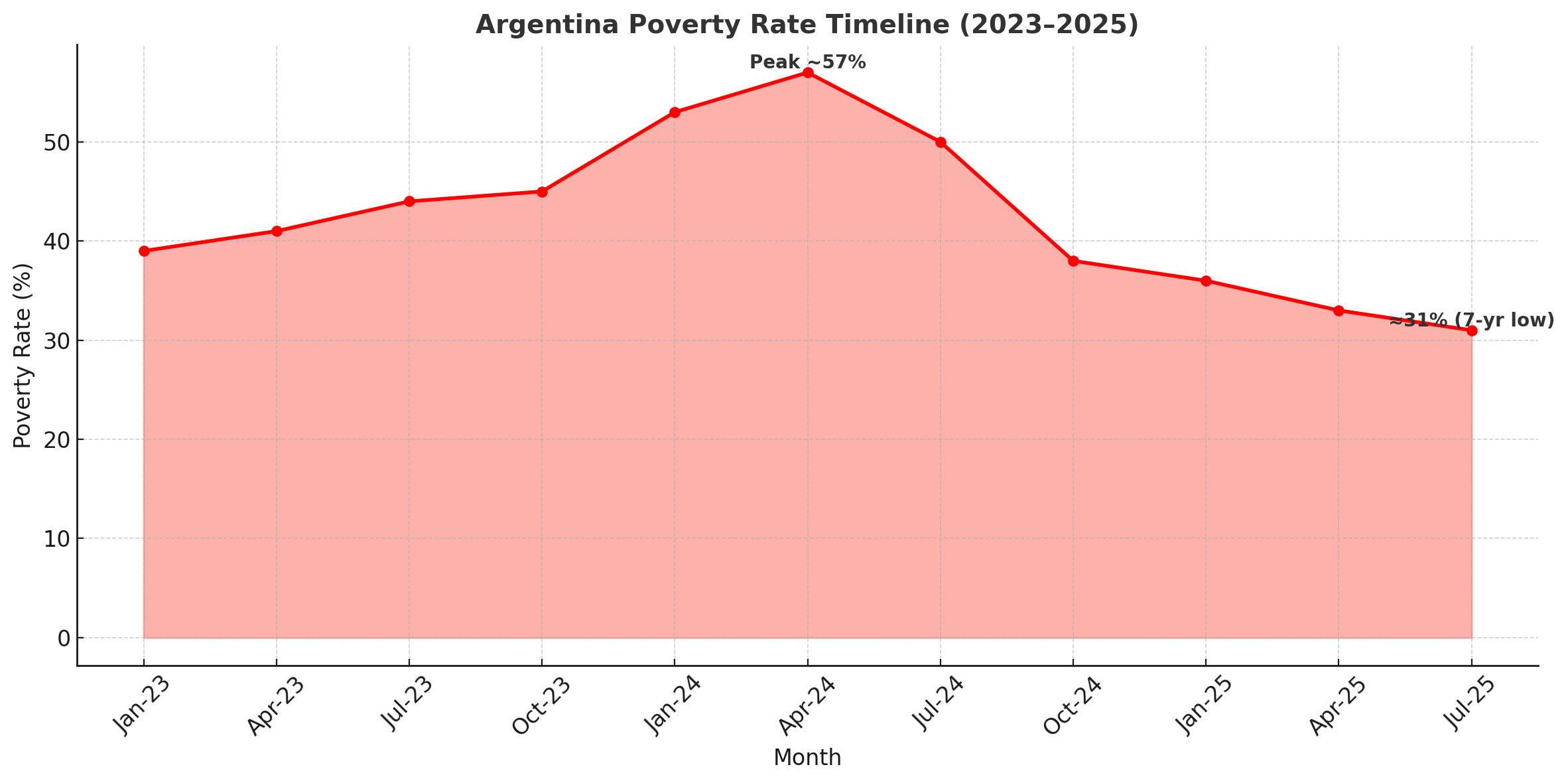
Fast forward to mid-2025, and poverty has dropped further, to around 31–32% (lowest level since 2018). That’s a seven-year low, driven by easing inflation and real wages finally starting to outpace costs. On paper, this is a remarkable turnaround.
💰 The IMF Tango
Testing
So… we got the first real report card on Argentina since Milei’s April loan deal. The $2 billion next tranche has already been released, a sign that, for now, the shock therapy is delivering.
The Fund highlights Milei’s fiscal record as Exhibit A. In a matter of months, Argentina has gone from a chronic deficit of 2–3% of GDP to a primary surplus of about 1%. That’s not just meeting and beating IMF targets.
Plus, it’s not just brutal spending cuts alone. Revenues are rising on the back of a rebound in economic activity, while subsidies and public payrolls are being held in check. After a 28% collapse in primary spending in 2024, outlays are now growing again, mainly through pensions, but the fiscal anchor remains.
Monetary policy has also stayed tight. Inflation, once roaring at triple digits, has cooled dramatically to multi-year lows even as the peso was floated. The IMF’s one criticism: money supply growth has been driven more by domestic debt operations than by reserve accumulation.
In plain English, Argentina still needs to increase its dollar reserves at the Central Bank to convince markets that this disinflation isn’t a mirage.
On growth, the economy hasn’t cratered. Far from it, GDP expanded 5.8% year-on-year in Q1 2025, with agriculture, energy, and mining leading the charge. Manufacturing and construction are still lagging, but the weaker real exchange rate is restoring competitiveness, offering hope of a rebound in industry.
Exports are booming with agriculture, mining, and transport equipment all showing gains.
Perhaps the most politically powerful result has been the social turnaround. Poverty, which had spiked above 50% in early 2024, has collapsed to around 31%. That means more than 10 million Argentines, including nearly two million children, have climbed out of poverty in just over a year. [Note: Lower inflation, stronger growth, and better-targeted social assistance are behind the shift]
But the IMF doesn’t let the champagne flow too freely. Risks loom large: October’s midterms could see Congress unwind reforms with populist pension hikes and new transfers. External investment remains tepid, waiting for political clarity. And fragile reserves could be tested if the peso wobbles in the election run-up. In the Fund’s words, risks remain “tilted to the downside.”
Milei has pulled off a rare Argentine trifecta: fiscal discipline, falling inflation, and rising growth.
But the reforms are fragile, and politics could undo them as quickly as they were achieved. In the IMF’s reading, the real “risk premium” in Argentina today isn’t global markets. It’s domestic Peronism waiting in the wings. October elections should put a hard stop on this… hopefully.
BCRA Reserves
Barely a year ago, Argentina’s Central Bank (BCRA) played “Reserve Red Overdrawn”, today it's leaning into fulsome foreign-exchange measures:
US$2 billion repo with international banks (June 9, 2025)
US$1 billion bond sale
Entire peso-crawling peg scrapped in April, unleashing floating exchange rates between 1,000–1,400 ARS/USD
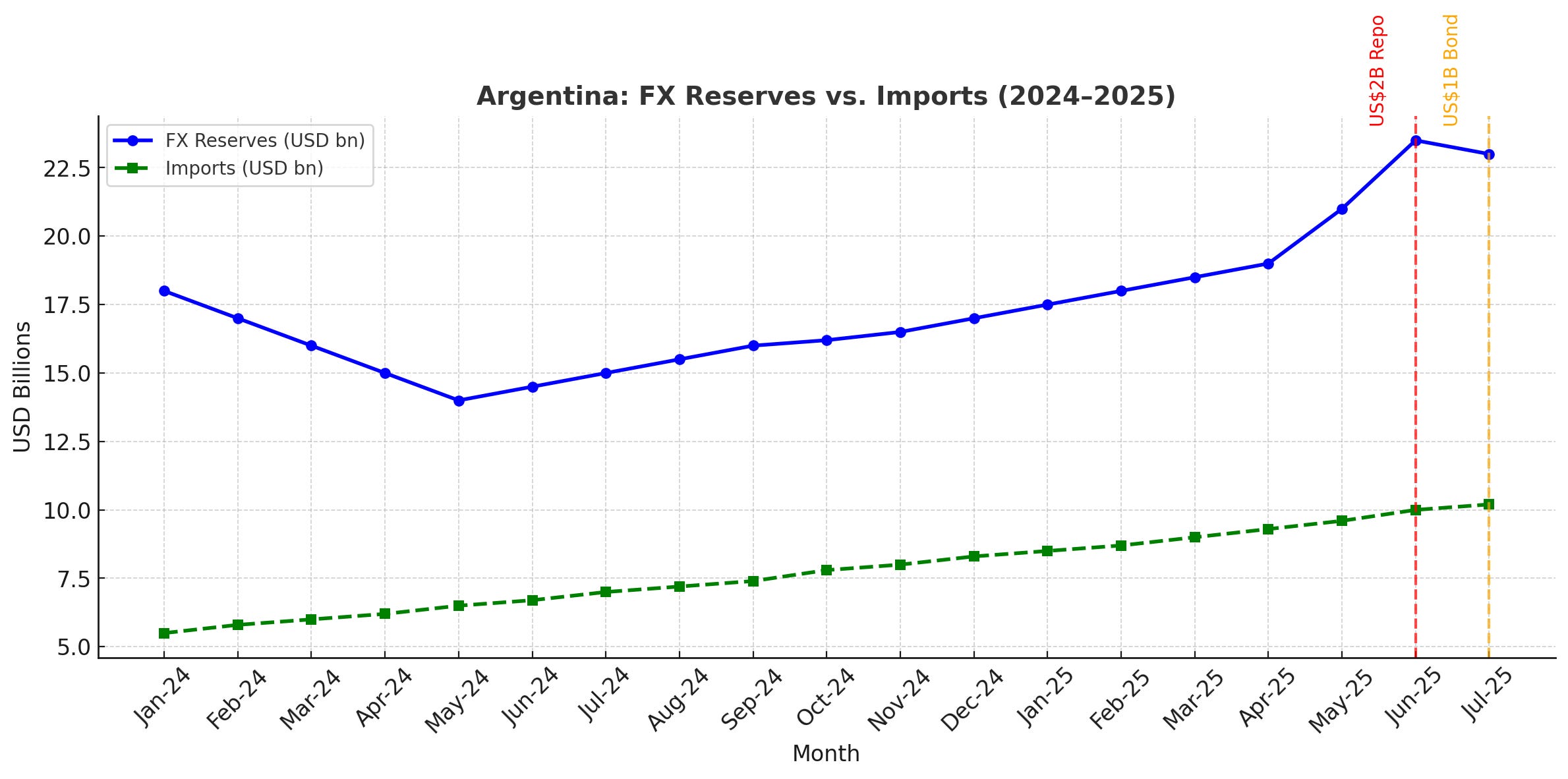
These moves were designed to satisfy the IMF’s goal of adding US$4.4 billion in FX reserves by the mid-year review.
But there's a twist: imports have surged around 30% over six months, widening the current account deficit. That makes the reserve cushion all the more vital for breathing room, FX stability, and transparency.
🎯 How should all this affect stocks
First, inflation coming under control is a clear tailwind for Argentine equities. Lower inflation means more predictable cash flows, easier financing conditions, and the possibility of real multiple expansion. Local companies that were being priced for macro chaos could suddenly look cheap if disinflation sticks.
Second, the fiscal surplus. For decades Argentina’s Achilles’ heel has been uncontrolled deficits monetized by the central bank. If Milei keeps delivering primary surpluses, country risk spreads could compress. This would lift Argentine bonds first, and equities second.
Third, unions remain the wild card. Deregulation and a shift toward business-friendly unionism could boost productivity and investment, but any resurgence of strikes or Peronist pushback risks denting confidence. Think of it as the “Argentina discount”.
Fourth, poverty falling so sharply is socially stabilizing in the short run. More people with real incomes means domestic consumption could surprise to the upside, benefitting consumer names and local banks. But if populist measures return post-midterms, that stability could vanish just as quickly.
Finally, the external sector matters. With exports rising and reserves rebuilding, exporters in energy, agriculture, and mining look like the clearest winners.
But rising imports and fragile FX reserves are the red flag. If the peso wobbles, the IMF will insist on more discipline, and that could squeeze growth-sensitive sectors.
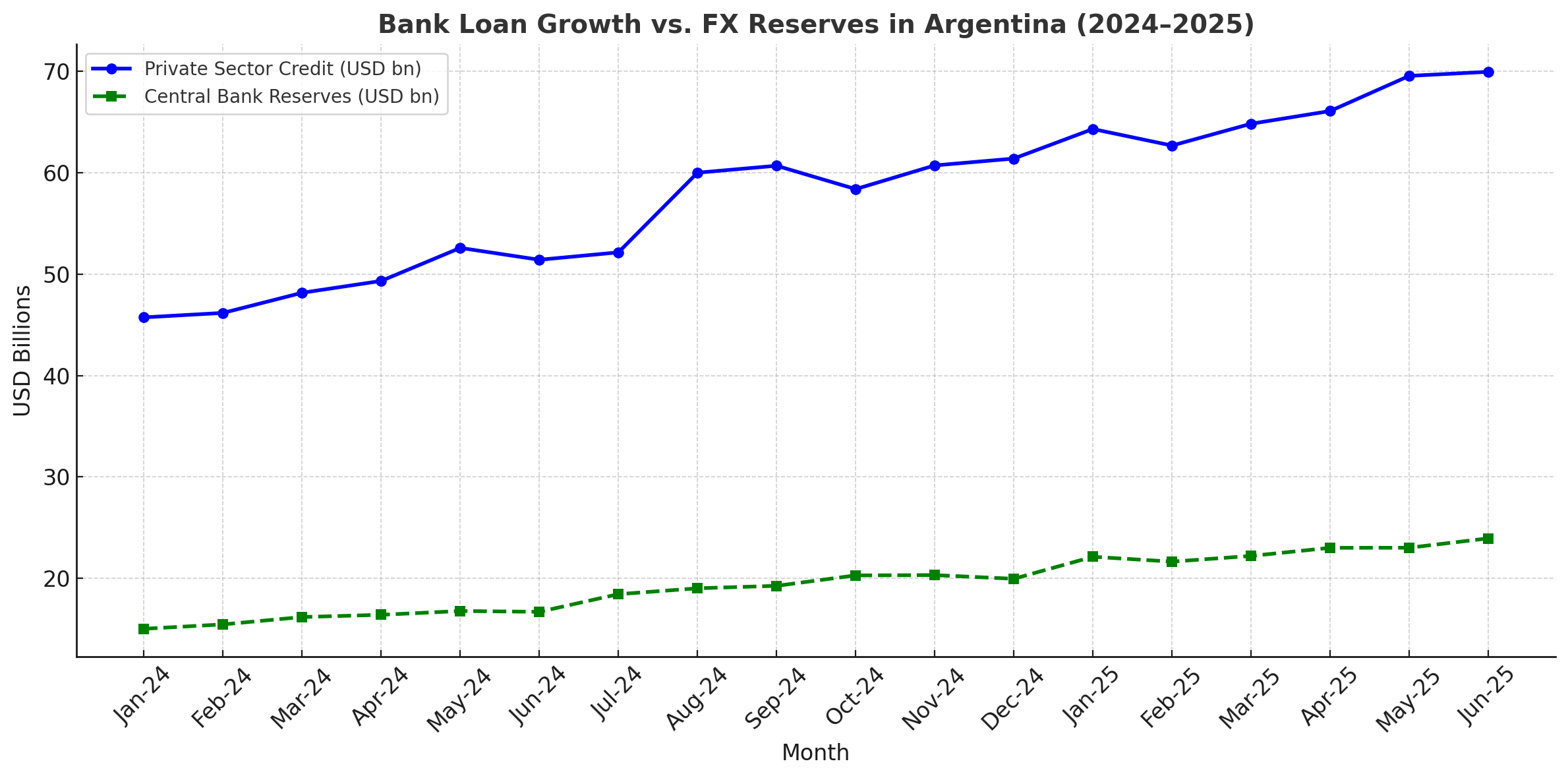
If there’s one metric worth watching, it’s bank loan-to-reserve ratios. They will, for sure, serve as a leading indicator of private-sector growth. Central bank reserves also have a nice correlation.
🙏 Feel free to ❤️ and comment so that more people can discover and enjoy this Substack 😇
Thank you.