


Guys, this feels so freaking good. It’s hard to explain how liberated I am… both in terms of time and in terms of productivity and focus.
I really do feel like I’ve been reborn after leaving all of the red tape behind.
With so much time now on my hands, it was time to make some changes around the house. I could either…
Go crazy with more-or-less productive (PokerStars) and not-so-productive side hustles (League of Legends).
(or) Start studying firsthand practices like the noble art of oenology… the art of wine making and, in my case, tasting.
(or) Focus on improving my existing set of investing practices.
And last week, I chose… all of the above.
I qualified for the Barcelona Open, consolidated my D4 position, tested some sample product (😉) during field research, and dove deep into a few companies that were going through earnings.

And in the midst of all of this “grueling work”, I had a deep discussion about one of these companies with my brother, and, to his credit, he told me that…
“I was being dull because there was a lot more juice to be squeezed.”
Given he’s much smarter than I am, the right course of action is to go through with his thought experiment… at least test it out.
In my mind, if you combine his entrepreneurial idea-milking maxxing with my mega risk-averse personality, you should get a new (profit maxxing?) strategy.
And that’s what we’re going to discuss today.
Let’s break it down.

What’s The Strategy
First and foremost, we’re not reinventing the wheel here. This is a more than tried-and-tested strategy. However, our twist is what makes it unique, as it all comes down to sizing and, obviously, information.
Note: None of this involves insider information. The informational edge essentially comes down to the fact that in the micro-cap space, there just aren’t enough eyeballs that care about the outcome.
Therefore, the difference in information between someone actually gathering data versus your average investor (or the passive index holding this) is a few orders of magnitude greater than it would be for a mega-cap corporation.
To put it very plainly: no one actually cares enough.
So, other than your random Citadel-esque quant nanosecond trading strategy and the occasional insider with the capacity to act, we’re confident we’re the only ones here actually making moves.
Playing The Short-Term Game
The move is pretty simple: we are buying out-of-the-money options that should be mispriced, betting on both the quality of earnings of our existing holding and the underlying volatility.
Ideally, we buy low volatility and sell high volatility. Again… Ideally.
Which is typically what happens around earnings, though that’s yet to be fully tested here. Because of the size of our companies, we should expect higher volatility overall, and that should play heavily in our favor given how options are priced.
Our aim is not to exercise these but rather to buy them before earnings and squeeze out a small profit by selling them within a week once their filing is released.
Sizing
Size is probably the single most important factor here.
We will limit bets every quarter, making it a bit odd on a per-bet level, but very congruent across a full test sample.
The limit is 0.5% of the portfolio per quarter, which roughly equates to €6,000 at the moment. So in any given year, we can only lose 2% of the portfolio… roughly equating right now to €25,000.
It may sound like a lot, but trust me, it really isn’t. The most likely scenario here is that we break even.
Just like in poker, where the size of the pot alters your bets, the size of the portfolio here acts as a constraint based on:
How much we’re willing to lose if everything goes to zero,
The potential upside, and
Frankly, capacity constraints on how much of these giga-illiquid contracts we can even buy.

Pricing. Black-Scholes in Plain English
Note: Move on to the next section if you fully understand how options are priced. This section is to bring everyone up to speed. In a sense, to make sure everyone reading speaks the same language.
If you want to buy an option, you’re buying the right (not the obligation) to buy or sell a stock at a specific price before a specific date.
Black-Scholes answers one question: What is that right worth today?
Strip away the Greek letters and scary differential equations, and the Black-Scholes model is basically an insurance pricing calculator for stocks, and what we’re playing around.
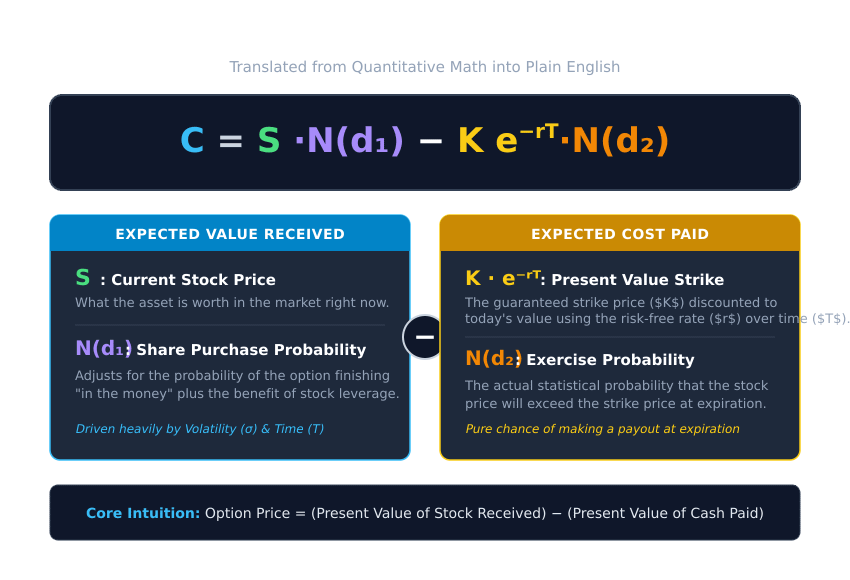
It figures that out by crunching 5 key ingredients:
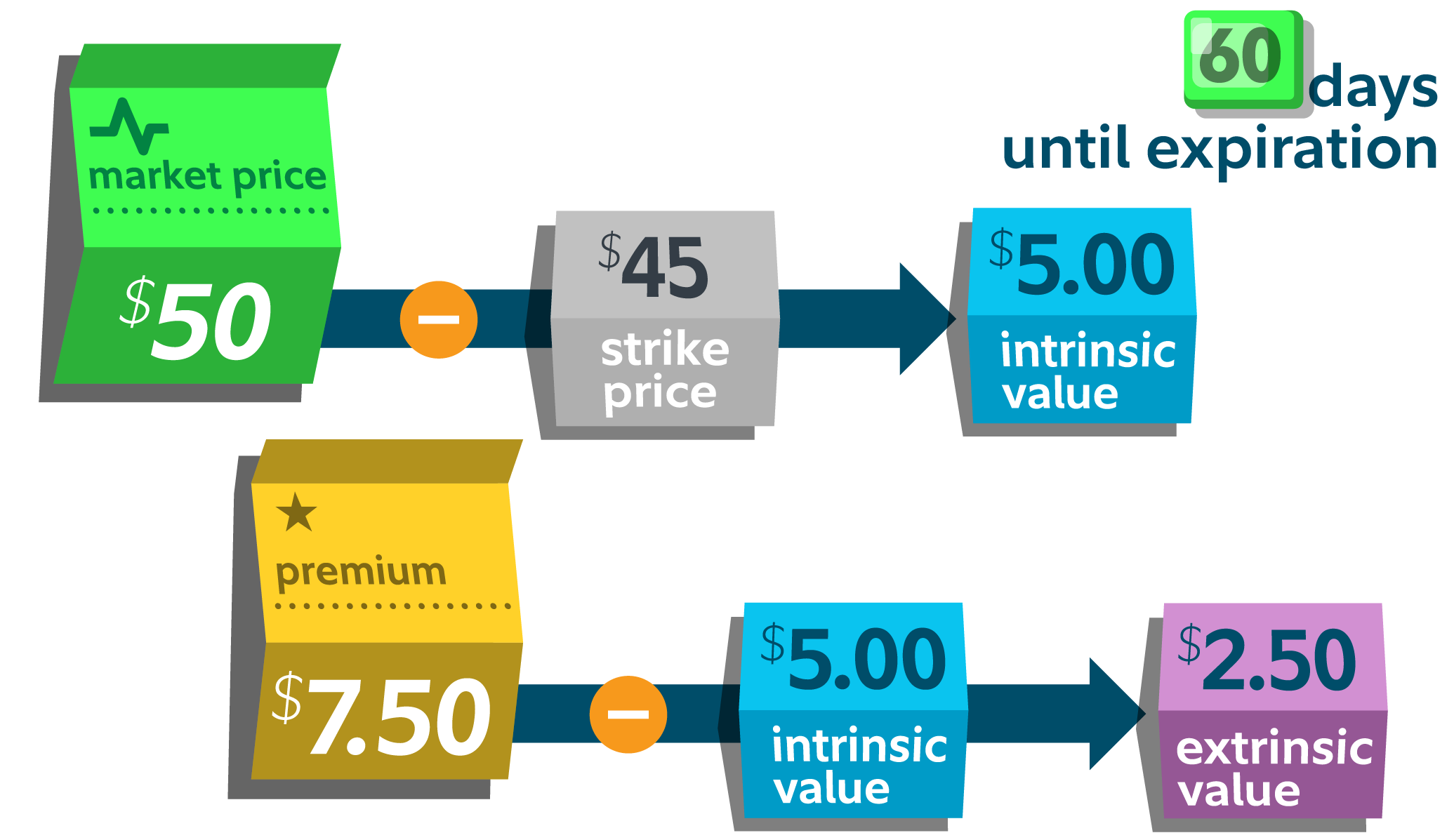
Current Stock Price vs. Strike Price: How far does the stock need to move for your bet to make money?
Time to Expiration: How much time is left on the clock? More time = more chances for crazy stock moves = a more expensive option.
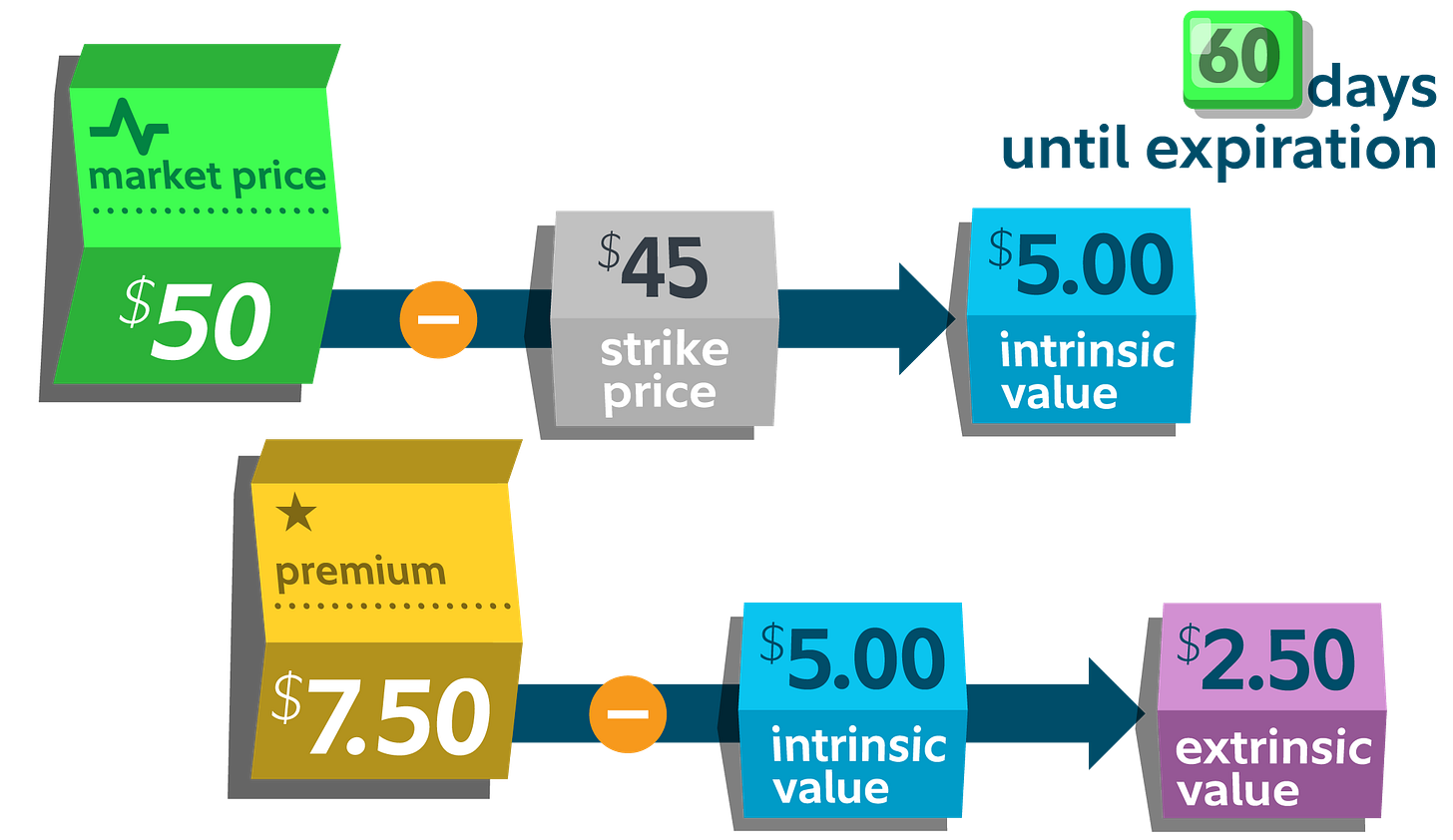
Volatility (sigma): This is the single most important variable for our strategy. It measures how wildly the stock normally swings. High volatility means a higher chance the stock hits an extreme price, which makes the option way more valuable.
Risk-Free Rate: The opportunity cost of holding the option versus sticking that money in risk-free government bonds.
Takeaway for Our Strategy
Black-Scholes assumes volatility is constant and stock prices follow a predictable bell curve. But in micro-caps, that assumption breaks down more than you think.
Because nobody is watching these tiny companies, market makers often price options based on historical volatility. When an earnings report is released and reveals a massive data discrepancy, volatility should (in theory) explode, and that means the option’s value should jump up even faster than Black-Scholes predicts.
That mispricing is our edge, at least in theory.
Why This Should Work
This whole setup is contingent on a few things going our way:
Illiquidity works in our favor. Because we’re taking small positions, illiquidity and information asymmetry actually help us.
Playing the averages. Regardless of whether earnings turn out good or bad, by distributing these bets across our highest chance holdings (we’re not betting on all of them), we expect to play a game of averages. On average, getting the direction right gives us a nice extra boost.
Strict size limits. We are heavily limiting the bet size, which works in our favor. This is definitely not core to our long-term compounding philosophy; it’s simply a smart way of recycling the quality data and information we’ve already spent the time collecting.

Live Example
At the end of last week, we went ahead and purchased some options for the upcoming earnings of CareCloud (CCLD).
Note: CareCloud is one of our portfolio companies, of which we currently own about 85% of a full position (~7%). We’d obviously like to make this a full position, but that’s exclusively a function of price at this point. We aren’t in a rush nor do we have a hasty personality… in fact, we’re probably some of the most patient players out there.
So, back to the strategy. We spent $850 (plus fees) buying up 45 contracts of CCLD 21 Aug 2026 $2.5 Calls at an average price of a little under $0.20 (35 x $0.20 + 10 x $0.15 + $29.51 in fees).
This means our breakeven price is a bit under $2.70 (including fees) if we decide to exercise the options, giving us the right to purchase 4,500 shares (45 contracts x 100 shares per contract) at $2.50, representing an underlying value of $11,250.
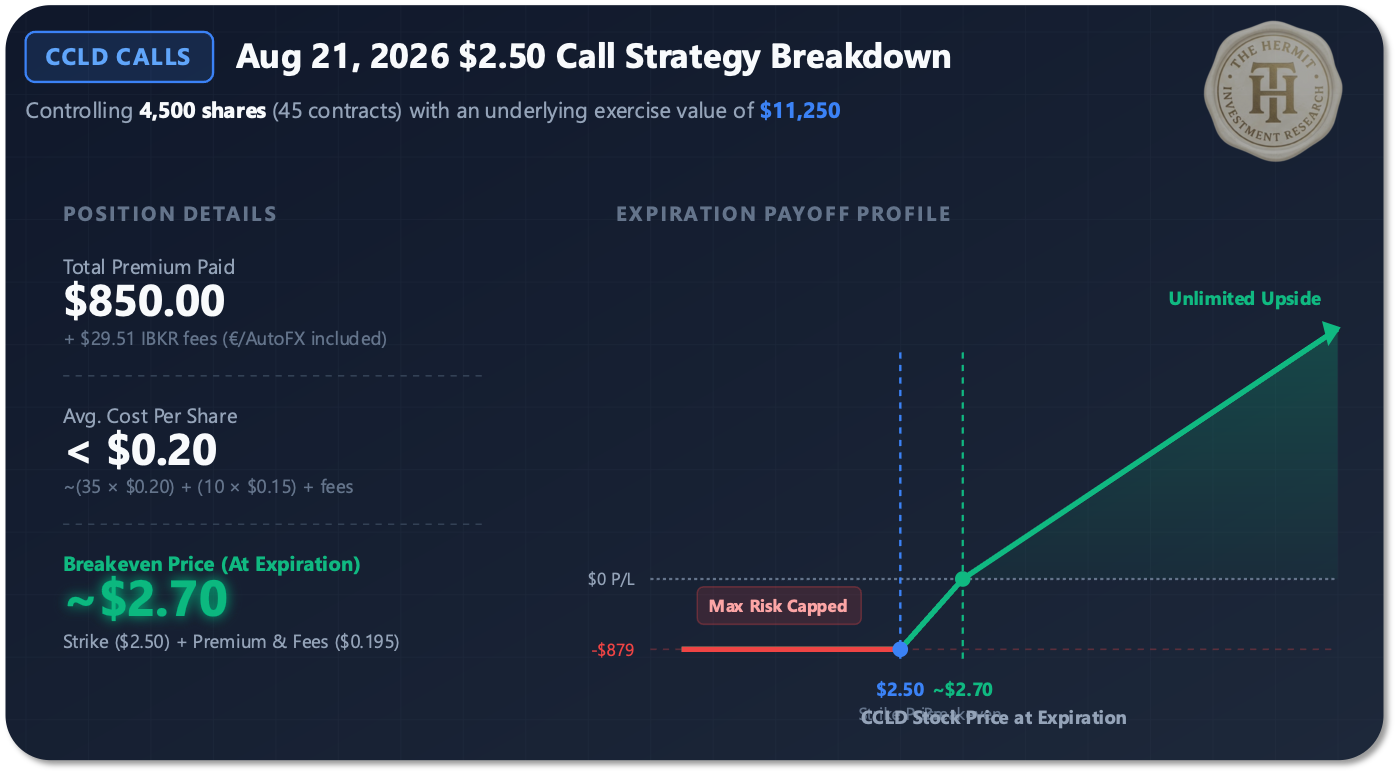
Carecloud is scheduled to release earnings tomorrow. So we’ll see how this plays out throughout the next few days.
We’ll update you via the comments and our members chat.

Next Steps
Please note that this one (CCLD) play represents a very small test position for us.
It could very well lead to a loss, but my brother’s theory is that with our standing informational advantage, over the course of a few earnings cycles, we should turn a steady profit.
We don’t necessarily reject the premise, but we’re keeping our guard up via sizing.
Again, how we’ll proceed with all of these is simple:
We will hold for a maximum of 1 week post-earnings, which should capture the bulk of the move.
We don’t actually plan to exercise these options. We’re purely playing the expansion in option price driven by the expected volatility boom… plus, hopefully, a rise in the underlying stock price.
So yeah… we’re testing it out. Serial optimizers at work, as always. We’ll be testing with at least 2 more of our companies in the next few weeks.
Since you’re probably used to muuuuch longer, heavy-duty texts from us, we’ll spare your attention span today and finish up a meme in Spanish for your enjoyment:


If you found value in this analysis, please hit the ❤️ button and share your thoughts in the comments. It helps us bring institutional-grade research to a wider audience.
And if you liked this post, we’re confident you’ll love this:
