


This is a comprehensive summary of a deep-dive write-up we are prepping. It will drop over the next few months.
We not-so-briefly introduced our quarterly update on Wednesday, so if you missed that, I highly recommend checking it out.
Don’t mind me, but I think we did a great job breaking down a massive wall of data into a digestible (audio) format, plus there’s a quick 5-minute written breakdown for anyone who just wants to skim the highlights.
Today’s business is one that pays a very handsome “fair share” to retain its tech talent, handing out a substantial $177m in stock-based compensation to keep its software engineers locked in.

Yet, despite that heavy equity package, the business is an absolute cash machine. It is printing sustainable FCF of $323m. With the market cap currently sitting right at $3.3bn, and backed by a fortress balance sheet holding $1.5bn in raw cash and net cash position of over $1bn.
That’s the math we loooove to see… 15%+ net cash-adjusted free cash flow yield.
On top of that, the capital allocation from the company is on point. The board authorized an $870m share repurchase program… roughly 26% of the entire market cap. They have already aggressively executed $554m in Q1 2026.
That buyback volume is more than 4.5x the dilution coming from the employee equity comp.
Throw in an exceptional return on invested capital crossing well over the 25% mark, and the operational excellence speaks volumes of what we’re looking at.
So…
Why is the market punishing this stock right now?
What is the business truly worth, and how are we playing it?
Let’s break it down.
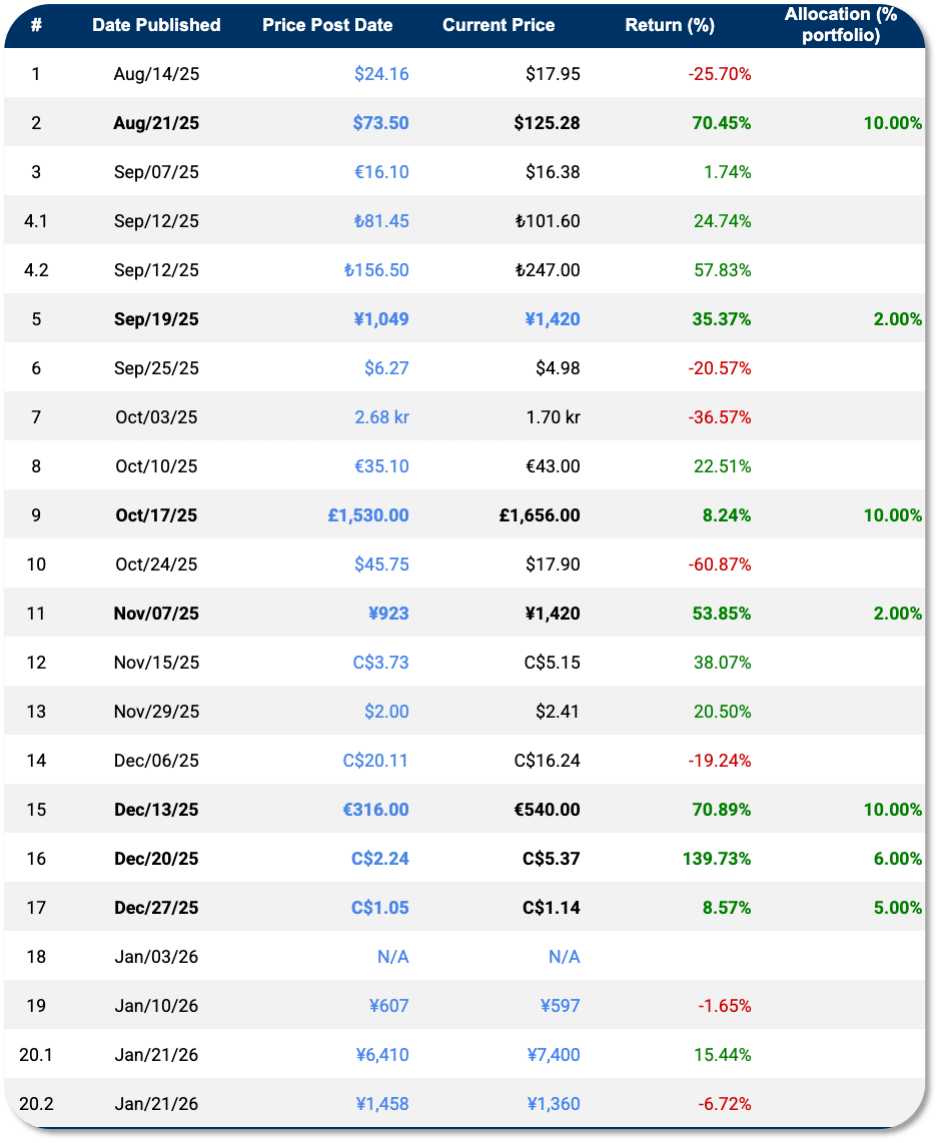
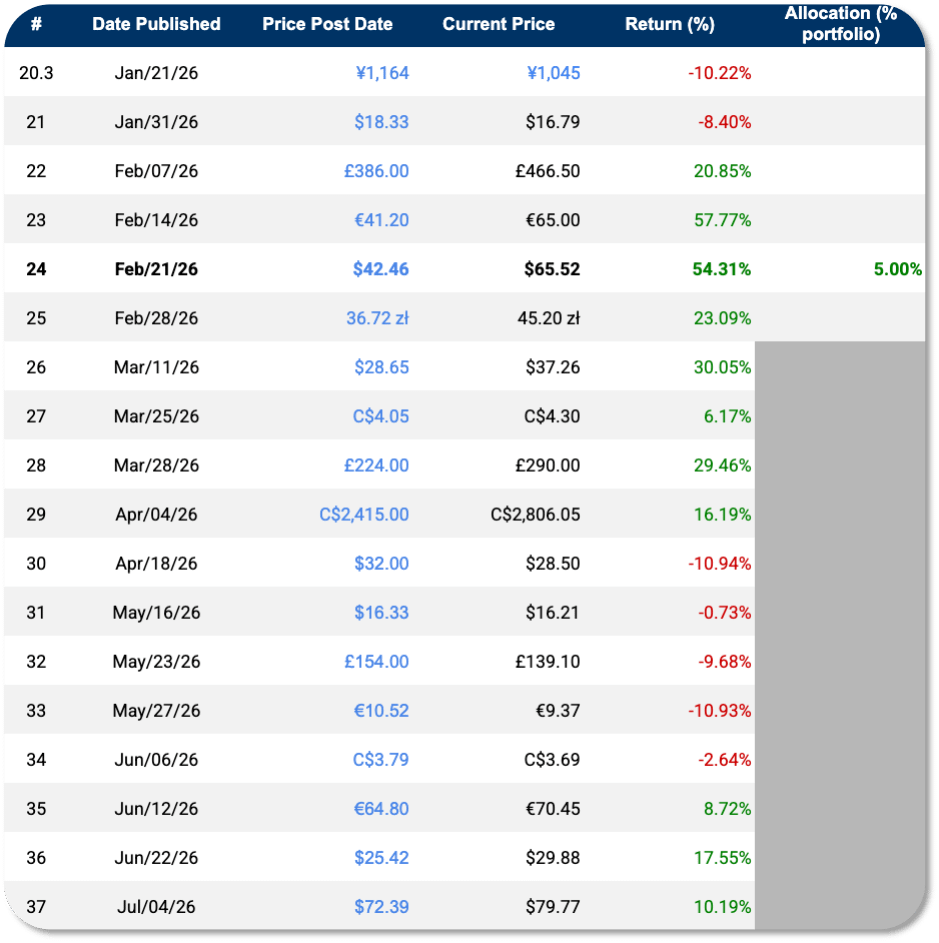
As we now do every week for transparency and to provide full value, here is our list of Pick of the Week posts and their returns since publishing:
Equally weighted picks: +15.83%
Fund-allocated picks: +35.34%
Quick notes before we move one:
1. Looking at our broader track record, you will also notice RedViolet (#24) listed on the board.
We have a deep institutional report ready for that one too, but out of fairness to our ongoing private capital raise (formally closes on July 31st), we are keeping it under wraps until the funding window officially locks.
I appreciate your patience on that front, but I can already tell you it’s amazing. Collecting prime data in an era of AI is literally shovels during a gold rush.
2. We also use the closing price of the previous day as our indicative price at the time of reporting. For this specific breakdown, we are using the July 1st price, as that is exactly when we disclosed it.

Pick of the Week. A curated series of high-conviction research on companies currently under our microscope. We screen for specific dislocations where the market has mispriced the balance sheet or earnings power.
None of the following should be construed as investment advice. Please consult a financial advisor before making any investment decision. You will find a full disclaimer at the end of this post.


📊 Monday.com Ltd. ($MNDY)
⭐ Overall Grade: 9.5 / 10
Founded in 2012 under the name daPulse, platformed in 2014 and then rebranded in 2017, monday.com is a customizable cloud operating system (“Work OS”) built on a highly flexible, schemaless database infrastructure called mondayDB.

At its core, monday.com is a little bit more than just a glorified task list, a spreadsheet, or an off-the-shelf project tracker.
Instead of locking teams into static, pre-packaged software layouts, it gives non-technical professionals a blank canvas of building blocks like columns, statuses, automation recipes, and application integrations.
Users can click and drag these pieces together to sculpt entirely bespoke software architectures that mirror how their specific business actually operates day-to-day, all without writing code.
Because of this structural open-endedness, the platform seamlessly warps to fit thousands of entirely unrelated industries.
A production manager in a heavy manufacturing plant can use monday.com to run raw supply chain logistics, while right down the street, a creative director uses the exact same platform base to manage a marketing video edit cycle.
And, over this foundational infrastructure, the company offers tailored vertical setups.
However, because all of these custom tools share a unified codebase, corporate departments can easily share mirror links, aggregate cross-board reporting dashboards, and deploy background automations instantly.
Ultimately, monday.com functions as the centralized operational system of record and custody layer for an enterprise. It replaces the fragmented mess of disconnected emails, rogue WhatsApp groups, and chaotic spreadsheets with a single, visually clear space where human workflows, system permissions, and history are governed.
It represents a flexible work database that naturally absorbs a company’s unique tribal habits and internal communication loops, embedding itself so deeply into the organization’s daily mechanics that extracting it becomes a major corporate headache.
If you want to understand all of its features, you should check this video out:
In a single sentence… monday.com is a highly profitable, founder-led global Work OS platform that orchestrates enterprise workflows through a flexible, multi-product codebase, providing a heavily insulated data custody layer that transforms the threat of AI into a compounding financial vector.

SaaS-Pocolypse and CAIR
Before we crack open each product line, and given how much we’re talking about this, we have to address the elephant in the room: the SaaS-Pocolypse narrative.
The market is violently de-rating these stocks based on a ridiculously simplistic fear. They all think corporate clients will just use LLMs to “vibe code” their own custom internal tools, or that agentic AI will kill seat-based software by letting one employee do the work of ten.
But that logic completely ignores how human beings and enterprise organizations actually adopt technology. Assaf Elovic (now Nebius) at monday.com and Harrison Chase at LangChain put out a brilliant framework called CAIR (Confidence in AI Results).
It looks like this:

When a raw AI agent commits a mistake in isolation, the denominator explodes. If an untethered agent hallucinates an action, deletes data, or emails a client the wrong quote, it causes chaos.
Let’s look at some examples: