Investment Thesis is our core series where we break down standout public companies so you understand exactly how they make money, where the risks lie, and why the opportunity exists long before the market agrees.
This content is intended for informational purposes only and should not be taken as investment advice. The author does not represent any third-party interest, and he may be a shareholder in the companies described in this series.
Please do your own research or consult with a professional advisor before making any financial decision. You will find a full disclaimer at the end of the post.
If you think organic food is just a bland, overpriced tax on people who do yoga, prepare to have your worldview completely dismantled. We are diving deep into Smart Organic ($SO), a European beast that scaled from a €20,000 shoestring startup into an international manufacturing powerhouse, all while being anchored by an owner-operator who literally locks himself in an office to meditate when tough business problems arise.
This deep dive covers everything: why taste always beats clinical logic in the grocery aisle, how they turned a string of distressed European acquisitions (like Germany’s Naughty Nuts and the UK’s LoveRaw) into a ruthless “buy-and-fix” playbook, and how they’re positioned for massive European expansion.
Expect raw ground-level factory and supermarket floor scuttlebutt, crunchy details on why their new mega-facility changes the game, and an unfiltered look at why their thin float is both a masterclass in asymmetric value and an absolute logistical headache.
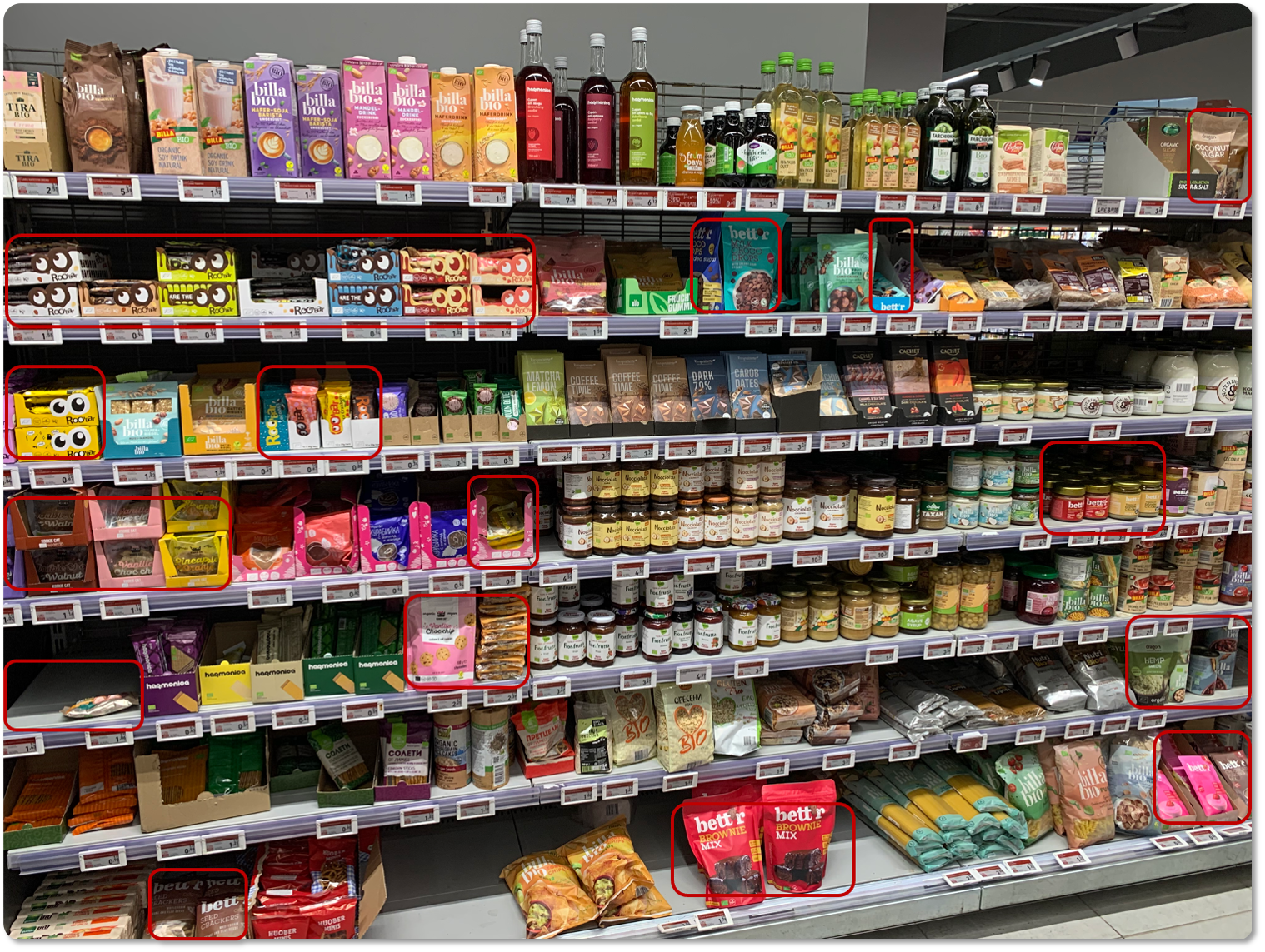
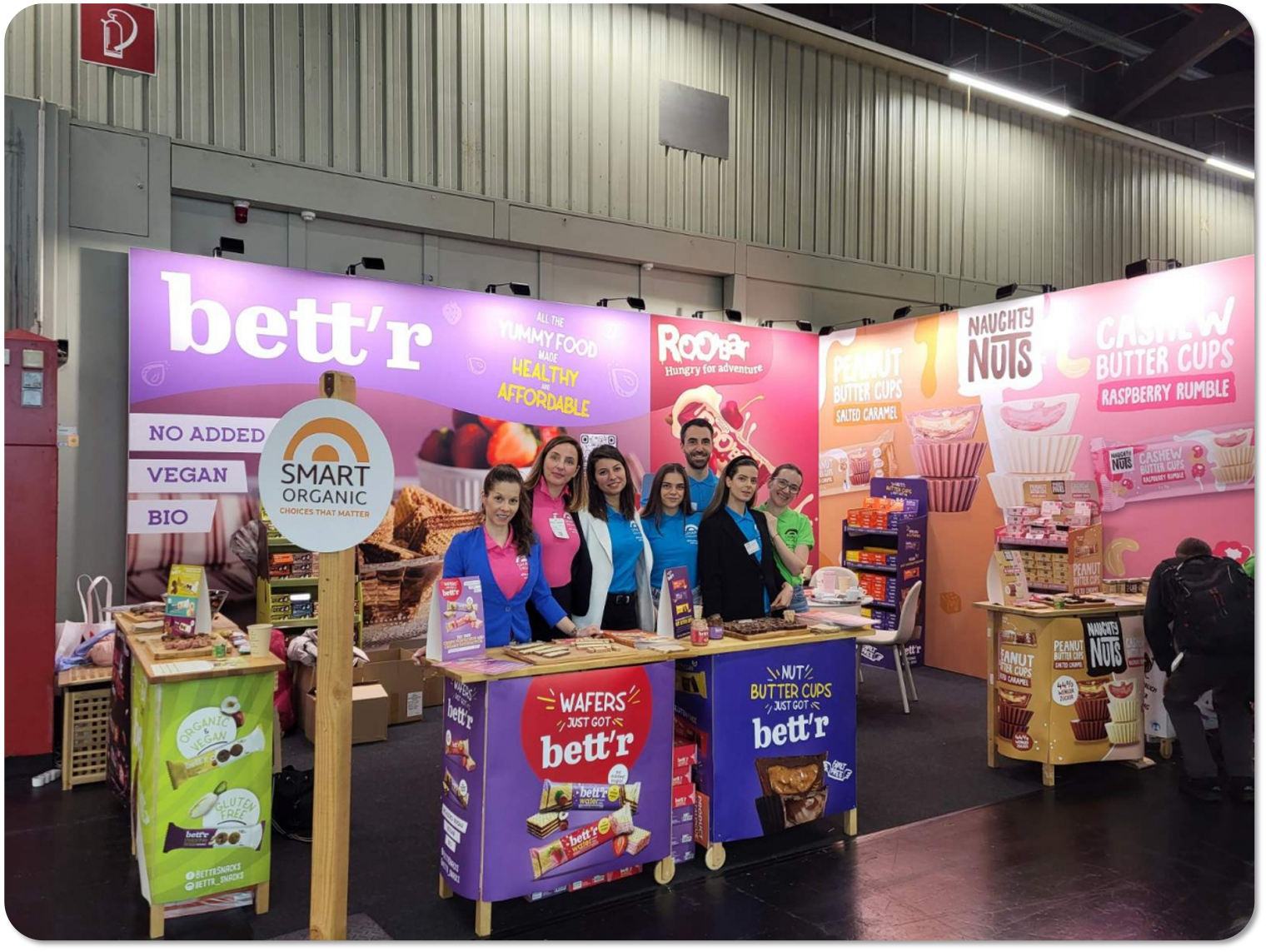
A quick snap from our local Billa: almost every organic highlight on this shelf comes from Smart Organic. That’s what top-of-mind actually looks like
Important warning here.
Do not read this, especially the product section, if you’re hungry.
We can guarantee that the main item causing delays for us was the number of times editing this piece caused pretty intense cravings.
You have been warned.
This write-up includes takes and opinions from various stakeholders. We conducted 8 interviews and visited several facilities, gathering first-party data in the process to better understand how the business actually operates.
A lot of this information was heavily guarded, and we’re not surprised given the excellent results they’ve collected, especially in the last decade.
The most impactful conversation was with Yani Dragov, founder and CEO of Smart Organic, which helped us unpack past product selection, capital allocation, and capex-related decisions, while giving us a clear view of where the company is headed.
With this owner-operator holding an 80.76% stake (55.45% directly and 25.31% through a wholly owned holding) this is a fantastic example of skin in the game.
In many ways, it strongly mirrors how one of our past holdings, Limes Schloss Clinics, was set up for success.
If you’ve followed our research for a while, you know we typically focus on two archetypes of leadership: those who decentralize operations entirely, and detail-obsessed operators who manage every moving part of the machine.
Smart Organic is undeniably the latter.
🌱 Origin Story
In 2009, at just 28 years old and armed with a modest starting capital of €20,000, Yani Dragov laid the foundation for what would become one of Europe’s most formidable organic food success stories.
Yani Dragov on a Forbes-led cover
Armed with a dual background in finance and investment management, having studied in Germany and worked as an asset manager, Dragov did not set out to build a typical consumer products company.
Driven by a personal commitment to a sustainable, vegetarian, and health-conscious lifestyle (routines that traditionally begin with early morning meditation and mindfulness), his vision was anchored by a deceptively simple core paradox in the global food market:
9 out of 10 people express a desire to eat healthily, yet intent consistently fails to translate into action.
The niche was theirs for the taking.
Historically, clean-label, organic food carried an elite, sometimes prohibitive price tag and a reputation for uninspired taste, crippled by low producer scale, outsourced manufacturing, and inefficient supply chains.
Dragov’s foundational thesis was built on solving this exact friction point: to make all yummy high-demand food genuinely healthy, completely uncompromised, and universally affordable.
From Scrappy Trading to Mega Mergers
Note: We will discuss all of these in great detail below (and everything will be linked and referenced), but we want you to both get used to the names and get a sense of how the company has developed chronologically from a single shop to mainstream large-scale production.
Smart Organic’s growth trajectory reflects an uncompromising operator’s playbook characterized by three distinct chapters:
(2009–2011) The enterprise officially began as a specialized organic retail venture in Sofia (Zelen Bio), giving management immediate, grassroots insight into consumer behavior, product gaps, and daily retail friction.
Rather than opting to remain a localized storefront operator, Dragov quickly realized that true leverage required moving upstream into bulk trading and primary distribution.
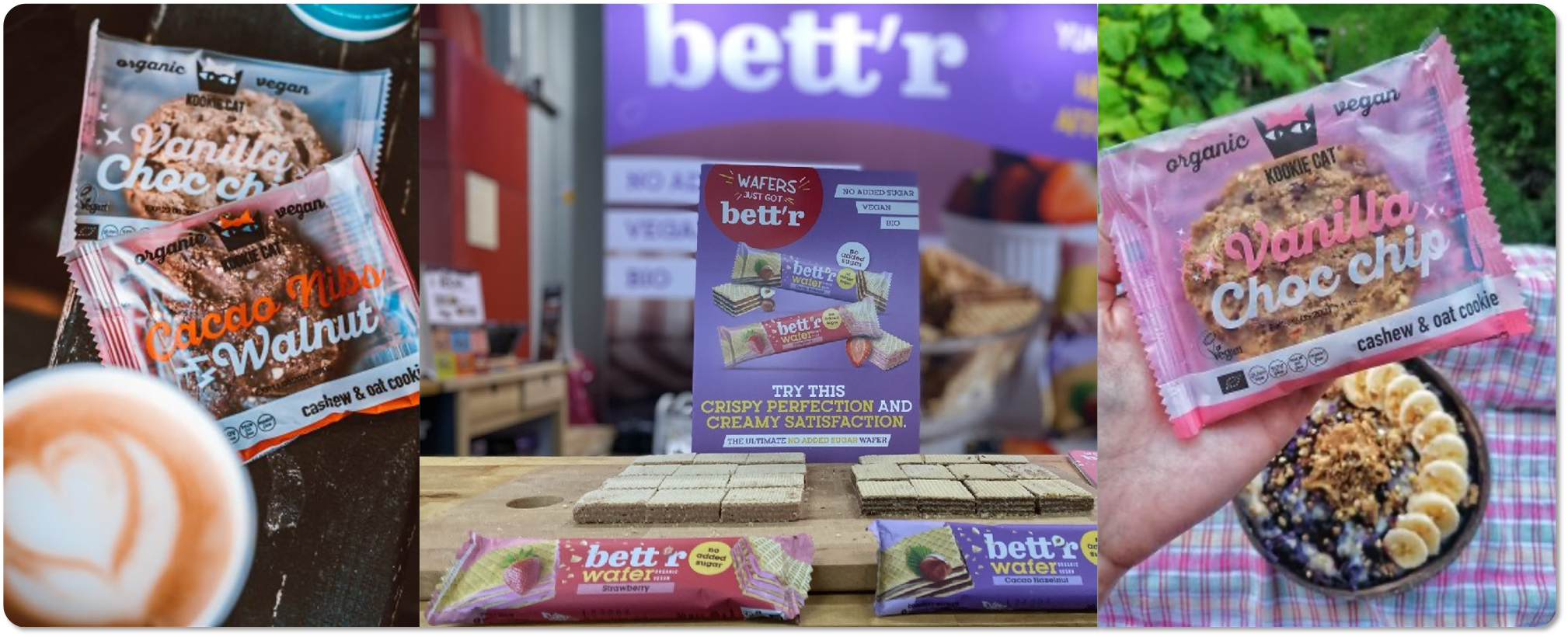
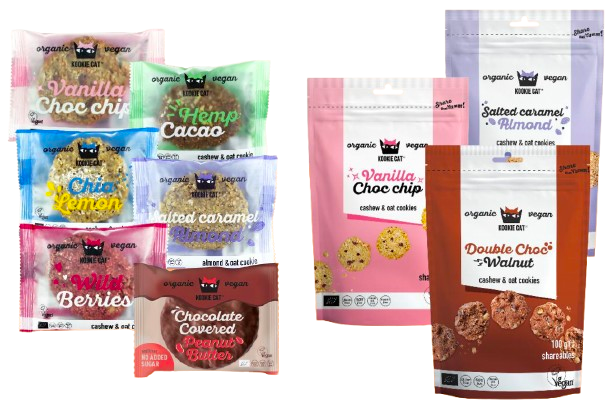
(2012–2018) Shifting focus toward production, the group began creating its own category-defining brands. This era marked the birth of global mainstays like Roobar (raw organic bars), Dragon Superfoods (functional powders and superfoods), Kookie Cat, and Bett’r.
Instead of relying on third-party co-packers, the team internalized manufacturing to control unit economics from day one.
(2021–Present) To fund aggressive capacity expansion, Smart Organic made history on the Bulgarian Stock Exchange. After successfully executing an IPO on the BEAM growth market in late 2021, the company scaled its manufacturing footprint.
This has culminated in the state-of-the-art mega-facility in Bozhurishte.
In 2024, Smart Organic achieved a historic milestone for the Sofia bourse by successfully transitioning from the SME growth tier straight onto the Main Market (Standard Segment), cementing its status as a mature, institutional-grade European food operator.
We’ll see how this story ends, but so far, this rhymes with a zero-to-hero archetype.
🌐 Industry Overview and Competitive Landscape
Unlike most of our other write-ups, traditional comparative metrics don't tell you much here.
The sector is wildly fragmented, packed with hidden shadow producers and dark-kitchen operators fulfilling unlisted white-label orders for single supermarket chains.
On the one hand, outsourcing is everywhere, making surface-level data deeply misleading.
Ranging from razor-thin margins, commoditized, undifferentiated, and tasteless food to brand-centric “Italian” delicatessens, quality control mismanagement, and uninnovative portfolios.
On the other hand, major specialist corporations have nailed production and distribution for decades and now seem to pop up everywhere but have yet to master the healthy side of the equation.
Smart Organic operates in a fragmented European organic and health-food landscape.
Because the company straddles both proprietary brand manufacturing and large-scale B2B white-label production for supermarket chains, its competitive set spans several categories:
Legacy Mega Corporation
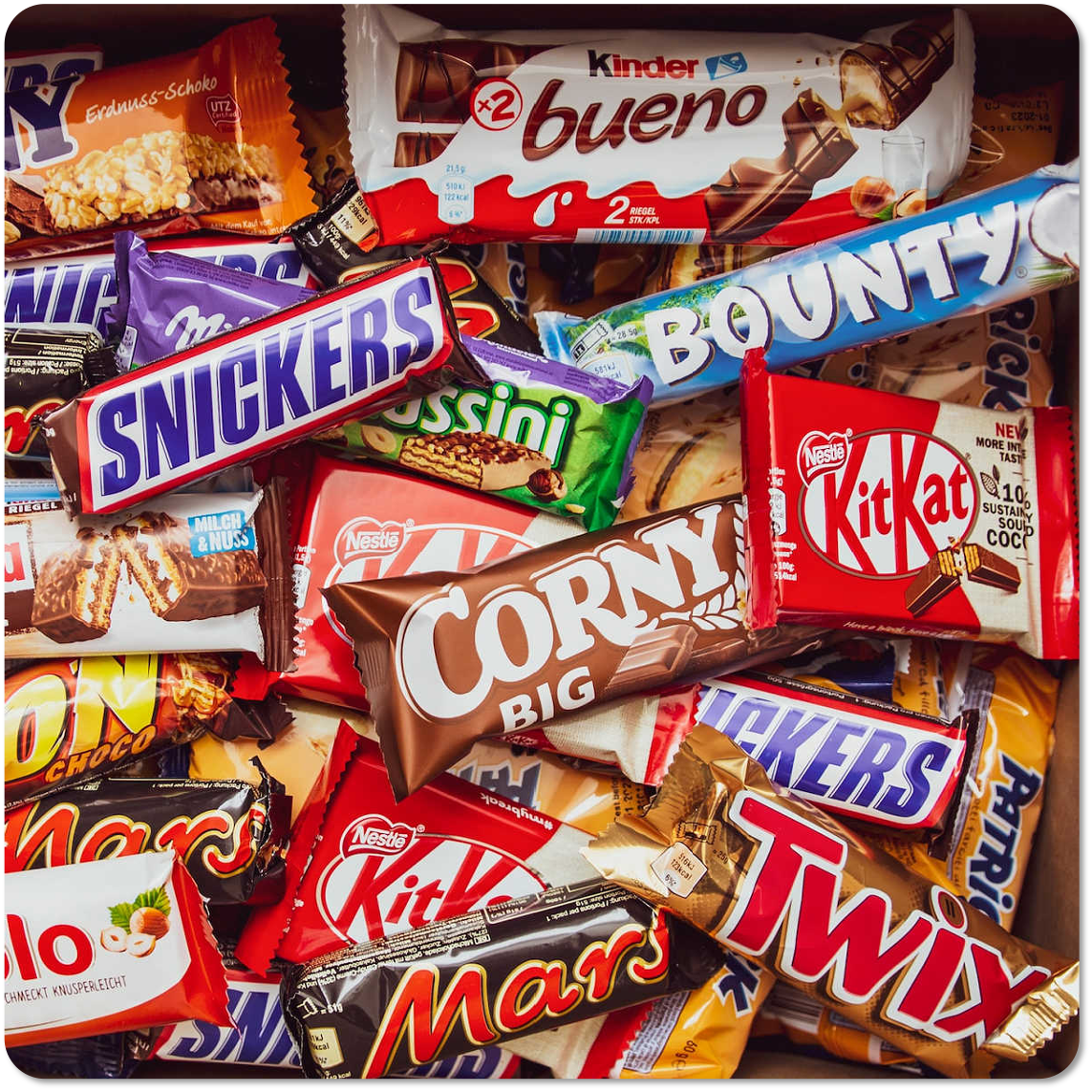
Multinational legacy FMCG (Fast-Moving Consumer Goods) titans like Mars, Inc. and Ferrero Group do not typically challenge Smart Organic by launching organic startups from scratch; instead, they buy into the “better-for-you” space through balance-sheet scale, acquiring high-profile challenger brands and plugging them into their global supply chains and retail relationships.
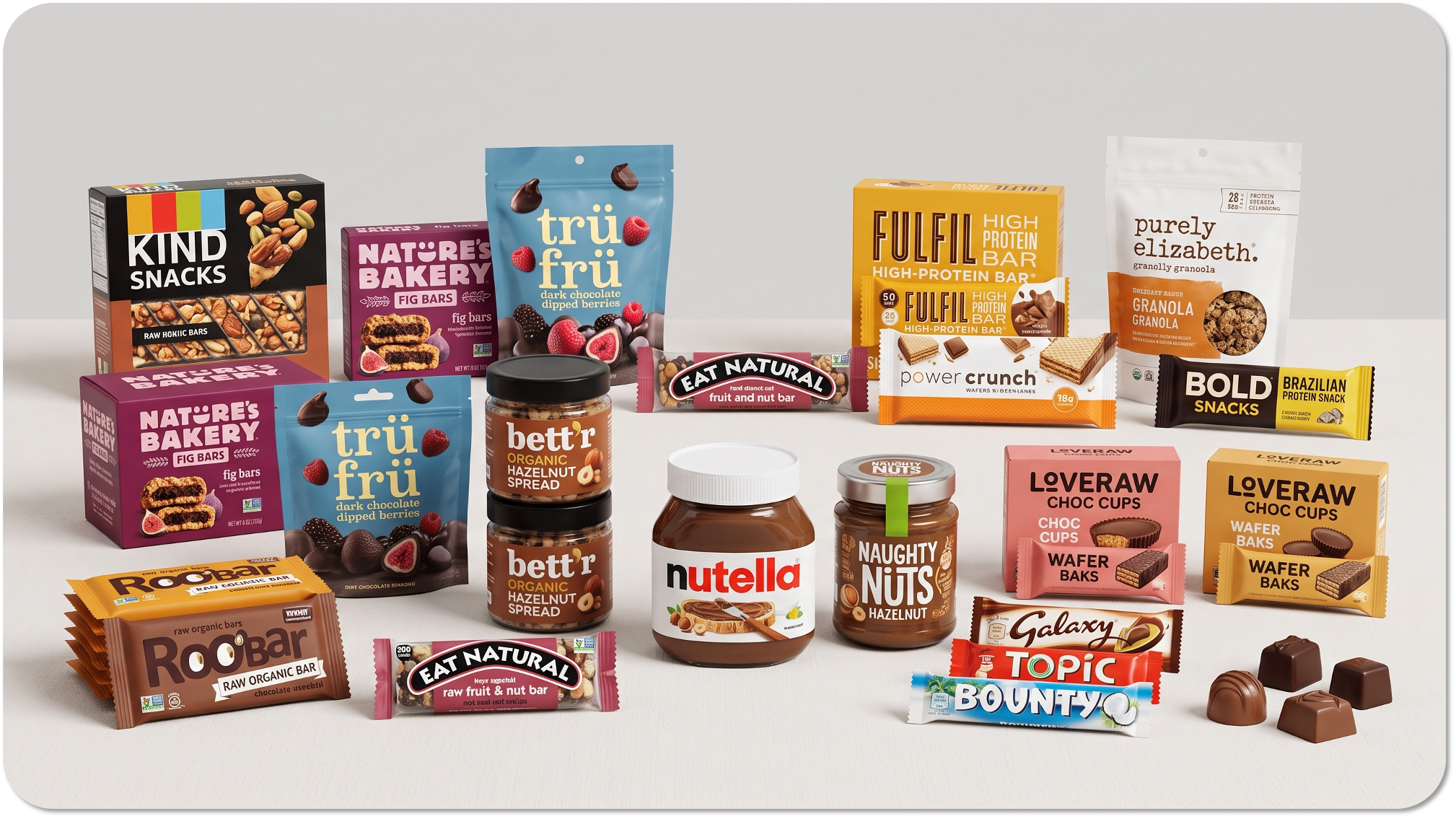
Mars has assembled a healthy-snacking platform anchored by KIND Snacks (marketed as BE-KIND in continental Europe), Nature’s Bakery (soft-baked, whole-grain fig and fruit bars), and Trü Frü (real freeze-dried and frozen fruit dipped in dark and milk chocolate).
Ferrero has mirrored this pivot by moving beyond pure confectionery to build an active-nutrition and wholesome snacking arm, acquiring UK-based raw fruit-and-nut bar maker Eat Natural, European high-protein bar specialist FULFIL, North American high-protein wafer company Power Crunch, and more recently, clean-label granola and functional breakfast maker Purely Elizabeth and Brazilian protein snack producer Bold Snacks.
In the spreads and indulgent treats segment, the clash is philosophical and nutritional.
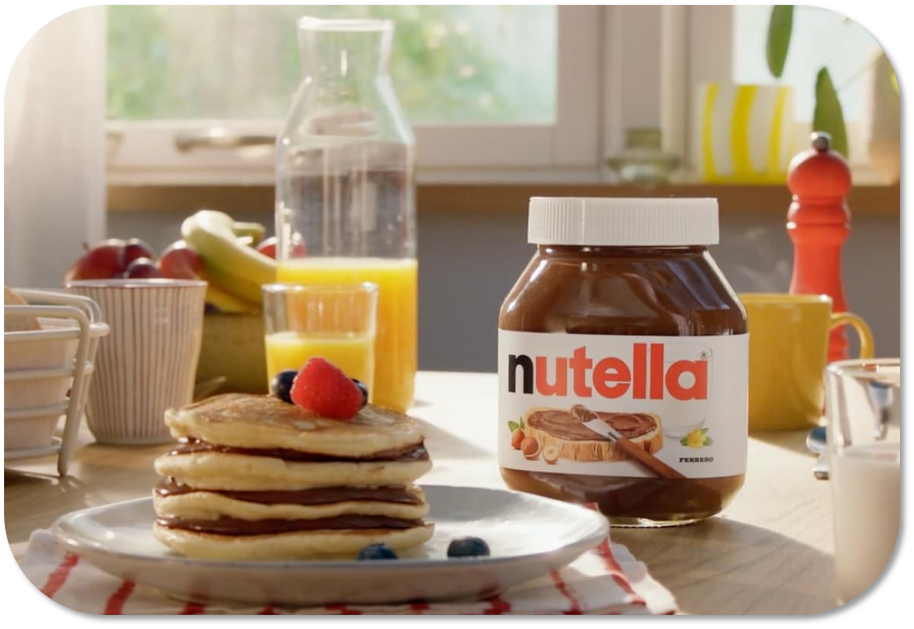
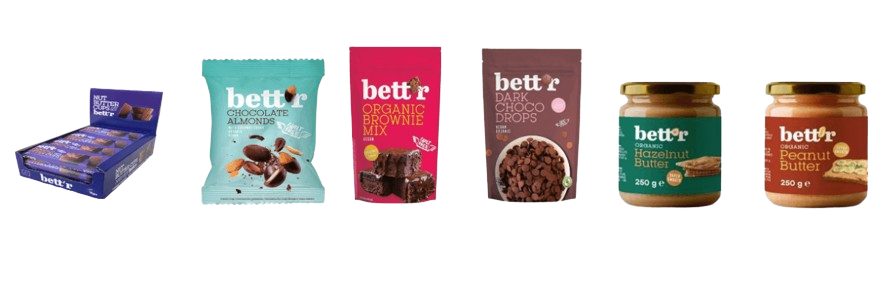
Ferrero’s Nutella remains the entrenched global king of sweet spreads, commanding unmatched brand equity and mass-market volume through a recipe driven by refined sugar and palm oil. Smart Organic’s organic nut-butter brand Naughty Nuts and Bett’r organic hazelnut spreads deliberately formulate around this legacy vulnerability by offering low-sugar, palm-oil-free, and clean-label alternatives (sweetened with coconut nectar or dates) that target consumers fleeing ultra-processed foods.
Similarly, in the vegan confectionery aisle, Mars’s plant-based extensions of iconic candy (such as vegan Galaxy, Topic, and Bounty bars in the UK) and Ferrero’s plant-based Nutella variants compete directly for mainstream vegan chocolate market share against Smart Organic’s acquired LoveRaw wafer bars and choc cups.
Where the competitive dynamic shifts fundamentally in Smart Organic’s favor is agility, pricing architecture, and manufacturing flexibility.
Megacorporations rely on long planning cycles, massive minimum-batch runs, and often high-cost outsourced co-packers for their niche acquisitions. Smart Organic operates as an agile, vertically integrated manufacturer controlling high-throughput, automated production hubs in Sofia and Bozhurishte.
While Mars and Ferrero charge a steep corporate markup on KIND or Eat Natural to cover massive overhead, Smart Organic uses its low Bulgarian conversion costs to price clean-label, bio-certified products at accessible price points while sustaining ~25% operating margins.
Note that, unlike these giants, Smart Organic captures upside that the legacy giants ignore (or don’t want to compete in): partnering with European grocers (Lidl, Aldi, dm) to formulate custom private-label organic bars and spreads that directly undercut the legacy giants’ shelf presence.
Major European and Branded Competitors
In the physical grocery store, the primary battlefield is retail shelf-space allocation and premium placement across Tier-1 supermarket chains (REWE, EDEKA, Tesco, Sainsbury’s, Carrefour, and Billa) as well as the checkout lane.
Mars’s BE-KIND and Ferrero’s Eat Natural and FULFIL sit squarely in the premium on-the-go snack bar aisle, competing directly against Smart Organic’s flagship raw and functional bar lines like Roobar and Bett’r.
Ferrero and Mars possess enormous slotting-fee budgets, multi-brand volume rebates, and trade-marketing leverage that allow them to secure eye-level positioning and exclusive end-cap displays. Smart Organic, by contrast, must defend its space through higher inventory turnover per square meter, clean organic certifications, and lower supply friction.
Large multinational consumer goods conglomerates and specialized regional manufacturers also produce competing organic snacks, plant-based foods, and superfoods distributed across major European retail chains. The ones that SO has a competing bid on (production) include REWE, Aldi, Lidl, anddm.
Regional Organic Brands
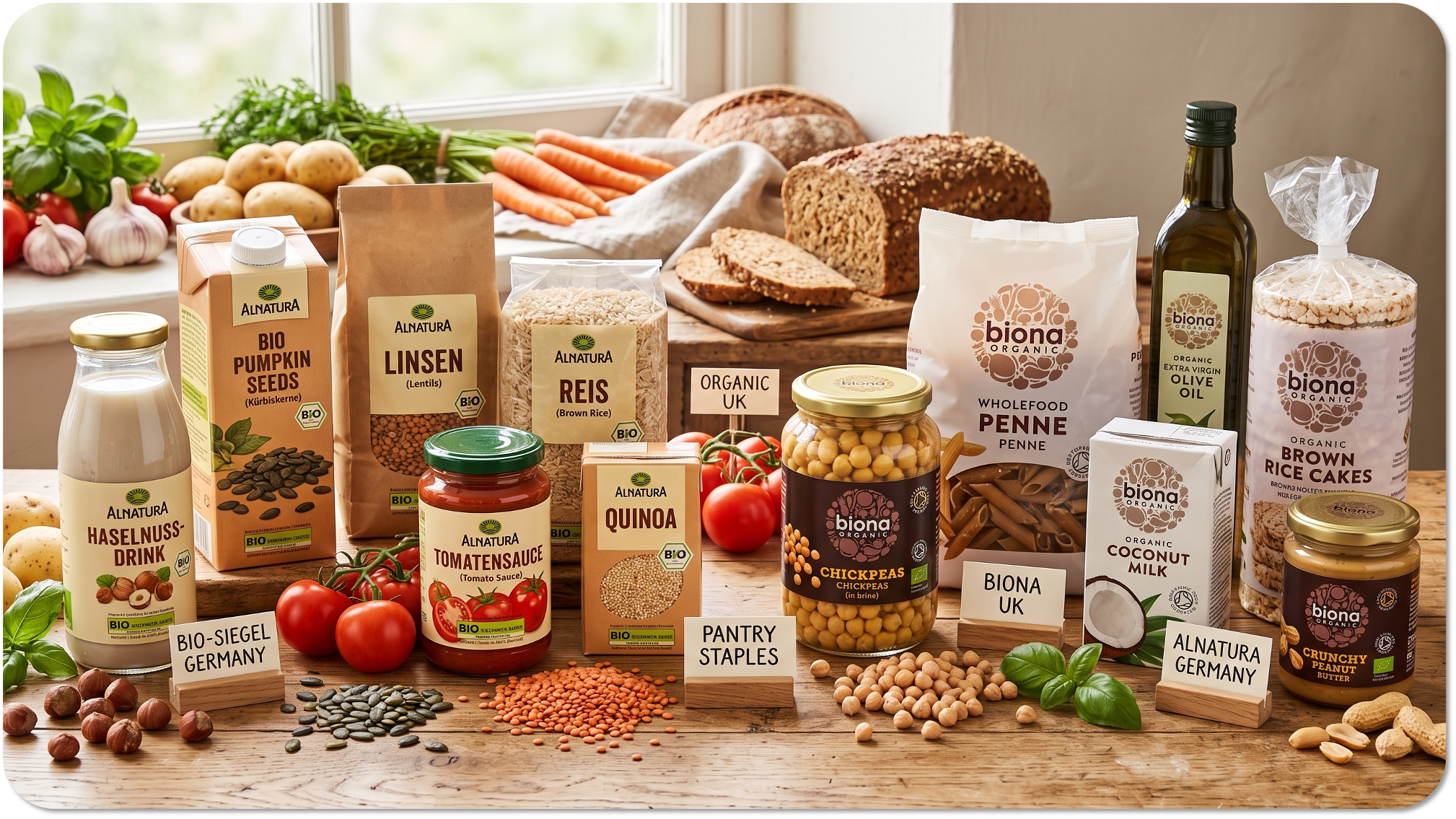
To really understand where Smart Organic sits in Europe, you have to look at heritage heavyweights like Alnatura in Germany and Biona in the UK.
These are the original pioneers that put organic food on the map decades ago, but they built their empires around the traditional “general store” pantry. Walk down their aisles, and you’ll find walls of organic canned beans, brown rice, grains, passata, and cooking oils.
While that stuff sells consistently, it has slowly drifted into a low-margin commodity trap where everyone is cutting prices and customer loyalty is paper-thin.
For better or for worse, Yani Dragov saw this trap early on.
Smart Organic deliberately keeps its pantry staples to a minimum, using them mostly as legacy anchors or foot-in-the-door items, while pouring almost all of its R&D and capital into high-velocity, impulse-driven snacking… things like Roobar, Bett’r cups, and Naughty Nuts spreads, where taste and formulation actually give you pricing power.
The even bigger difference is how the food actually gets made.
Alnatura and Biona are essentially master brand curators and distributors rather than factory owners. They design recipes, run strict quality checks, and slap their famous logos on the packaging, but they outsource the heavy lifting to a vast web of third-party co-packers across Western Europe.
That setup works fine when the economy is cruising, but the moment cocoa or hazelnut prices go berserk, those co-packers pass every single cent of pain down to the brand, squeezing margins dry.
Smart Organic takes the exact opposite approach by owning the entire factory floor. When they bought broken, cash-strapped brands like Germany’s Naughty Nuts or the UK’s LoveRaw, they didn’t just redesign the wrappers; they ripped manufacturing away from expensive German and British co-packers and dropped it straight into their automated mega-hubs in Bulgaria.
That single operational shift wiped out middleman fees overnight and restored healthy gross margins.
Let’s not discount the power of volume. While Alnatura and Biona treat their brand names like sacred ground and largely avoid making products for other people, Smart Organic plays both sides of the retail counter.
They happily balance their factory output 50/50 between their own proprietary brands and custom, high-end private label runs for supermarket giants.
Because these aren’t boring commodity grains but complex chocolate-enrobed bars and nut butter cups, Smart Organic can pull roughly 25% operating margins across both sides of the house.
Producing at scale also safeguards margins so they stay the same regardless of the market cycle.
Their own brands capture long-term retail pricing power and street cred, while private label deals keep the automated machinery in Bozhurishte running at full blast with zero marketing spend.
Supermarket In-House Private Labels
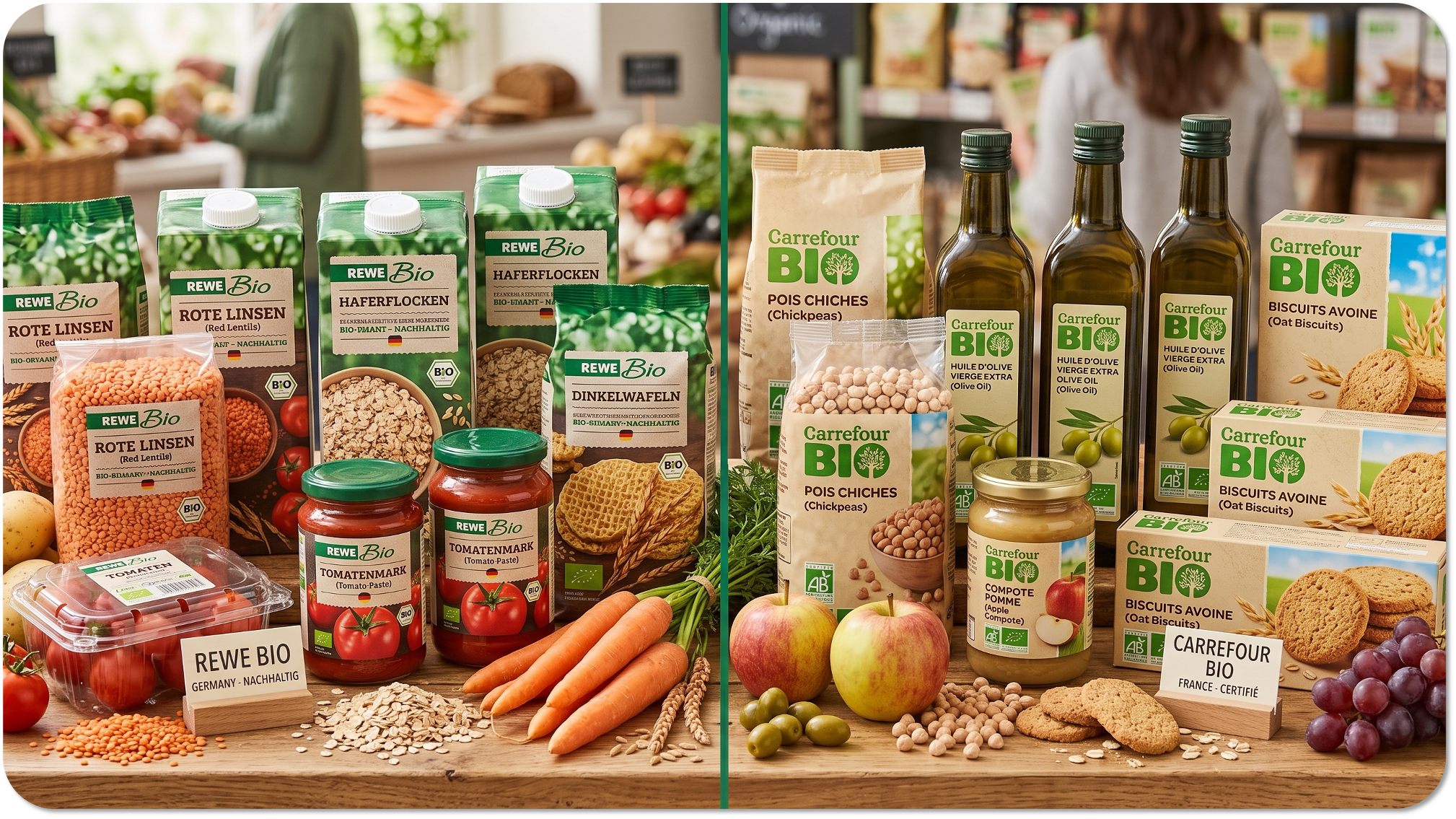
To come full circle, you also have major retail giants (such as REWE Bio and Carrefour Bio) that have developed their own organic lines.
These compete directly with Smart Organic’s custom white-label projects, although Smart Organic simultaneously acts as a supplier to many of these same grocers.
These brands usually rely on specialized, dark-kitchen-style suppliers for distinct product groups, meaning snack suppliers are typically not the same as olive oil or tomato sauce suppliers.
To be perfectly honest, rather than pure competitors, these present a massive expansion opportunity for SO, as much of their success is driven by acquired taste.
If they can start supplying (e.g.) Carrefour with their snack bars, they will wedge their way into controlling and expanding across several Mediterranean markets.
That opens the door to easier M&A in those regions and smoother distribution, especially given how long-term relationships with these retail giants directly influence pricing and shelf-space negotiations.
🧩 Business Model
Smart Organic operates as a vertically integrated producer and distributor of certified organic, vegan, and clean-label snacks and superfoods. Their base premise is, paraphrased…
“you can be both healthy and tasty”
Rather than acting purely as a co-packer or brand marketer, the company controls the entire value chain from direct origin sourcing to manufacturing and distribution, mainly B2B but also partly B2C.
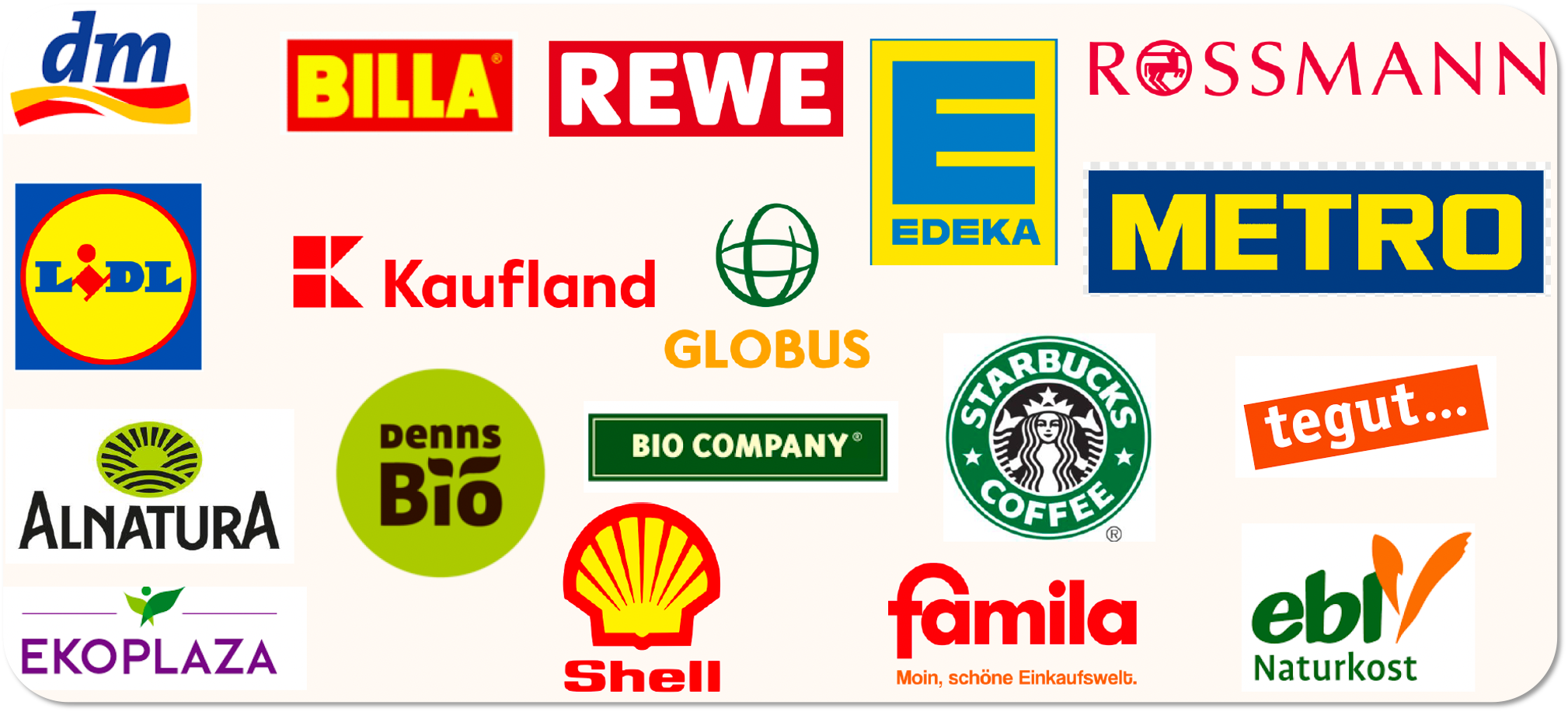
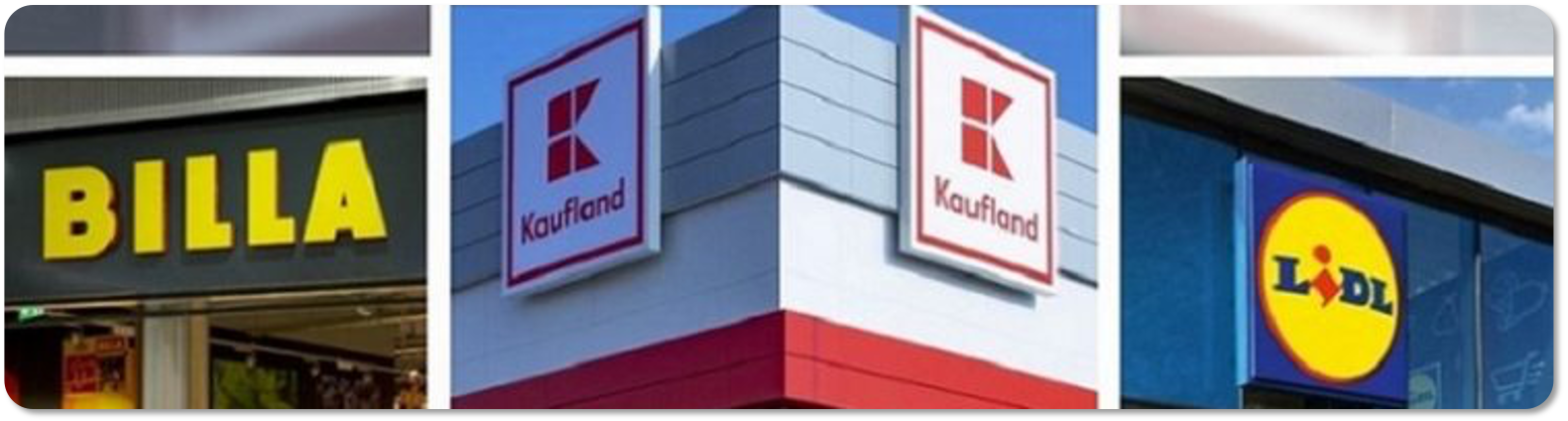
All of these are current clients of Smart Organic (August 2026)
We believe the TL;DR of this business case can be summarized in four major points.
Firstly, Smart Organic purchases raw commodities (nuts, cocoa, coconut, superfood powders) directly from farming cooperatives and producers across 30+ countries.
Raw materials cost roughly half of total sales value every year. Improving and maintaining these relationships together with smart purchases and hedging practices (direct and indirect), explain most (if not all) long-term margin variations.
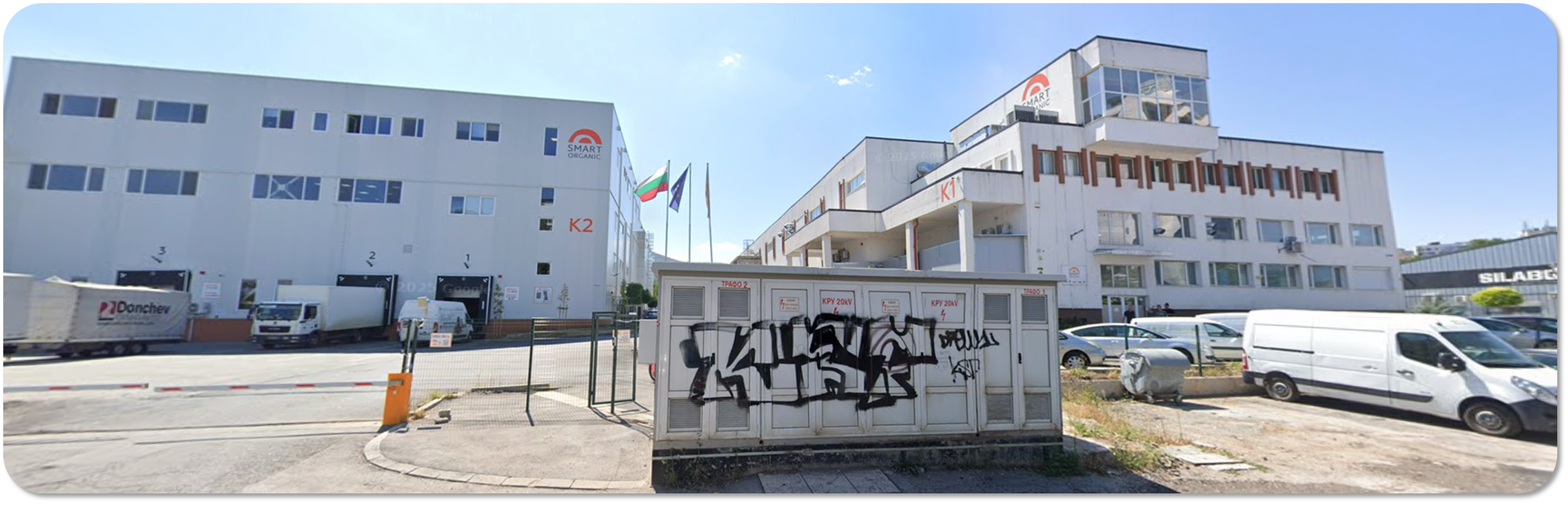
Secondly, production takes place across their owned and operated facilities, including the main Sofia hubs and the 6,000 m2 Bozhurishte mega-facility.
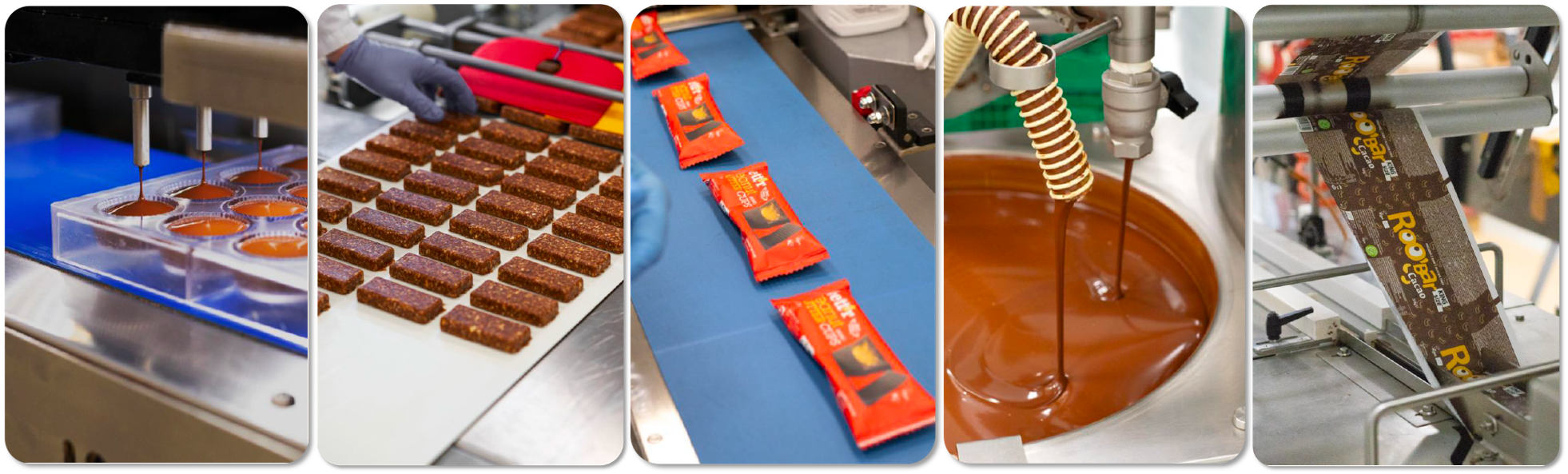
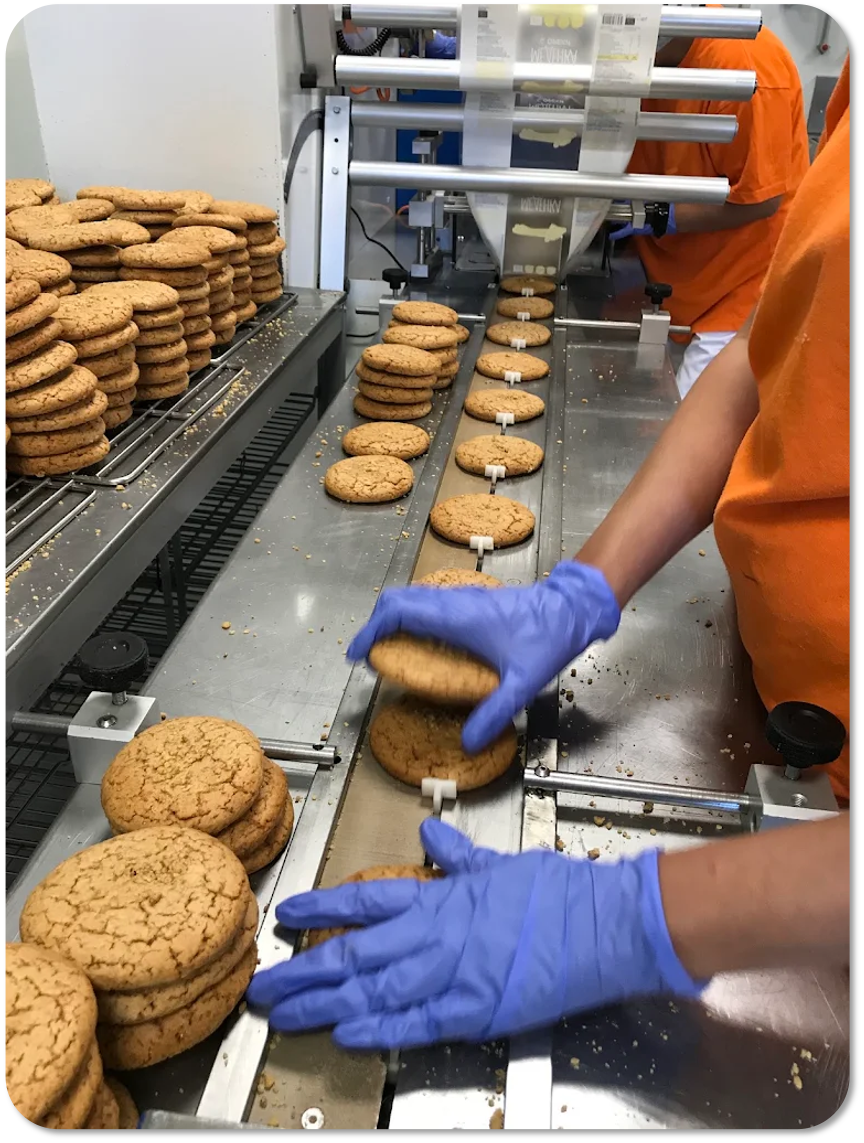
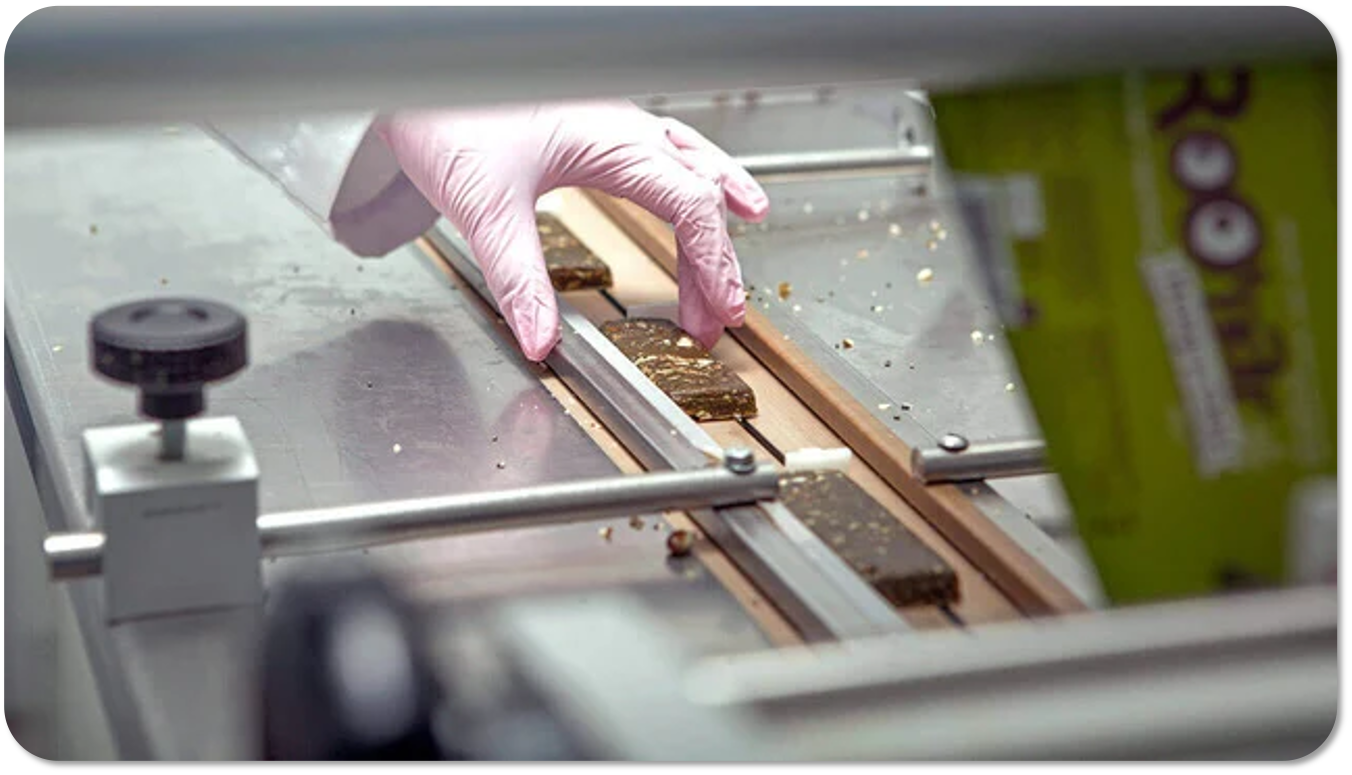
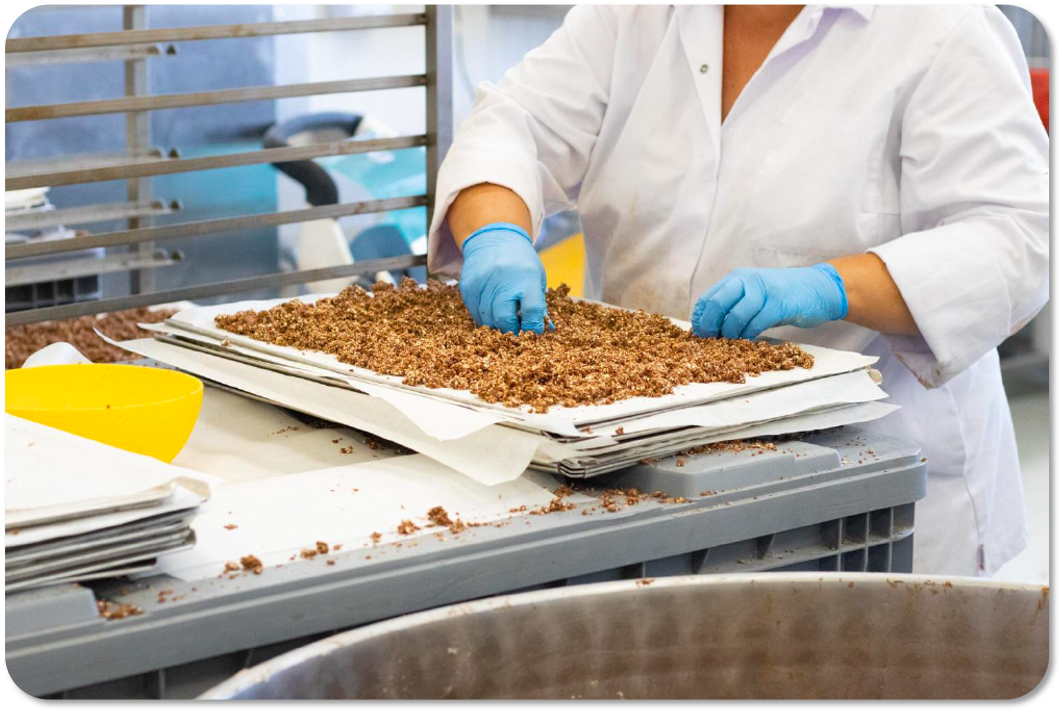
The setup handles high-throughput automated lines for chocolate-enrobed bars, nut butter cups, wafers, cookies, spreads, and functional powders. Controlling all variables at this stage of production ensures quality and consistency.
Thirdly, revenue is split relatively evenly between their own brands (Roobar, Bett’r, Kookie Cat, Dragon Superfoods) and custom non-commodity private-label projects for major supermarket chains.
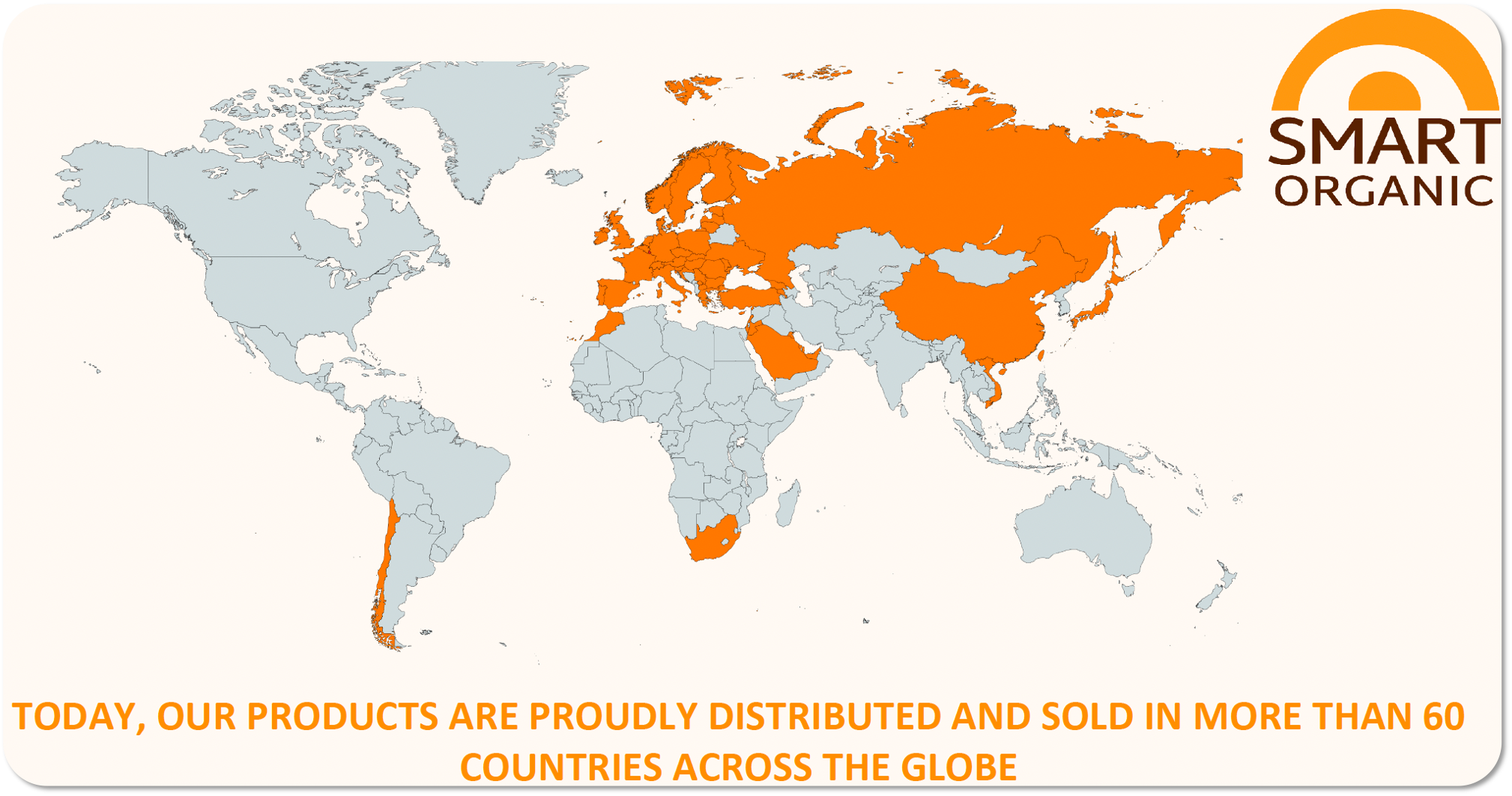
Lastly, roughly 70% of production is exported to over 60 countries, anchored by DACH (Germany, Austria, Switzerland), the UK, and Romania.
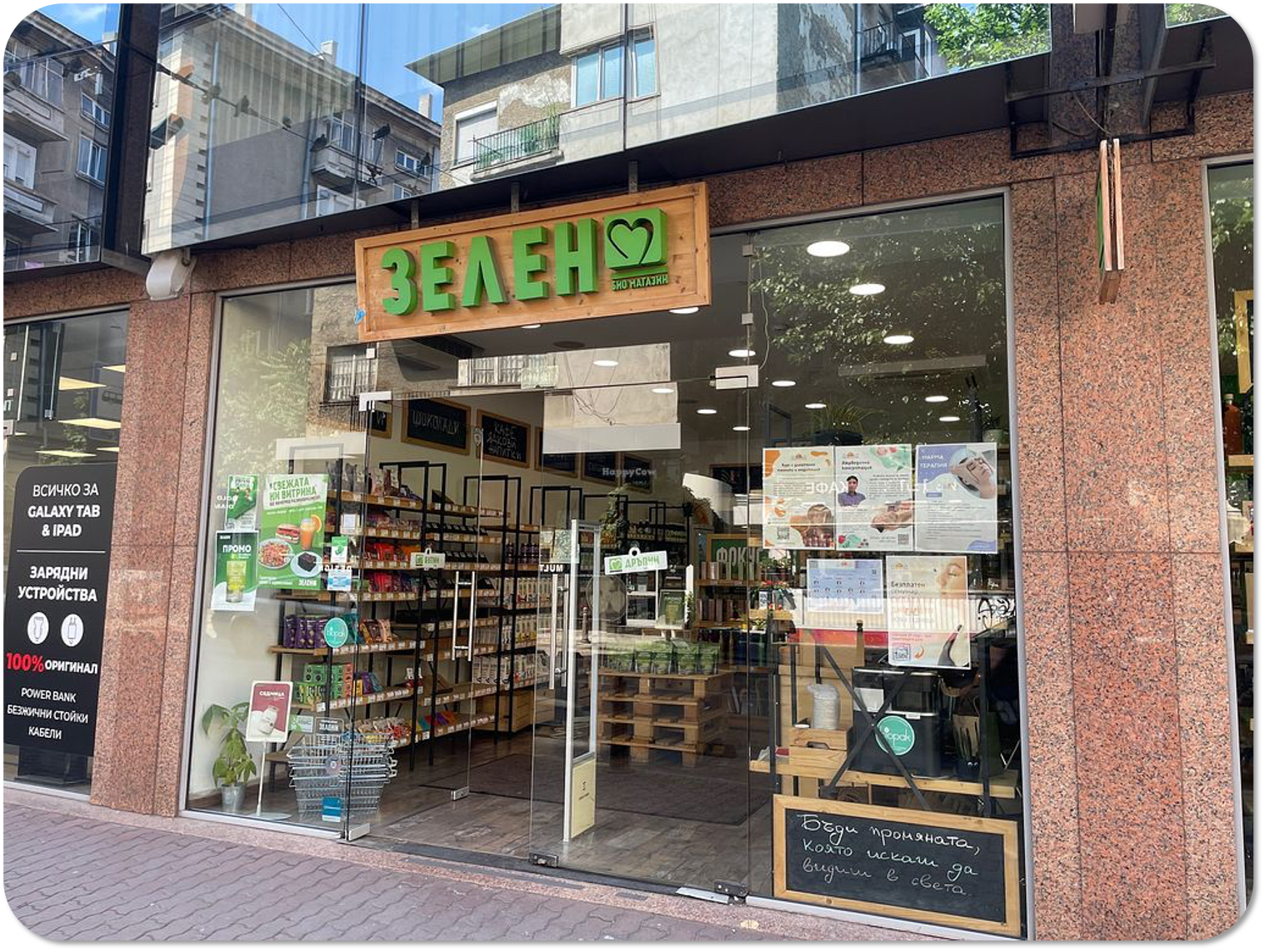
In Bulgaria, the group operates its own retail and e-commerce chain (Zelen Bio / ЗЕЛЕН), which doubles as an immediate R&D test center.
If you understand these four concepts, you understand what the company does.
Products. What Does Smart Organic Actually Sell?
This may not be an exhaustive list, as the company is constantly testing, discarding, and improving products.
However, we’ve done our best at providing you with the main products and subcategories that Smart Organic produces under their different brands. Custom or white-label products are, at times, harder to identify.
Organic Snack Bars
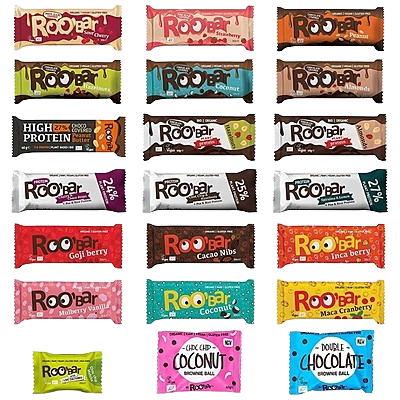
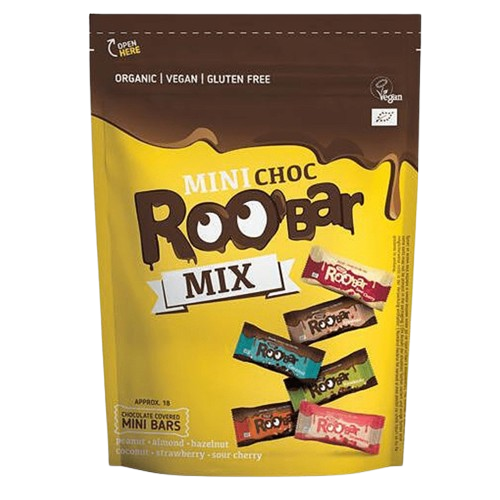
Their most recognizable product and definitely the most widely distributed across Bulgaria has to be Roobar.
These are mostly bars, but they come in different shapes and sizes, made from clean ingredients like dates, nuts, and superfood powders. Again, they usually lean on the fact that it’s high protein or just has a few calories.
Spreads, Nut Butters and Cookies
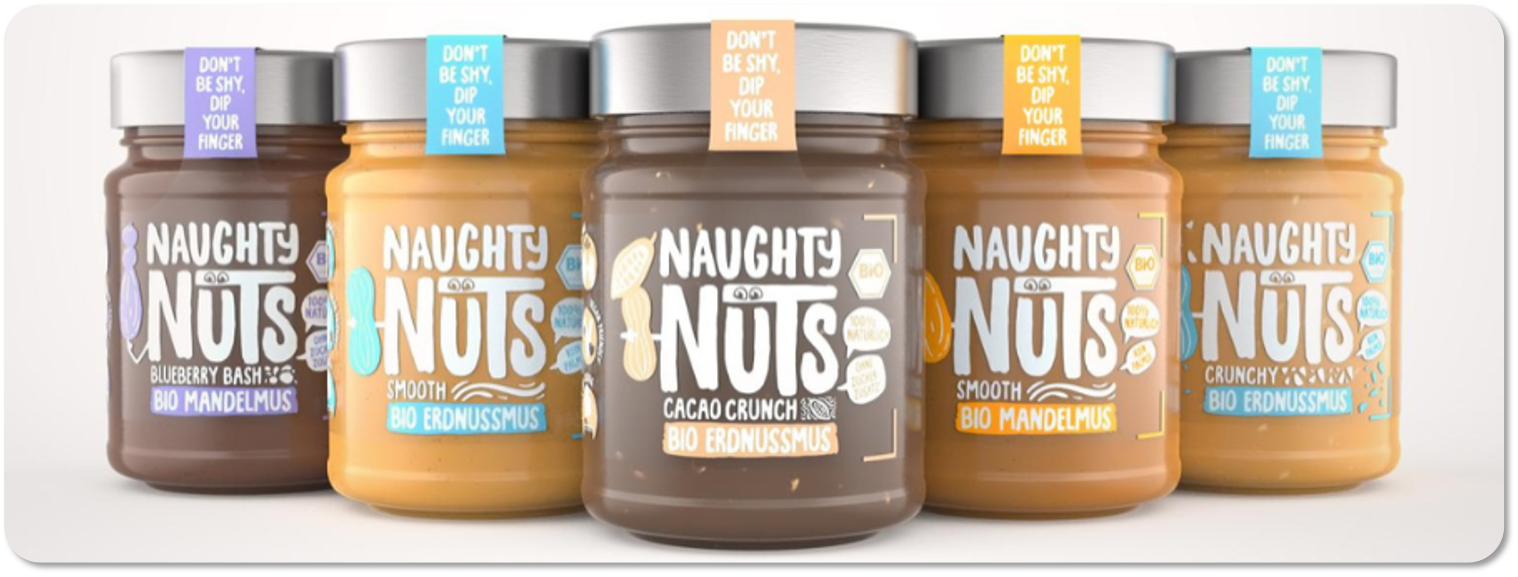
High-growth, low-sugar spreads and nut butter cups (such as Naughty Nuts), designed as healthier alternatives to legacy confectionery spreads by radically cutting sugar content.
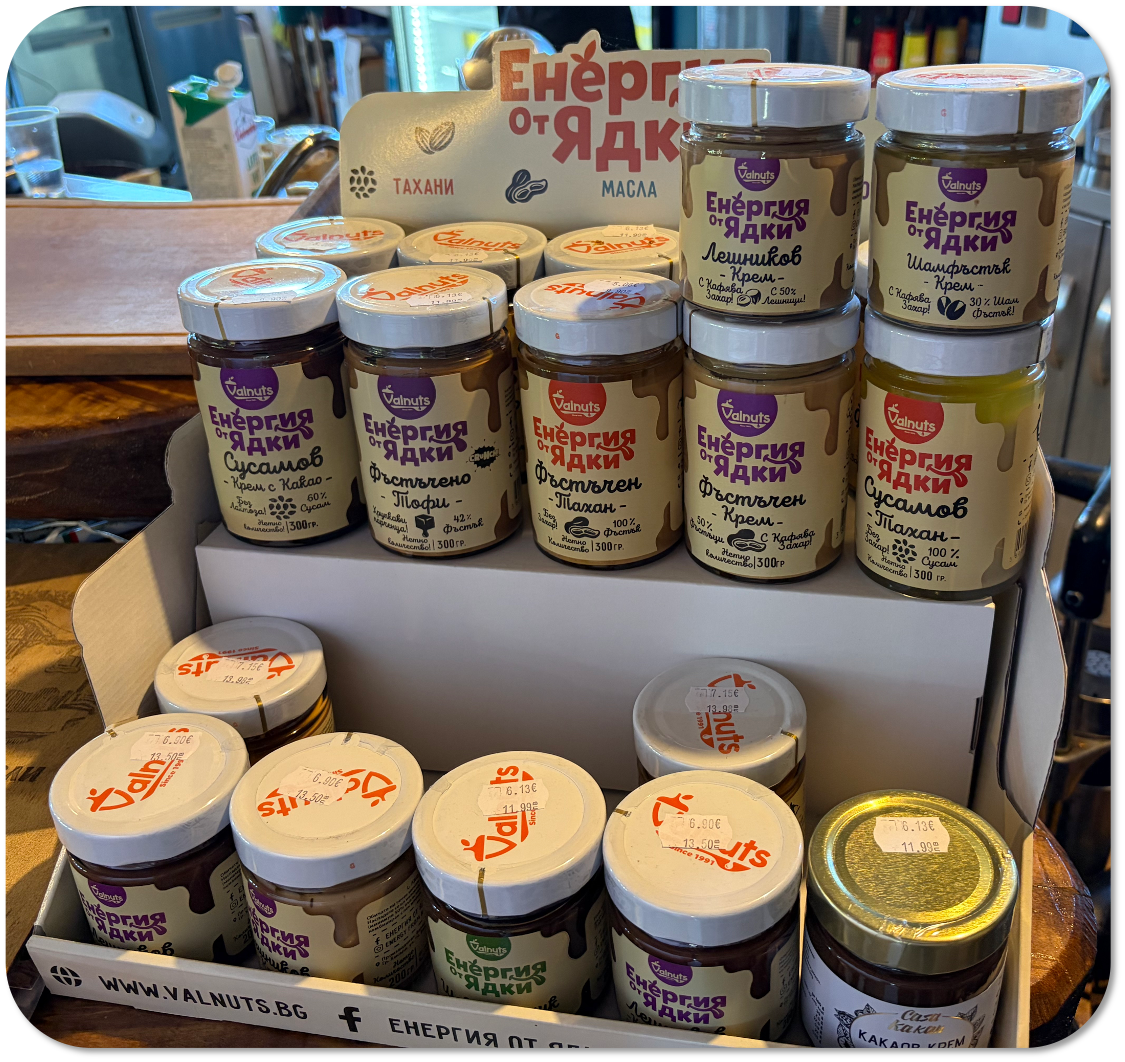
We are personally hyper (addicted) users of these spreads, and the only one we’ve come across that can compete in the taste arena is a super niche company called Valnuts.
They commercialize their spread via their subbrand Енергия от Ядки / Energy from Nuts, and it’s freaking delicious, albeit not as healthy.
Their brand Kookie Cat should also be included here.
Confectionery and Baked Goods
Probably their most health-conscious brand is better, which is most famous for the protein pancakes. These are freaking delicious and fall under the Better brand.
This section has more than a few organic chocolates, wafers, and bite-sized treats manufactured mostly with automated lines at their modern Bulgarian facilities.
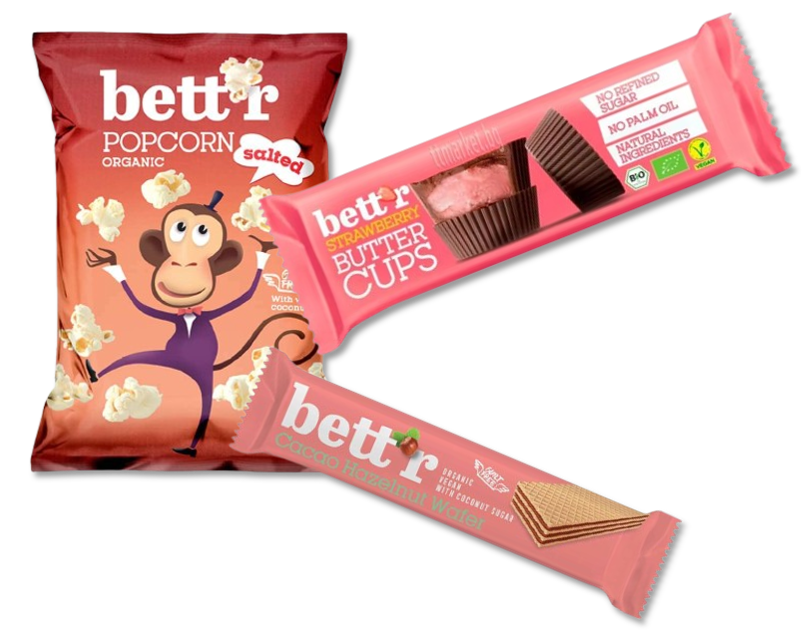
They also have instant soup, hummus and potato puree. It’s also likely their most experimental segment… healthy popcorn and all.
Superfoods and Powders
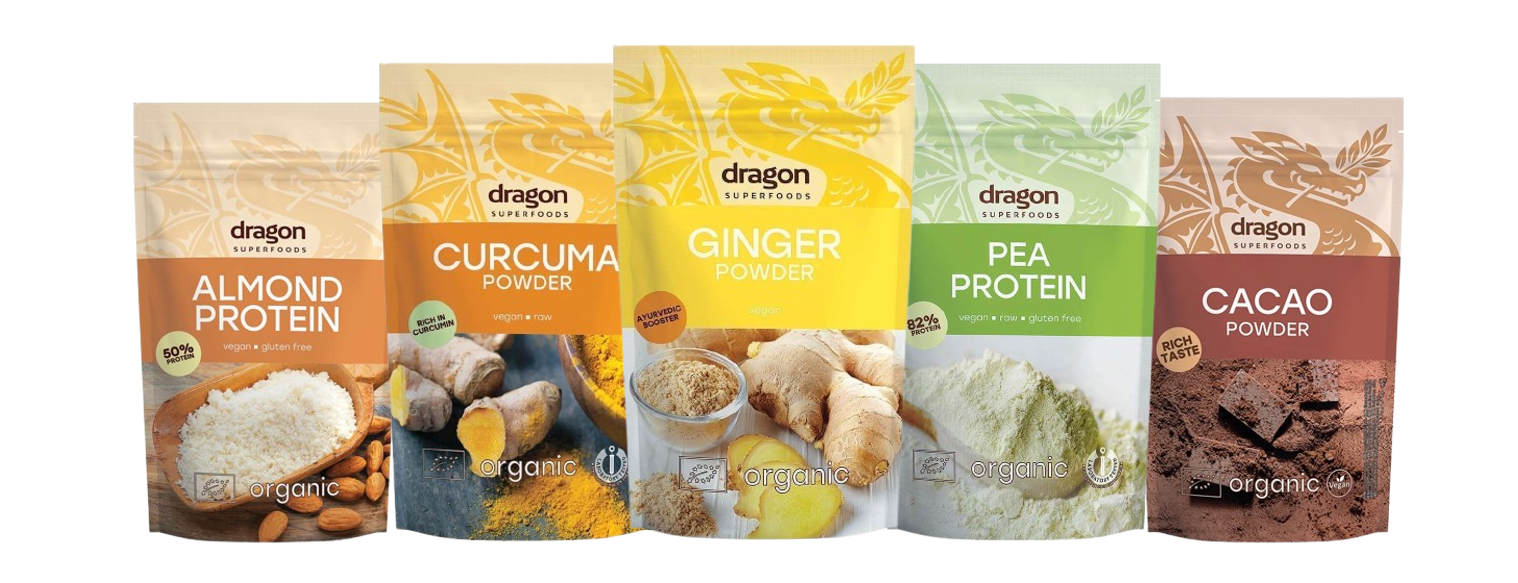
These are mostly branded under one of their longest-running subbrands, Dragon Superfoods, and they come in easy-to-use packs that usually last a few weeks.
To be perfectly honest, these are the ones we’ve tested the least, but we can guarantee you they are ever-present throughout small and large stores across the major supermarket chains in the country.
Cold-Pressed Beverages
These are mostly a new inclusion from a recent acquisition, and they account for a tiny part of revenue.
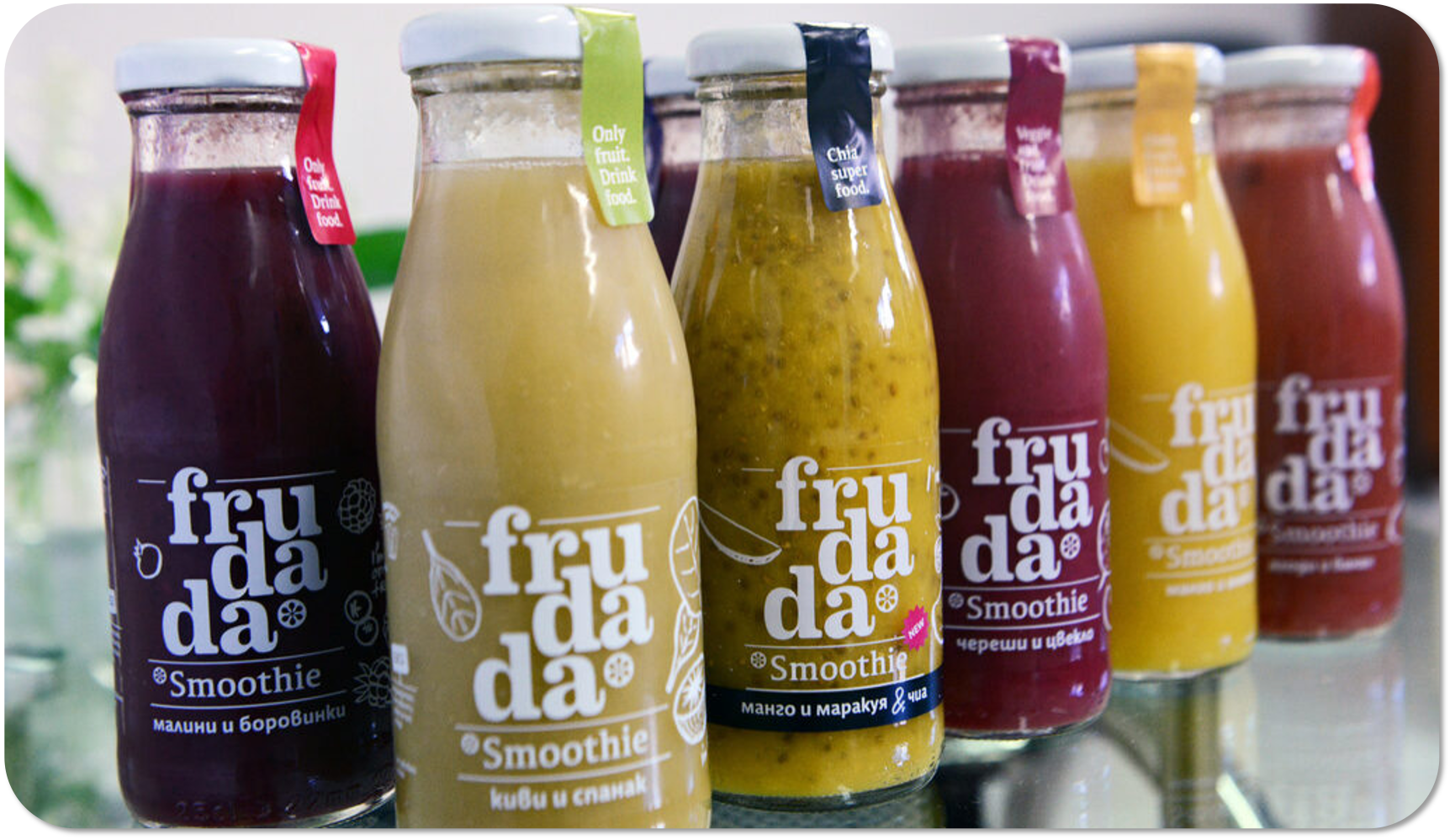
Fresh, organic cold-pressed juices and smoothies (under the Frudada / Santulita brand) serve as a specialized, non-dry-shelf complement to their main portfolio.
From their entire portfolio, this is probably the first product we came across via a local Kaufland and our personal favorite in terms of taste.
Again, the key to all of these is differentiation in both health and taste; more on this in the next section. Both contribute to stretching the products as far away from the commodity category as possible.
And this leads to acquired tastes by the population, which provides the company with both a moat and pricing power over what should be a commodity with near-zero margins.
Management is quite conscious about this.
Q: How would you categorize your brand? Would you say it’s on the one that you have like super commodity and on the other hand you have like super premium? Where would you place your brands and what are you looking to see that develop like into the future?
Yani: Yes, so how much do you know about our portfolio?
Q: Well, I think I’ve tested most of it out. (Wink) I mean, I ate all the avaible product. I don’t know so much about the white label stuff because I haven’t identified everything, but definitely have eaten most bars and protein-related products.
Yani: Yeah, so we have the snacking. So snacking is the biggest part of our business. Snacking like bars, cookies, cups, these products and they are far away from commodity.
The closest to commodity would be organic lentils and organic rice, these kind of things. It’s a part of our business.
(But I ) would say much bigger part is the more added value and we’re also focusing on that. We want to sell more and more bigger added value products. This is our future.
This commodity, don’t believe in that. I have friends in Germany who have this (type of) company just packing organic commodities and just the margins, they just earn the same type of package, if at all. So risky, they never have money to grow and pay the invoices. It’s big struggle.
So we want to go as far as possible away from this. And we’re doing it. We have very few products which are close to that. We only started in Bulgaria because we have been doing it originally, so we keep doing that. But we don’t expand this range. We don’t grow in that.
Taste vs. Health (Core Philosophy)
Early lessons proved that consumers do not make food choices based purely on clinical logic.
Taste remains the number one driver.
Consequently, Smart Organic’s core expertise lies in formulating products that combine strict clean-label/health parameters with mainstream taste appeal.
Q: Well, that was exactly my question. But if you had to prioritize one, would you go for the healthy or would you go for the tasty? Would you rather have tasty but unhealthy?
Yanni: I got your point. This is exactly why we’re both at the same time.
This is our core expertise to make it healthy AND tasty. We’re working on combining both. In the past we’ve been focusing on healthy. Our early years, we realized this is not going to work. People are not, I mean, they’re just not… logic, don’t take logical decisions; they just take decisions based on taste. This is the first thing.
So, like you saw in our presentation that I sent you, taste is the number one factor when people choose food. So we prioritize taste.
I mean, taste is very important, but we don’t sacrifice healthy; we don’t sacrifice using harmful ingredients or something that doesn’t fit in our values. This we don’t do. We just keep working in the lab until we find a tasty enough product with all the clean-level characteristics.
Mainstream confectionery brands often rely heavily on cheap inputs like refined sugar and palm oil (e.g., legacy hazelnut spreads containing ~56g sugar per 100g).
Smart Organic prices its premium, low-sugar alternatives (sweetened with erythritol, dates, or coconut blossom nectar) at an affordable markup over mass-market brands while drastically undercutting legacy specialty health-food store pricing.
This is only possible thanks to their initial jump in a lower cost country like Bulgaria back in 2009, and nowadays it’s sustained through their economies of scale.
To be perfectly honest, it is a challenge to start from scratch today, especially with the inclusion in the Euro which provides a great position for Yani and his team. Starting early and having scale are effectively a moat.
Pricing Power. Value-Add Cost-Plus
Even though we haven’t been able to find accurate and reliable measures of their market share, multiple sources affirm that the company (combining private label and white label) sells the majority of products in their category within Bulgarian borders.
Because Smart Organic is the dominant organic market leader in Bulgaria by a wide margin, it holds substantial negotiation power with major supermarket chains (Kaufland, Lidl, Billa)… if a dispute arises, half of a retailer’s organic shelf space would go empty.
A lot of these collaborations, especially with German supermarket chains, make a very strong case for their positioning both inside and outside of the country.
This positioning creates leverage.
Smart Organic deliberately avoids competing in low-margin commodity auctions. Instead, it prices its products based on functional differentiation, speed to market, and dynamic cost management:
The company avoids complex commodity hedging (except for selective forwards like USD or cacao). Instead, it leverages 1-year supplier contracts and directly passes input price swings through to retail and B2B clients.
Q: A lot of these are essentially commodities that you’re purchasing. How do you deal with the prices? Do you have a hedging strategy, or do you just have multiple sources and just buy from the best at any given point in time?
Yani: We have multiple sources, but we also like our long-term suppliers that we work with them long-term. We check prices to make sure nobody speculates with us, but we like to work with the same suppliers for longer. We have many suppliers.
We don’t do hedging right now.
We can do it; maybe we’d plan to do the featuring with Cacao, but the market was so volatile and we also it would prefer to wait, and our clients also they understand when that some raw material is going up, they see that and they accept higher prices. I mean, our B2B clients are supermarket chains and everybody, so right now we have preferred to pass on the price movement up or down to our selling price (rather) than hedging.
But the cacao is something that we can hedge. Others we cannot hedge. Other raw materials, they’re not… I mean, you cannot hedge hazelnuts or pistachio, etc.
The company procures raw materials globally from over 30 countries via a dedicated 5-person team.
To manage currency volatility, they utilize forward contracts (such as buying forward US dollars) when necessary, though they primarily absorb or pass foreign exchange and commodity price fluctuations directly into their final selling prices.
EBIT figures for both white and private label sit within the same
25%-ish range.
While gross margins on own brands are higher before marketing spend, the bottom-line net return between proprietary brands and custom private label runs is roughly equal.
Private label projects achieve unit economics through volume and zero marketing overhead, while own brands capture long-term retail pricing power.
Long-term White-Label Contracts
Smart Organic balances its revenue roughly equally between private label production and proprietary brands.
[Note: this one quote is parraphrased given his English was not too good]
Q: What would you guess is the balance between private label and white label
Plant Manager: I cannot speak for other plants, but for us, it comes out to be about half-half. At times, contracts for white label can freeze because they maybe are reordering inventories or negotiating prices or something, so for a week or a month we almost only produce our own stuff, but at the end of the year the balance is always 50/50.
They completely avoid low-margin commodity auctions, focusing instead on unique custom projects for retailers where they only compete with themselves.
Again, net margins between private label and own brands equalize once marketing expenditures are factored in.
Q: It seems the market here has a few very dominant German brands, like the Kauflands of the world. Is it hard to deal with these people? Are they tough negotiators, or are they more friendly than one would expect?
Yani: Some are more friendly, some are less friendly. It’s never easy. Whoever tells you it’s easy to negotiate with the big supermarkets is not true. It’s never easy.
We’re managing right now in a good position, especially in Bulgaria, in a very good position because we are market leaders with a big distance to everybody else. So if we don’t agree with them, half of their organic shelf will be empty. And it’s a growing category. They don’t want that for sure.
So we have a little bit more negotiation power right now (than in the) last 7, 8, 10 years. […] So it’s quite balanced. It’s a balanced thing. Give and take.
Zelen Bio (ЗЕЛЕН). Their Own Retail Shops
Back in 2008, before Smart Organic grew into a massive international manufacturing and distribution company, founder Yani Dragov started his journey in the organic sector by opening one of the very first physical organic food stores in Bulgaria under the name Zelen.
While Smart Organic’s primary scale today comes from B2B manufacturing, global exports, and its proprietary brands (Dragon Superfoods, Roobar, Kookie Cat), the Zelen retail arm serves as their direct-to-consumer footprint.
These physical shops (and their accompanying online platform, zelen.bg) offer a curated selection of organic groceries, superfoods, natural cosmetics, and fresh healthy snacks.
Our take is that operating their own retail shops gives the company a direct testing ground for new product launches, consumer feedback, and retail trends.
It’s great to focus on large-scale manufacturing, but first you need to focus on understanding the end consumer and this is the perfect way of doing exactly that.
Major Base Currency Changes
Starting 2026, Bulgaria officially changed its currency from Leva to Euros. We should know, we were there…
… and that has heavily affected all businesses.
On the one hand you have cost pressures from raw goods, distribution and wages. On the other hand, you have the lag of everyone adjusting to the new prices.
We’d say it’ll take 2 years for everone to adjust but in the mean time core goods ranging from cooking oil all the way to real estate should see the changes happening nearly in real time
Q: Have you had any issues with the transition from Leva over to Euros in the sense of raising capital but also in terms of costs, particularly on the financial end of things right now?
Yani: We haven’t had any issues. Of course, when we take down new loans, they might be a little bit more expensive. We haven’t yet taken a loan since we’re in the Euro. Last, just before, I mean, in December, we signed a big loan for our new project. We signed it still in Leva, so it was on the outterms. So, we might need to pay somewhere around a little less than 1 % more interest.
Now we’re paying about 2.3%. We might need to go to 1%, maybe more. 3 points or something. It depends on the year report. I usually pay for something like 1 % plus the year report, plus three months year report.
Q: What about on the cost end, so on the operating end, have you seen any changes because of the currency change? Cost pressures, materials pressures, imports restrictions.
Yani: We buy most of our materials abroad.
Q: Well, I was just curious. I wouldn’t expect any, but maybe you had like some random guy who increased, prices by 30% and you were like, what are you doing, man?
Yani: No, I think this is the sphere of solitude, generally (we’re safe from) competition in the market. One guy decides (to increase) so we go to another guy.
It happens in retail. I think it happens on these small tickets. If you buy something, if it was costing 129 leva and then now somebody makes it 99 euros (194 leva). But on the small things, it’s the bigger change, and it’s mostly on the retail.
Competitive Advantage and Runway
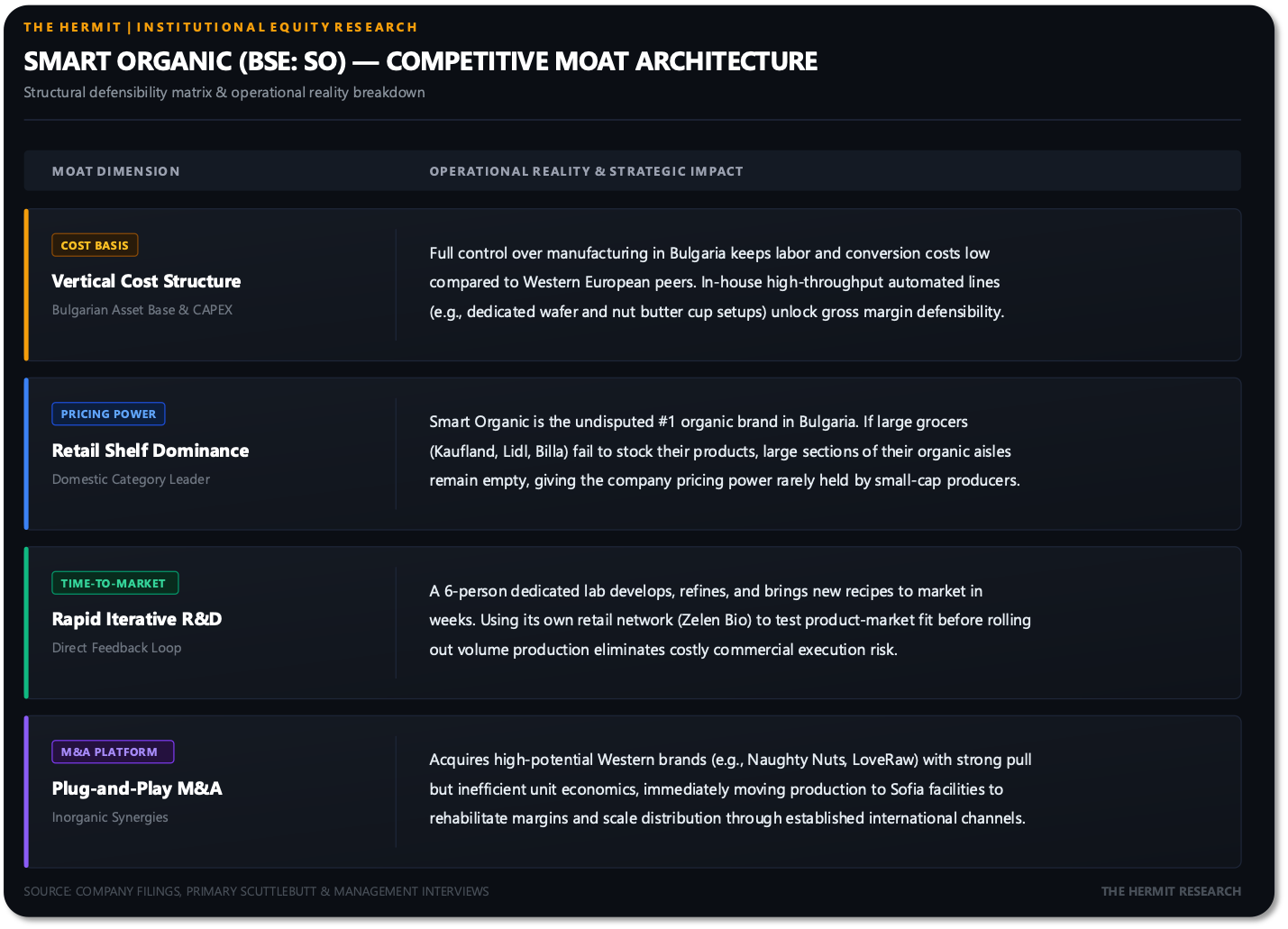
We outlined the core competitive advantages here:
Beyond these core advantages, and to achieve long-term success, management is working on deep market penetration in key Western European regions.
Smart Organic prefers establishing its own local distribution and marketing teams rather than relying solely on third-party brokers (with active setups already in the UK, Germany, and Romania).
Unlike most other companies we see, SO has the ability to scale up, from our perspective, infinitely. There is no ceiling preventing sales, margins, and consequently market cap from scaling 10x or 100x from here.
The growth percentage on a given year, though, may be capped as growing in volume requires capacity (and CAPEX) and growing in price may only be possible by retaining their position plus inflation. This latter option is really not a lever they can pull.
Product Cannibalization & R&D
Management embraces internal product cannibalization, preferring its own superior products to compete against and replace older lines rather than losing shelf space to external competitors.
An in-house R&D team of 6 people operates out of a dedicated laboratory, prioritizing rapid testing and market speed over exhaustive analysis.
Good ol’ Trial and Error
Q: I’m asking because one of the issues I’ve seen is, especially when you put them all in the same shelf, there’s a little bit of cannibalization. Your products compete against each other. How are you combating that? How are you setting up a shelf, for example, in one of these supermarkets?
Yani: I don’t mind competing with our own products. I prefer that we compete with our own products, not somebody else.
So whenever we launch a new product and it’s super cool, and even if it will cannibalize some of our old products, we don’t mind doing that. We’ve done that in the past.
When doing that, it’s fine because, I mean, if you have a good product, better launch it and people will buy more of it. Even if you kill a little bit old, something old from yours, it’s fine.
Facilities Overview
The company has two major production centers and they recently raised money in April to build another one.
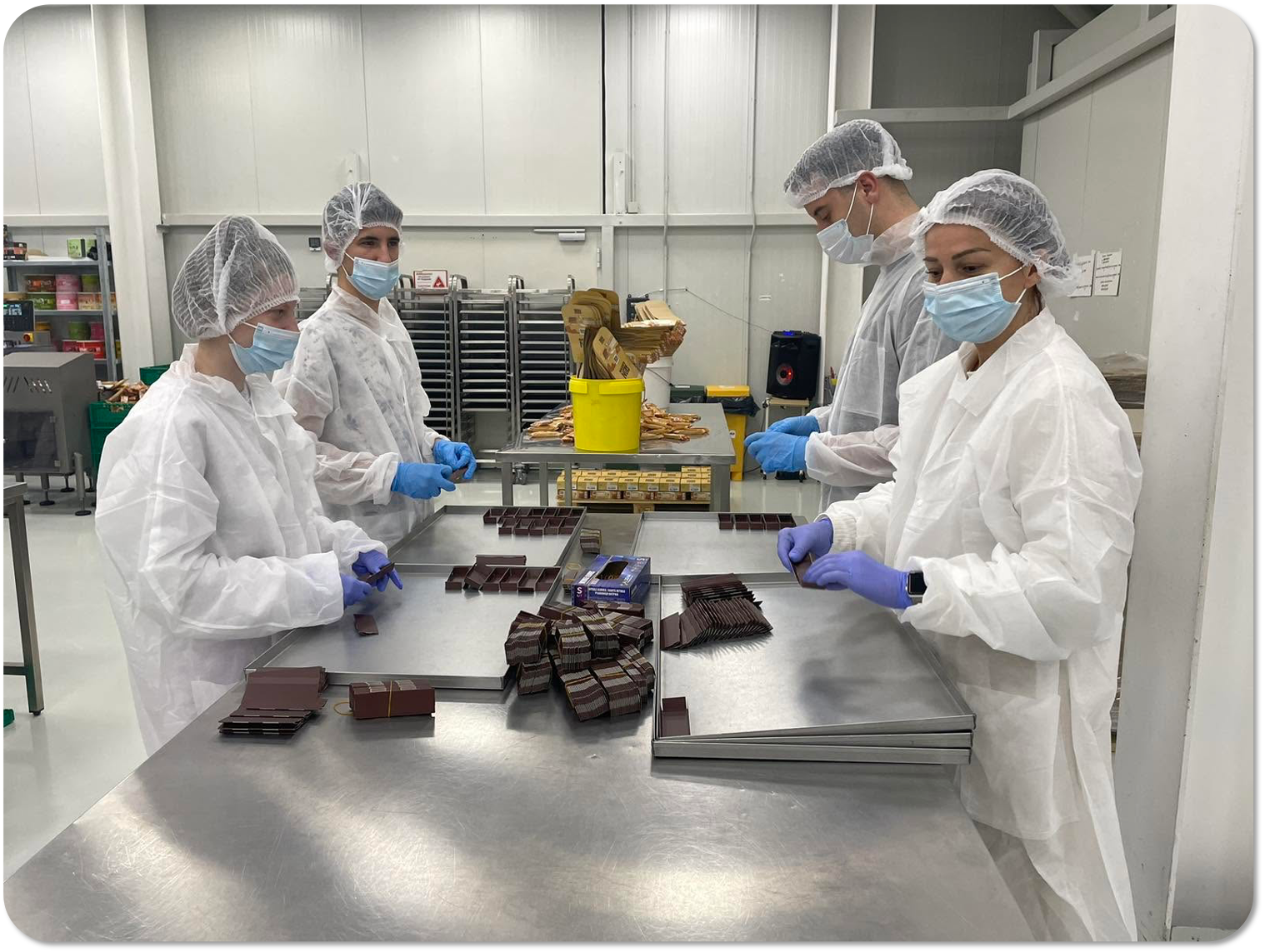
Note: A lot of what happens internally remains extraordinarily confidential, so we cannot really disclose a lot of what we know, and we probably only know 20-30% of what’s going on inside of these.
Karpuzitsa Base (Sofia)
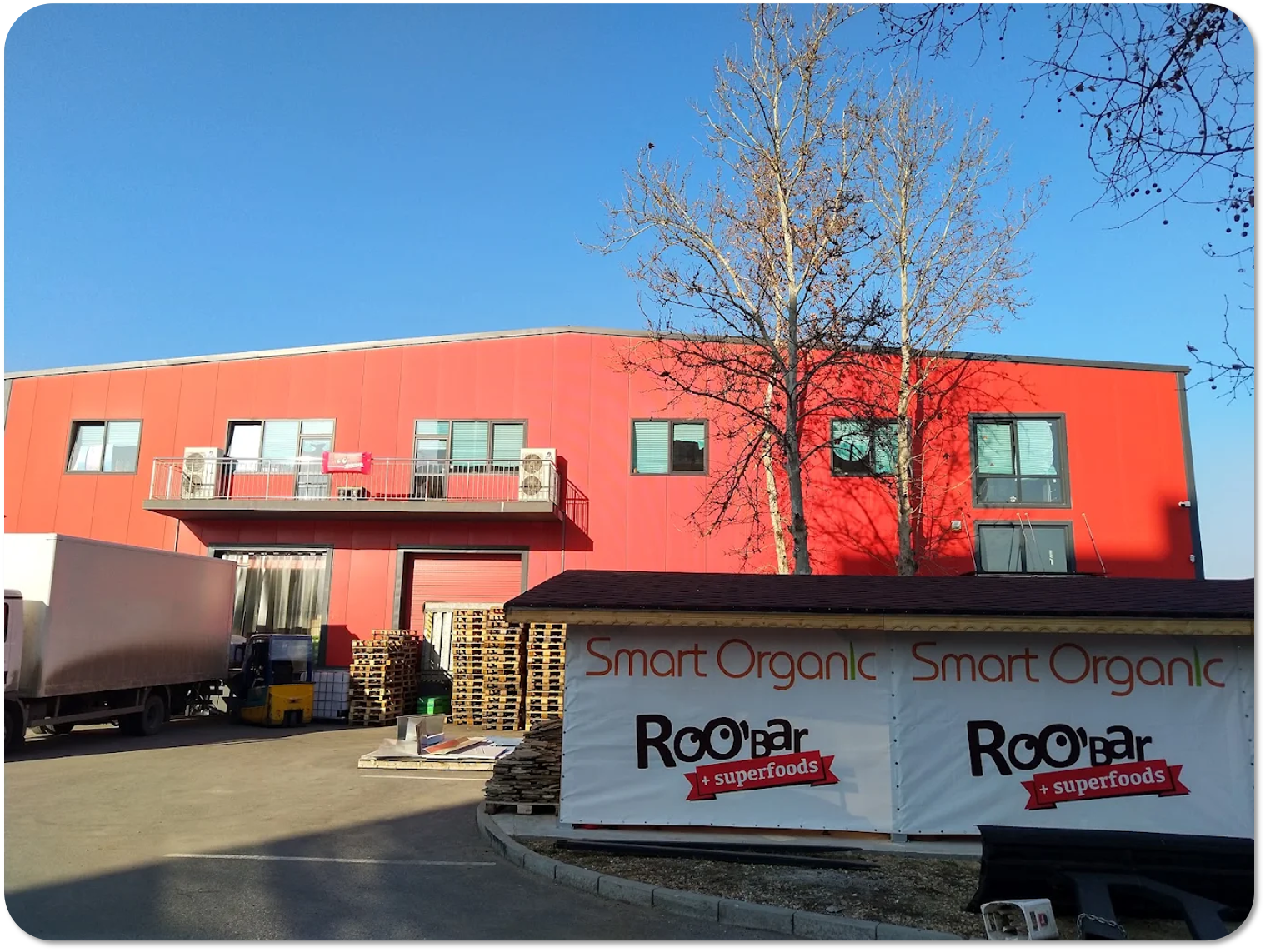
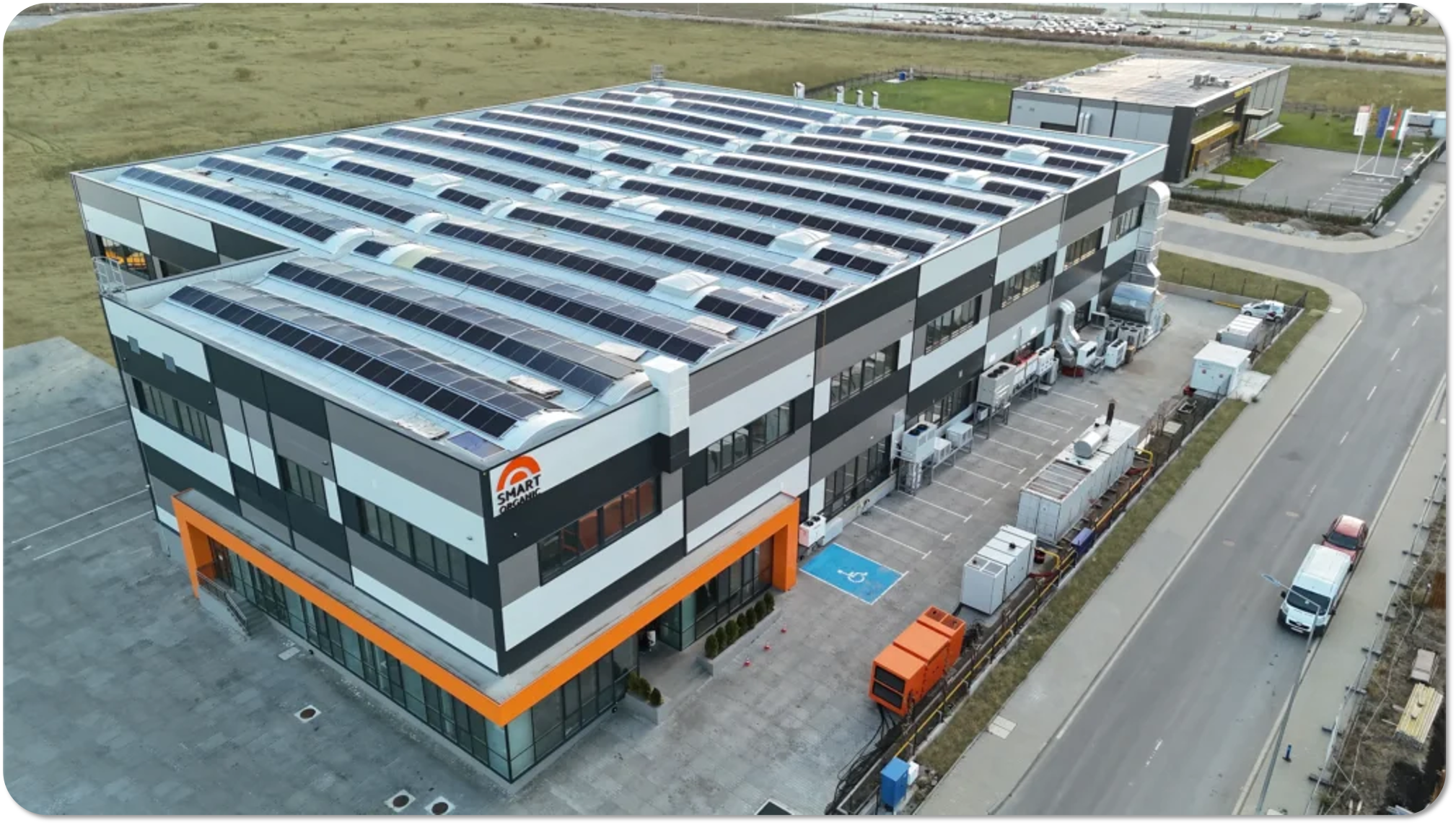
The company’s established operational base features specialized manufacturing and warehousing spaces (including an expanded 5,000 m2 building equipped with a 330 kW rooftop solar park).
This site located at 6 Damyanitsa str., 1619 Sofia, Bulgaria, serves as both their head office and the original production center. All managerial decisions are taken from this building right here.
This location also houses the corporate R&D laboratory where a dedicated team tests and iterates new product formulations.
We only wish we could be part of THAT team. That really does sound like a fun job.
Bozhurishte Mega-Facility (Industrial Zone near Sofia):
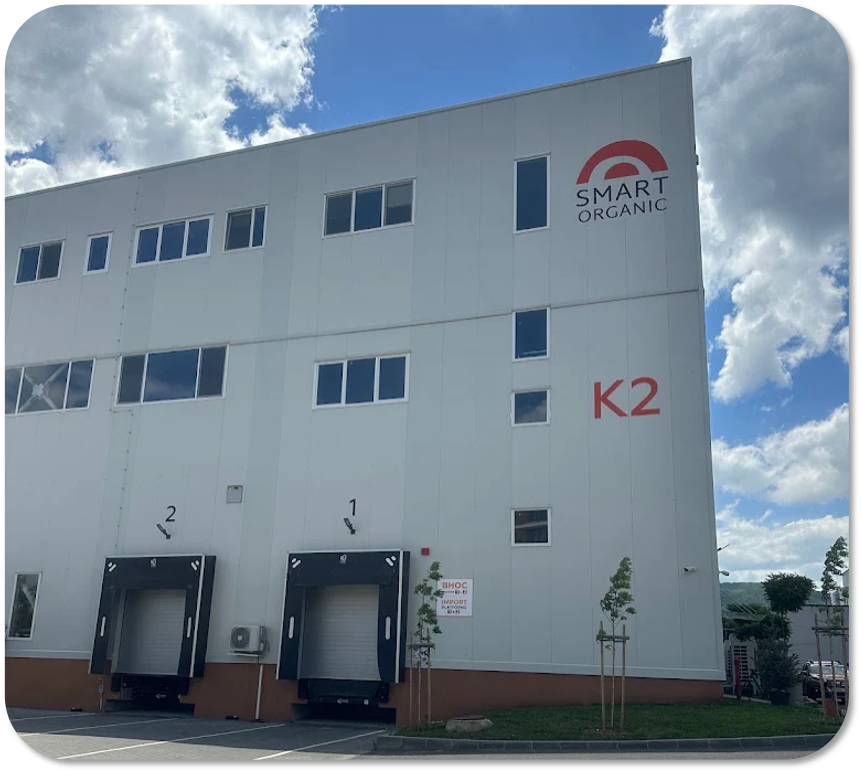
To support its heavy international export demand across 60+ countries, Smart Organic constructed a state-of-the-art 6,000 m2 production and logistics complex in Bozhurishte.
It was built intensively throughout 2023 and 2024, received its official Act 16 (Certificate of Occupancy) in December 2024, and officially commenced production in early 2025.
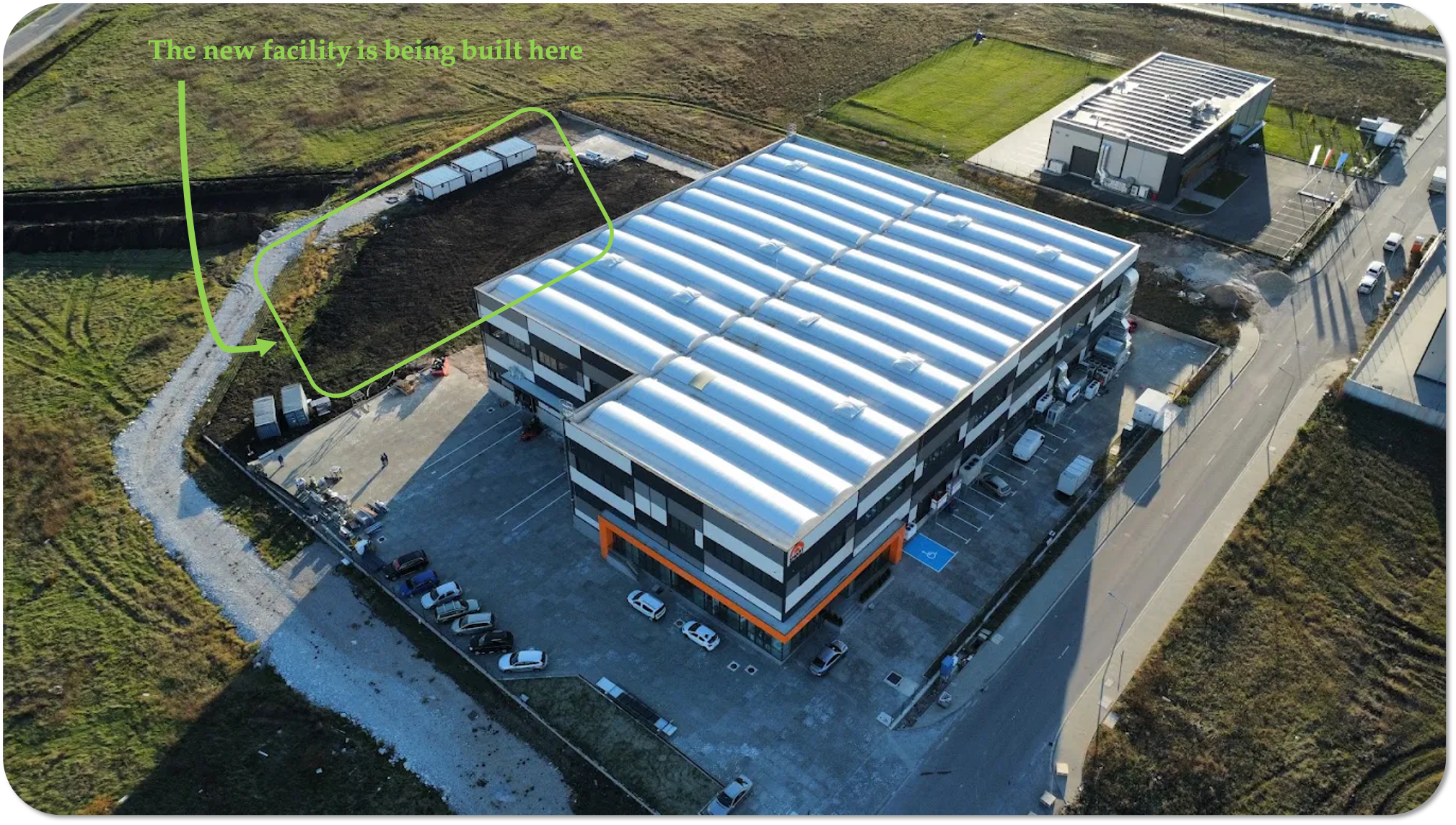
The facility is now being expanded with an adjacent 6,500 m2 second production and warehousing base, which doubles capacity.
Operationalized to triple manufacturing output, this facility features highly automated lines dedicated to chocolate products, nut butter cups, spreads, wafers, and raw bars.
Q: So if I’m not mistaken, Bozhurishte would be your facility, the stuff you set up in 2024.
Can you talk a little bit about capacity usage since it is a major project and whether you've gotten to a hundred percent use? Whether you’re able to absorb the overhead, the fixed cost that comes with it? Look at it from two years down the road, do you think it’s been worth it? What would you have changed over there? Give me your thoughts on the facility and how it’s working out for the company
Yani: In terms of capacity, it depends on different aspects. One is the capacity of the machinery. One is the capacity of the people you have and the people with how many shifts you are making.
Q: Yeah.
Yani: So with the current machinery, we can produce much more. We have the capacity. At the same time, now we’re building a new factory because we’re doing different projects, different products. So we have capacity for one product and we’re growing, but we have developed an amazing product we want to launch and we need new machinery for that. And some of the coolest products help us also open doors where we can sell some also more simple like more simple products.
So that’s why we want to invest now, even though we have some capacity. We invest in a new factory, and we already have the financing for that. Now in the process of construction
As a fun fact, and because you probably don’t understand the context, building or expanding one of these facilities is a massive endeavor in every single sense of the word.
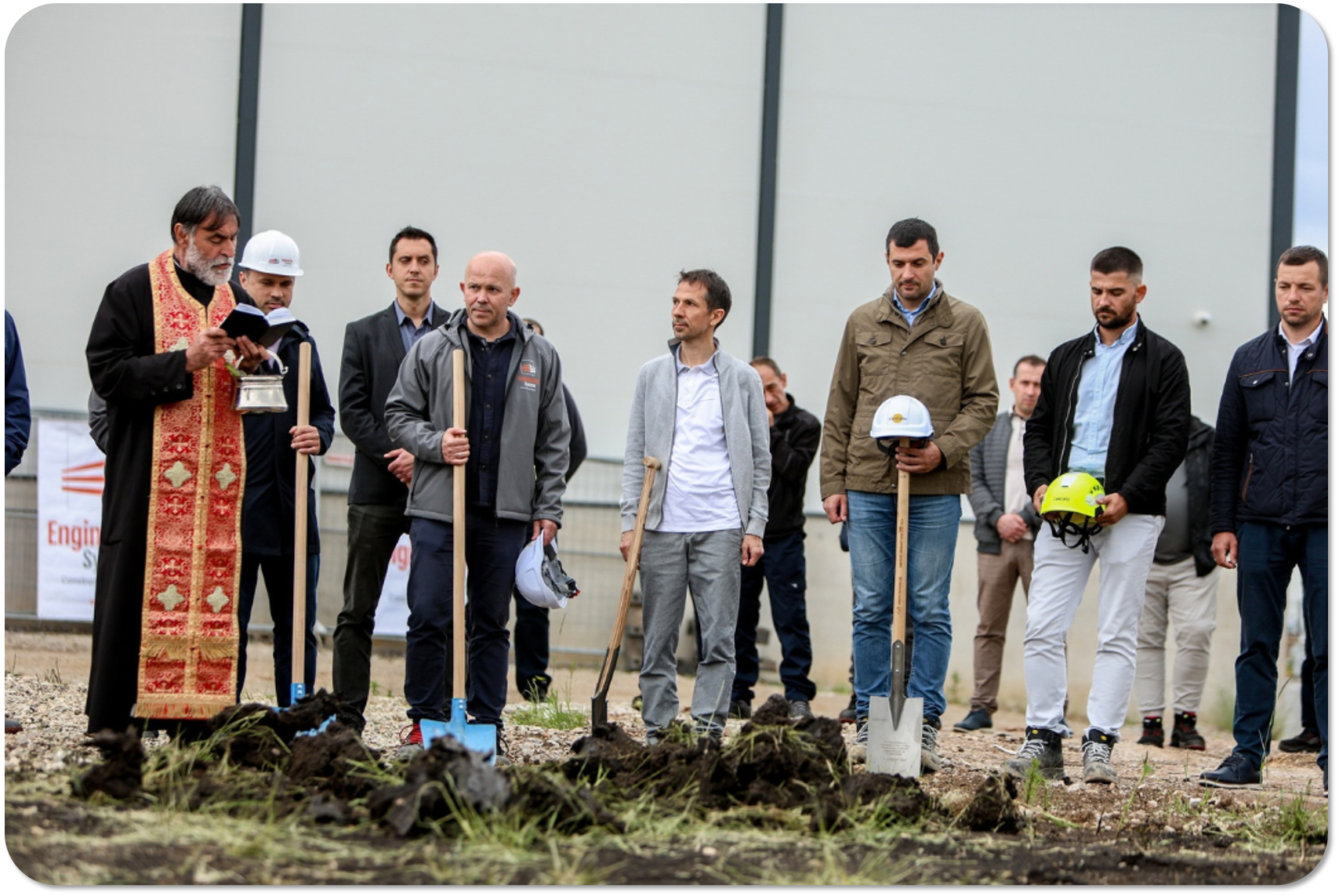
If Eastern Orthodox Europeans quite literally baptize (they're technically blessed by a priest) their cars for around €50 plus the taxi ride for the priest, you can imagine what building something like this entails.
Traditions are important in Bulgaria 🇧🇬.
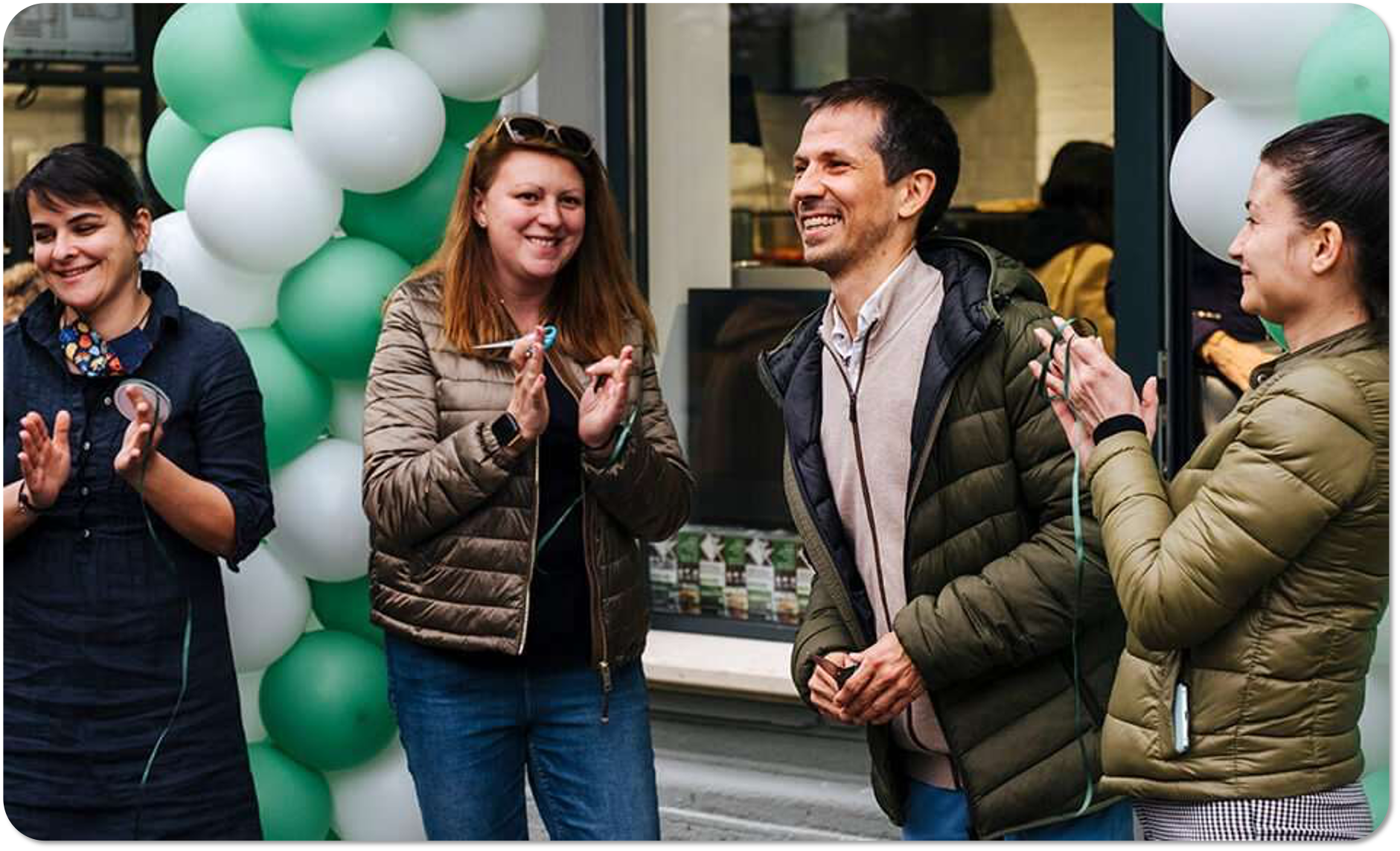
And if you can’t, as they say, “a picture is worth a thousand words”.
Initial groundbreaking ceremony (pǎrva kopka / Първа копка) on May 28, 2026.
Manufacturing Capacity, CAPEX and OPEX
New facilities (such as the Bozhurishte expansion) require heavy physical capital for buildings and machinery, but we know internal estimations are set achieve to fast capital payback period of 2 to 3 years once operational on $20m invested.
Sources also confirmed that future manufacturing will prioritize full automation on dedicated single-product lines to handle high volume efficiently.
This may seem like a minor topic, but beyond raw goods, wages and administration are by far the largest cost, adding up to nearly 31.9% of revenue in 2025.
Factory wage growth in Bulgaria historically ran at double-digit percentages driven by tight labor supply, but labor intensity and wage pressure have cooled off as general manufacturing demand stabilized and certain external industrial plants closed down.
In these processed the company also has to manage inventories. The company manages raw material inventory buffers spanning 3 to 4 months.
To eliminate legacy system errors and streamline cross-border integrations with e-commerce platforms (like Shopify) and marketing tools, they transitioned to Microsoft Business Central.
Note that this system is not even close to perfect.
There’s a great example of a past inventory write-downs were largely administrative or system-based rather than product spoilage. We’re talking about their €200,000 write-off caused by an ERP error that failed to track wooden pallets exiting the system.
This has been confirmed as a mistake by management and is also the main reason that prompted a complete system migration to Microsoft Business Central together with more frequent and rigorous physical inventories.
Raising Money. EU and Bulgarian
When looking at where to list the company, the most logical starting point for Smart Organic was right at home in Bulgaria.
While many growing companies of similar scale opt for a dual listing on prominent Western exchanges like Germany, France, or the UK, management has deliberately chosen to stick to the local market for now.
The primary deterrent against rushing onto a major Western exchange is purely financial.
Maintaining a listing in a market like Germany comes with heavy overhead price tag, running an estimated €200,000 annually in various fees and costs.
Because management’s goal is to fund business operations efficiently rather than pay for prestige or popularity, paying those recurring costs without an urgent capital requirement simply doesn’t make sense.
Instead, management takes a pragmatic approach: if a massive capital-raising project materializes down the road (anywhere from €30m to €50m confirmed by management), that is when they will pull the trigger on a German listing.
Until then, utilizing the local Bulgarian exchange keeps overhead low while the stock price grows alongside the underlying business
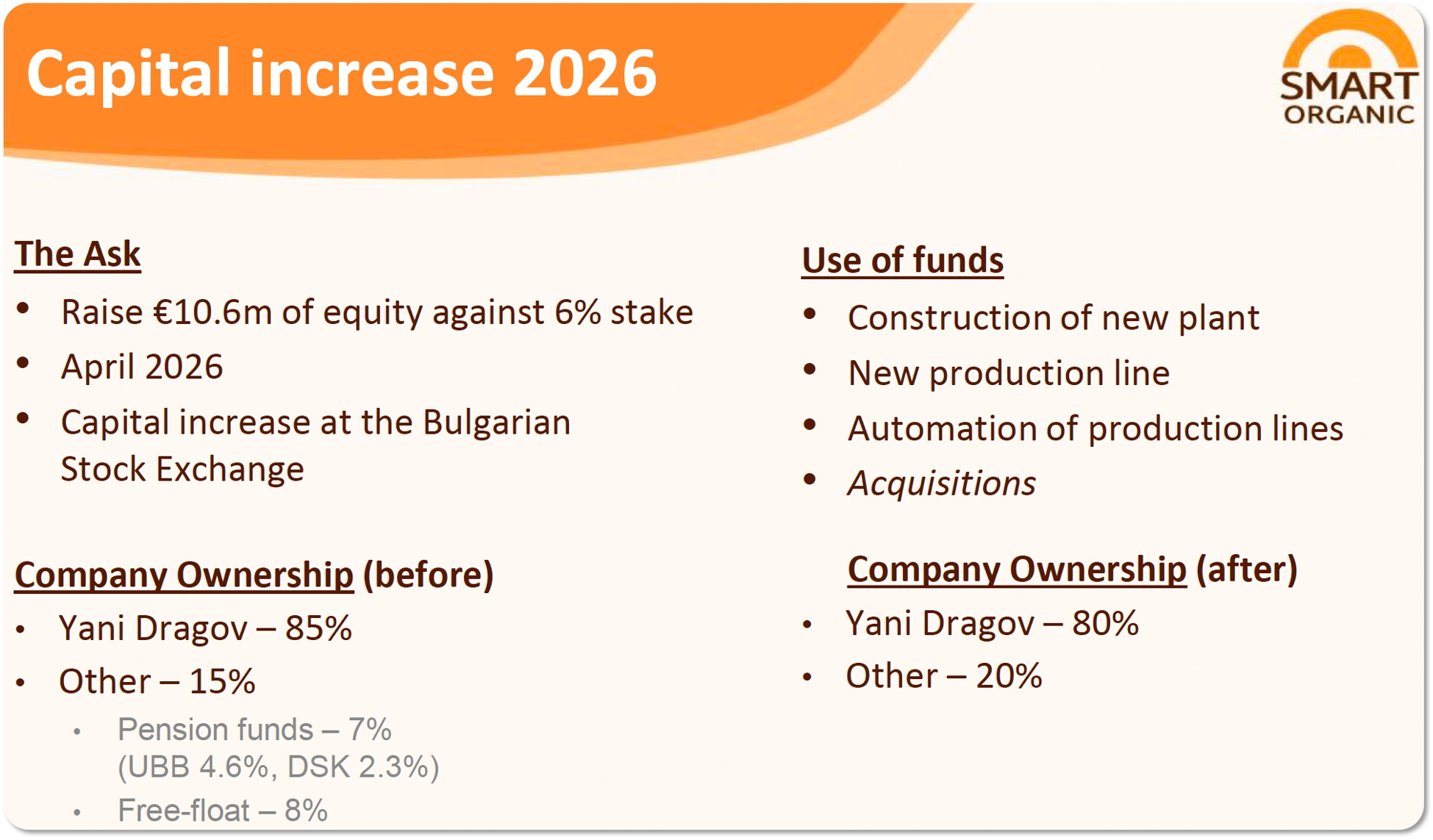
Minority shareholders UBB (4.6%) and DSK (2.3%) are two major banks. We don’t know whether this position is direct, from their clients, or aggregated in some type of ETF for client purchase. Please note that those percentages are pre-raise
Q: Okay, there’s a cost embedded into all of these but more in terms of visibility… because investors, particularly Western European investors, they will participate in projects that are listed in countries like Germany but not so much in Eastern Europe.
Yani: Yes, but keep in mind we are being listed because we want to finance our business. We’re not listed to be popular.
And if we get the money that we need in our local stock market, then that’s cheaper for us. And if the market appreciate our stock. I mean, if our stock value grows with the growth of the company, I’m happy. I don’t need to go abroad, spend a lot of money. Because if we get local investors doing that, why bother about German stock market?
But the time will come because we’re growing a lot. Next time we need to raise a big amount. I mean, now €10 million, we made a small round.
But my plan maybe after 2030, maybe about three, four years to make what we have the need, especially if we grow outside Europe. And these are our plans, we want to expand to build factories also on other continents. And we just will need much bigger amounts of money.
As pointed out before on the facility section and just now in the transcription, the company raised €10.6m to expand their Bozhurishte facility in April 2026.
The only thing we would note is that, even though obvious, this increases the free float and therefore derisks for us in any investment as it increases liquidity for the company.
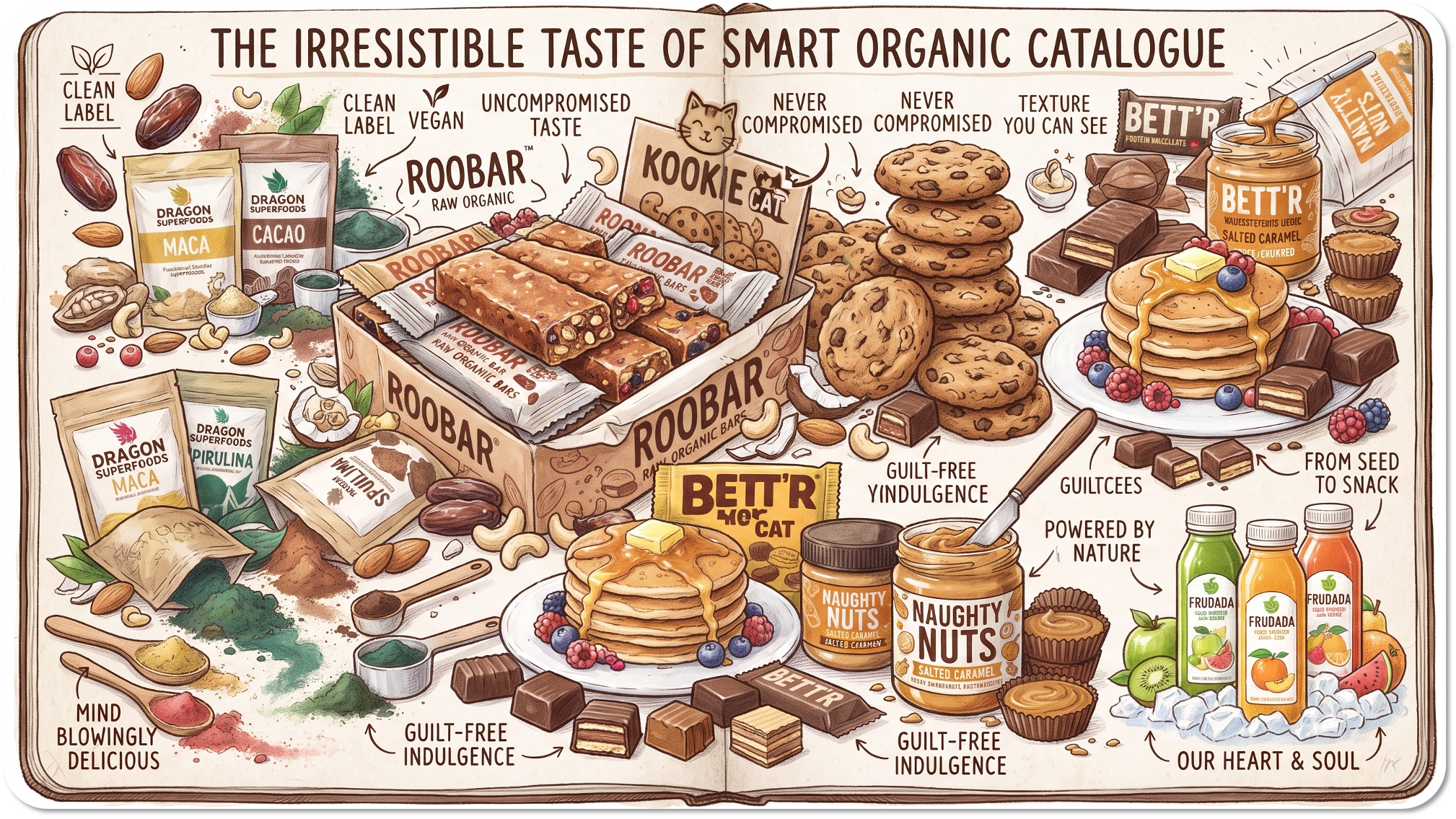
Here’s the presentation for the raise in case you want to dive in a bit deeper. It includes their entire product catalogue at the end which is not a recommended read for people on a diet.
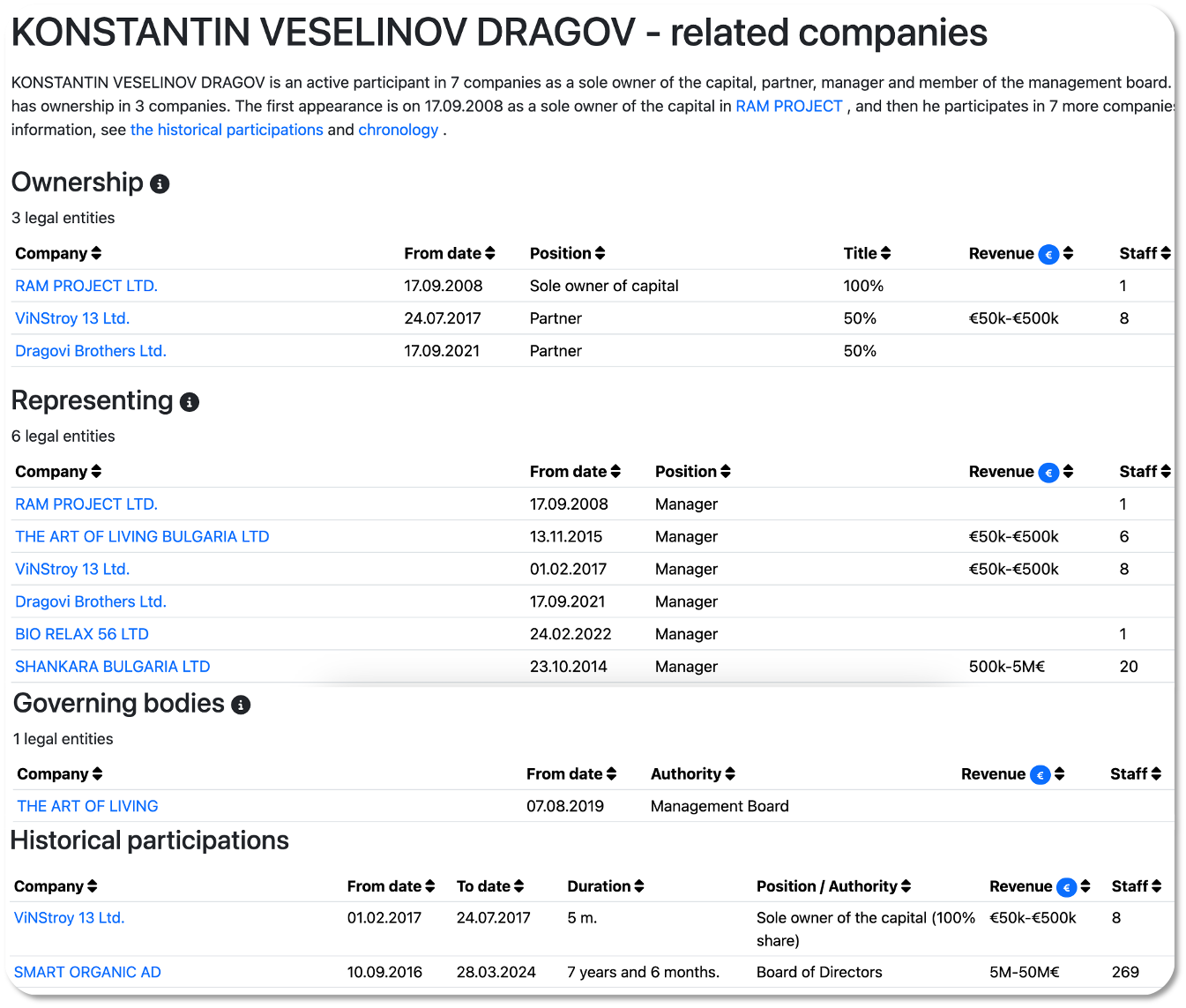
We can’t claim to have done a proper analysis without stopping and acknowledging their related party transactions. Even though the company is under the complete control of it’s CEO, governance still matters and on that we must underline the influence of Yani’s brother in all of this.
Yani Dragov's brother is Konstantin Veselinov Dragov (Константин Веселинов Драгов), with whom he co-manages and co-owns joint business ventures such as Dragov Brothers OOD. He’s also been involved with the company until recently where he got replaced as a director (March 2024).
Related-party activities (such as distributing cosmetics for Orenda Group, aid to “yoga studio” The Art of Living or light production work for family-associated entities) represent negligible turnover relative to group scale, and board structures have been formally adjusted to include independent members as part of public compliance.
We’re not big fans though (of the whole thing), but we can’t do anything about it either.
Note: We know very little about it, but The Art of Living looks to me like a mega cult (on the surface). We asked Claude about it, as we don’t want to waste time here, and apparently it’s a legally dubious international wellness and humanitarian brand founded in 1981 by a guru-like figure called Sri Sri Ravi Shankar.
Take out whatever conclusion you want from this data point, we’re only here to inform not to opine.
👥 Management
Yani Dragov – CEO Yani is the co-founder and Chief Executive who guiding pretty much everything including the company’s overall strategy, international expansion, and production operations.
Originally transitioning from a background as a financial analyst, Yani maintains a firm grip on operational control as a strict "red line" to prevent losing majority oversight while the company scales toward its long-term goal of hitting €1bn in revenue.
Even though in Bulgarian, this chat was quite good and it tells you a lot about his qualities and character. In this TEDx talk Yani Dragov shares how foundational spiritual principles… stuff like radical sincerity, living in the present moment, taking full responsibility instead of complaining, practicing meditation for creative problem-solving, and focusing on a win-win mindset.
He claims all of these elements helped him scale Smart Organic from modest beginnings into a major international manufacturer.
You’ll need to read the English translation though… so you’re welcome.
Entrepreneurship And Spirituality Yani Dragov Tedxstarazagora Tedx Talks [en]
Teodora Karadzhova – CMO Teodora is the Chief Marketing Officer who oversees brand development, commercial positioning, and market growth across international retail channels.
For Smart Organic, international market entries (such as entering Romania or the UK) are frequently triggered by opportunistic acquisitions of locally known brands, allowing them to leverage already existing (brand) visibility while manufacturing the products in-house to retain their high margins.
To date, Smart Organic has executed a disciplined, highly opportunistic inorganic growth strategy that complements it’s already excellent organic strat.
Rather than buying expensive, fully priced revenue streams, management targets asset-light or distressed consumer brands that possess strong product-market fit and consumer pull, but suffer from broken unit economics or sub-scale manufacturing.
By acquiring these targets through accelerated M&A processes or bankruptcy proceedings and immediately shifting production into its automated Bulgarian facilities, Smart Organic rehabilitates their cost profiles, purchases client portoflios and unlocks immediate gross margin expansion.
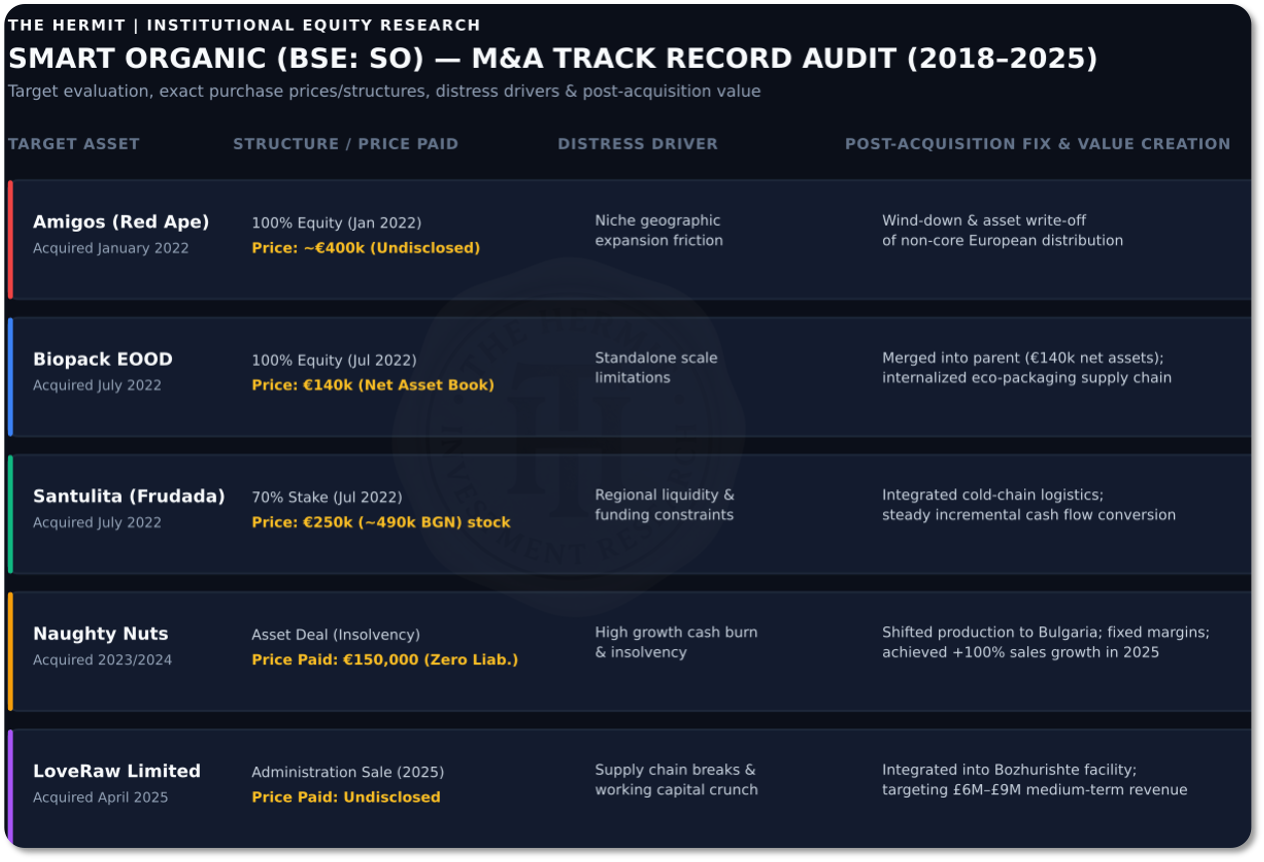
We’ll review each one indicidually but here’s a overview of what they’ve done to date.
Comprehensive M&A Audit (Last 7 Years)
Please note that many of the price tag figures are not publicly disclosed and are derived from our own internal financial analysis and estimates, meaning there may be some inaccuracies in these valuations.
Finalized in January 2022 for an undisclosed amount estimated at roughly €400k, this 100% equity acquisition of Netherlands-based organic food and sustainable sweetener distributor Amigos International Trade B.V..
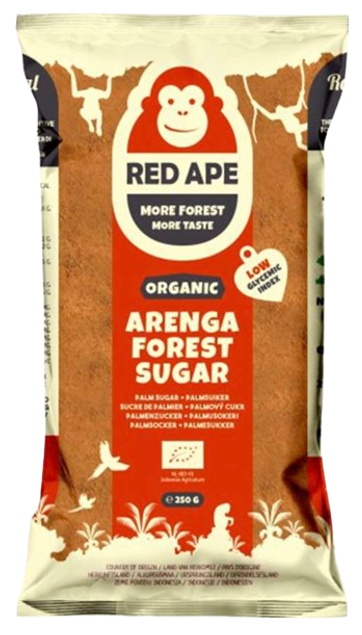
Known for Red Ape wild-harvested Indonesian Arenga sugar protecting rainforest orangutan habitats, the purchase was designed to establish a direct Benelux distribution foothold and source ethically branded sweeteners.
Although it initially gave Smart organic market access, the setup proved difficult to scale independently. Management ultimately made the decision to wind down and close the non-operational entity, fully writing off its initial asset carrying value and minor €30k goodwill allocation to protect capital.
Finalized on July 30, 2022, the 100% equity acquisition of Biopack EOOD was completed via a purchase agreement with an estimated net asset book value transfer of €140k.
These are key supplier of compostable HORECA (above) packaging, cups, and eco-friendly bags designed to replace single-use plastics
Designed to capture supply chain synergies for sustainable packaging materials and expand HORECA channel reach, management executed an internal legal absorption via a merger-by-acquisition (вливане) on March 14, 2023.
This legally dissolved Biopack and transferred its net assets directly into the parent company on May 18, 2023, ultimately eliminating external supplier markups on eco-packaging, saving over 55 tons of historical carbon emissions, and streamlining administrative overhead through full corporate consolidation.
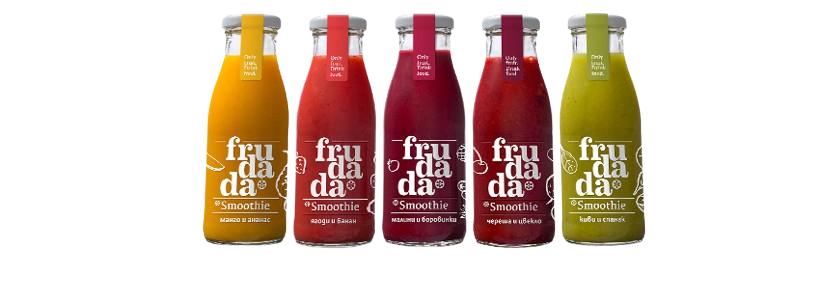
This company was and still is leading Bulgarian producer of 100% natural, cold-pressed fruit and vegetable smoothies and juices sold under the Frudada brand without added sugars, preservatives, or water.
Acquired on July 1, 2022, the 70% controlling equity stake in Santulita OOD involved a purchase price of €250k (~490k BGN).
Part of this transaction was settled via newly issued Smart Organic shares transferred from the majority shareholder, generating a corresponding premium reserve addition, alongside a put/call option structure exercisable between June 1, 2026, and June 1, 2028, to buy out the remaining 30% minority stake.
Designed for immediate expansion into the cold-storage liquid beverage category to complement dry-shelf snacks with refrigerated health-conscious drinks, the acquisition added a premier regional cold-press brand with €1m+ in baseline revenue (~2% of group sales) and solidified domestic leadership in functional beverages.
Anchoring a major chunk of group goodwill at €837k, the business has since been optimized to generate steady incremental cash flow despite initial break-even friction.
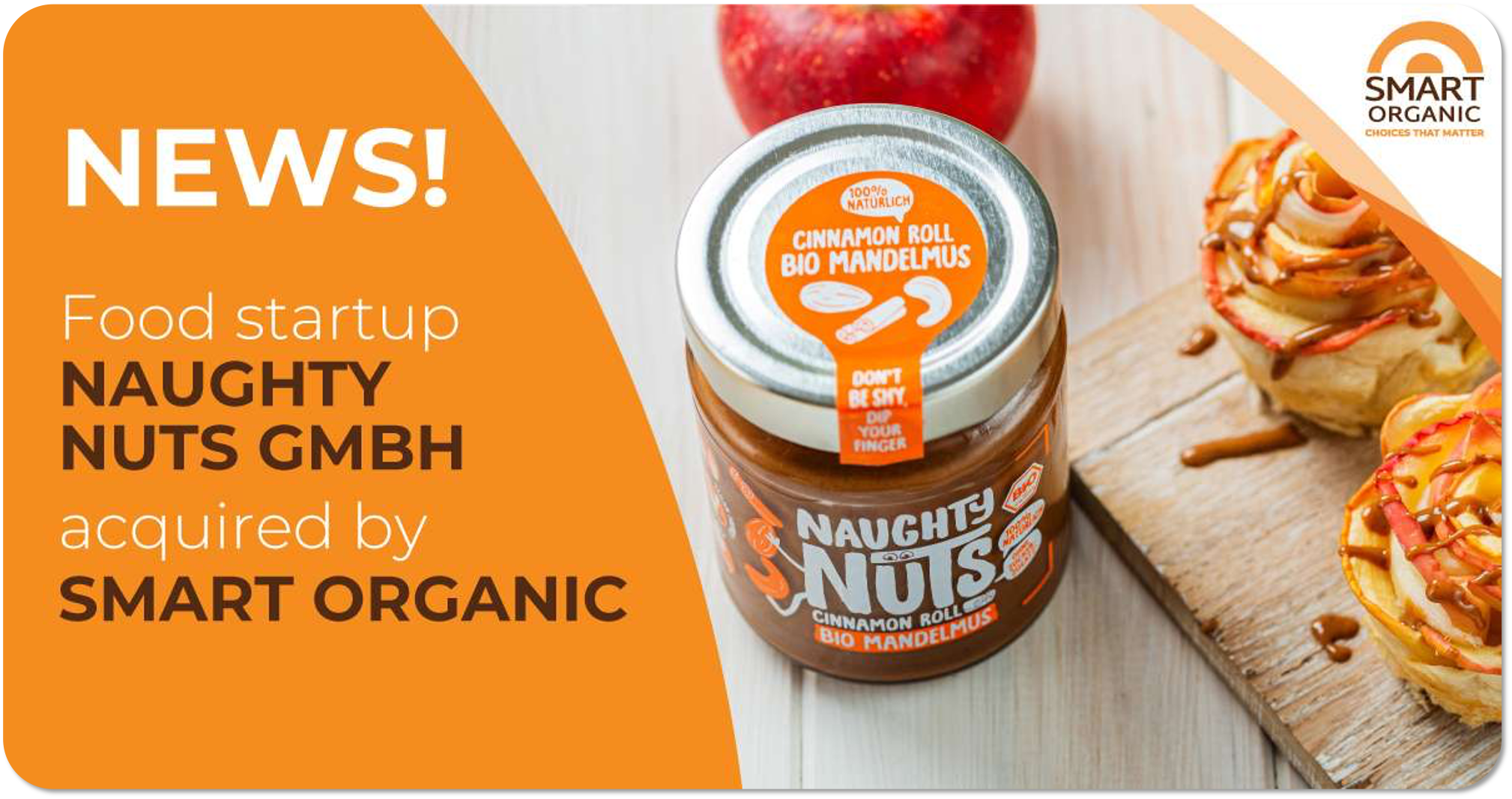
Founded in Cologne in January 2021 by Benjamin Porten and Lorenz Greiner, Naughty Nuts is a fast-growing German bio-food startup specializing in innovative flavored organic nut spreads (fantastic stuff like salted caramel and raspberry rumble) distributed across 1,200+ retail locations including REWE, EDEKA, and denn’s.
Acquired out of insolvency and bankruptcy proceedings for a nominal cash consideration of €150,000 for assets only with zero historical liabilities, Smart Organic established a German subsidiary (Naughty Nuts Vertriebs GmbH) holding a 68% controlling stake, while the original founders retained 32% and stayed on to operate the business.
Designed to establish a high-velocity direct-to-consumer and retail footprint in the core DACH market while rescuing a distressed brand suffering from high-growth cash burn, the acquisition addressed a company that had generated €2.5m in turnover during 2022 before falling into insolvency due to a lack of institutional growth capital.
Smart Organic solved this instantly by shifting production from high-cost German co-packers to its low-cost Bulgarian facilities, a single operational fix that restored gross margins and drove a 100% sales increase for Naughty Nuts over the course of 2025, perfectly validating the group’s “buy-and-fix” playbook.
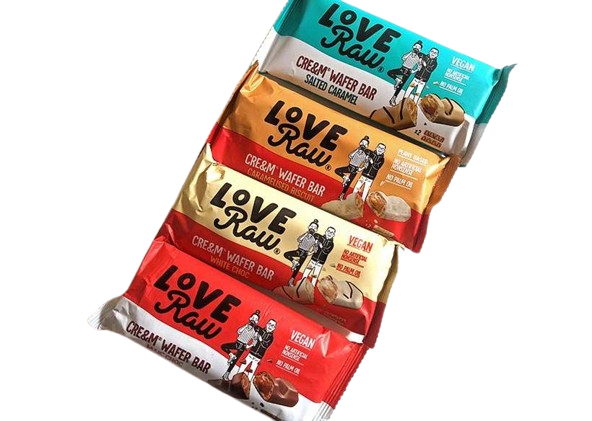
Founded in 2013 by Manav and Rimi Thapar, LoveRaw is a premier UK-based vegan confectionery brand famous for palm oil-free, dairy-free chocolate wafer bars, peanut butter cups, and choc balls, which at its peak was stocked in 13,000 retail outlets across 25 countries and generated £3m in revenue, earning a spot on the Financial Times FT 1000 list.
Clients include Tesco, Asda, Waitrose, Ocado, Co-op, and Whole Foods.
Acquired via an accelerated M&A process while under administration, with Joint Administrators Jimmy Saunders and Mike Lennon appointed on April 16, 2025, the brand and business assets were bought through Bettfr Food Limited (legally still LoveRaw), a wholly owned UK subsidiary of Smart Organic.
Designed to aggressively scale the group’s footprint in the UK retail market, cross-sell into Tier-1 Western European grocers, and absorb high-potential confectionery IP, the transaction targeted a brand that had suffered sharp revenue contractions in 2024 due to supply chain disruptions and investment bottlenecks.
Smart Organic immediately began integrating production into the newly opened Bozhurishte mega-facility, with management targeting medium-term run-rate revenues of £6m to £9m from LoveRaw-branded products alone, alongside high-margin private label upside in the UK region.
💵 Comprehensible Financials
As always, we’ll keep this part simple. We look for five core traits in every company we own:
Sensible leverage. Healthy debt levels and smart, disciplined use of it
Profitable growth. Steady revenue expansion supported by strong margins
High returns on capital. Efficient use of every dollar invested or employed
Cash discipline. Capital requirements and consistent free cash flow
Shareholder alignment. Minimal dilution and thoughtful per-share allocation
Note: Please understand that we used USD as the base currency for all of these figures, as it provides a much more stable constant YoY comparison following the EUR integration. In terms of underlying trends, this is more accurate, and for the valuation itself, we will translate the final figures into EUR.
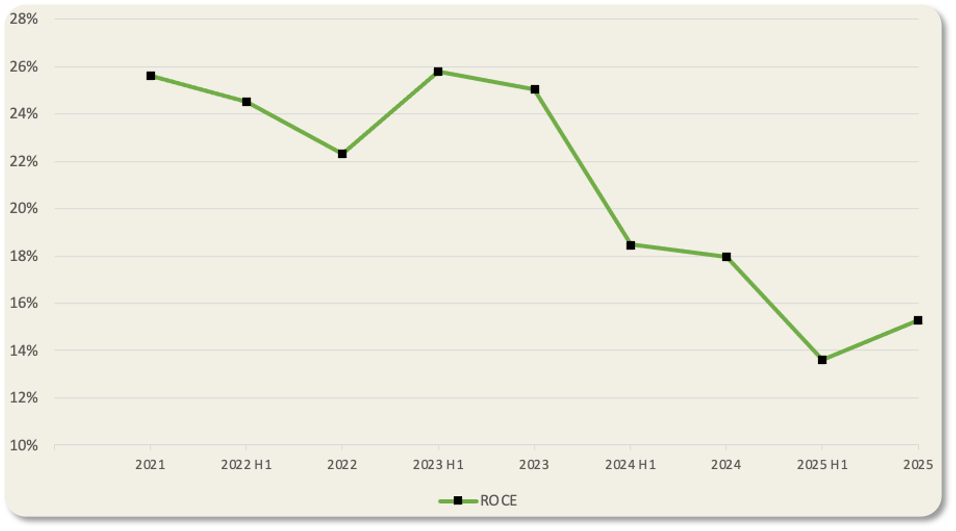
The long-term trend for returns should see an ROIC or ROCE of around 20%. However, this figure will spike down hard in times of investment, essentially through a denominator effect where we have to spend a substantial amount of money to acquire assets (land, buildings, machinery, etc.) to build out capacity while revenue and margins experience a lag.
However, because the investment was recently done, we can pretty much guarantee that we are currently on the lower end, especially after the April 2026 raise. We should now expect the trend to be upwards from the 2025/2026 figures.