


My dear fellow Hermits 👋
This is a step-by-step guide to structuring your forever portfolio, helping you learn quickly and avoid rookie mistakes.
Before we start, if you’re new here, we highly recommend checking out our…
… it’ll give you a better sense of who we are and why you might want to listen.
“What’s your biggest financial challenge?”
This post is the answer to the top challenges you’ve shared with us.
Over the past 12 months, we’ve collected hundreds of responses. Here are a few of them…
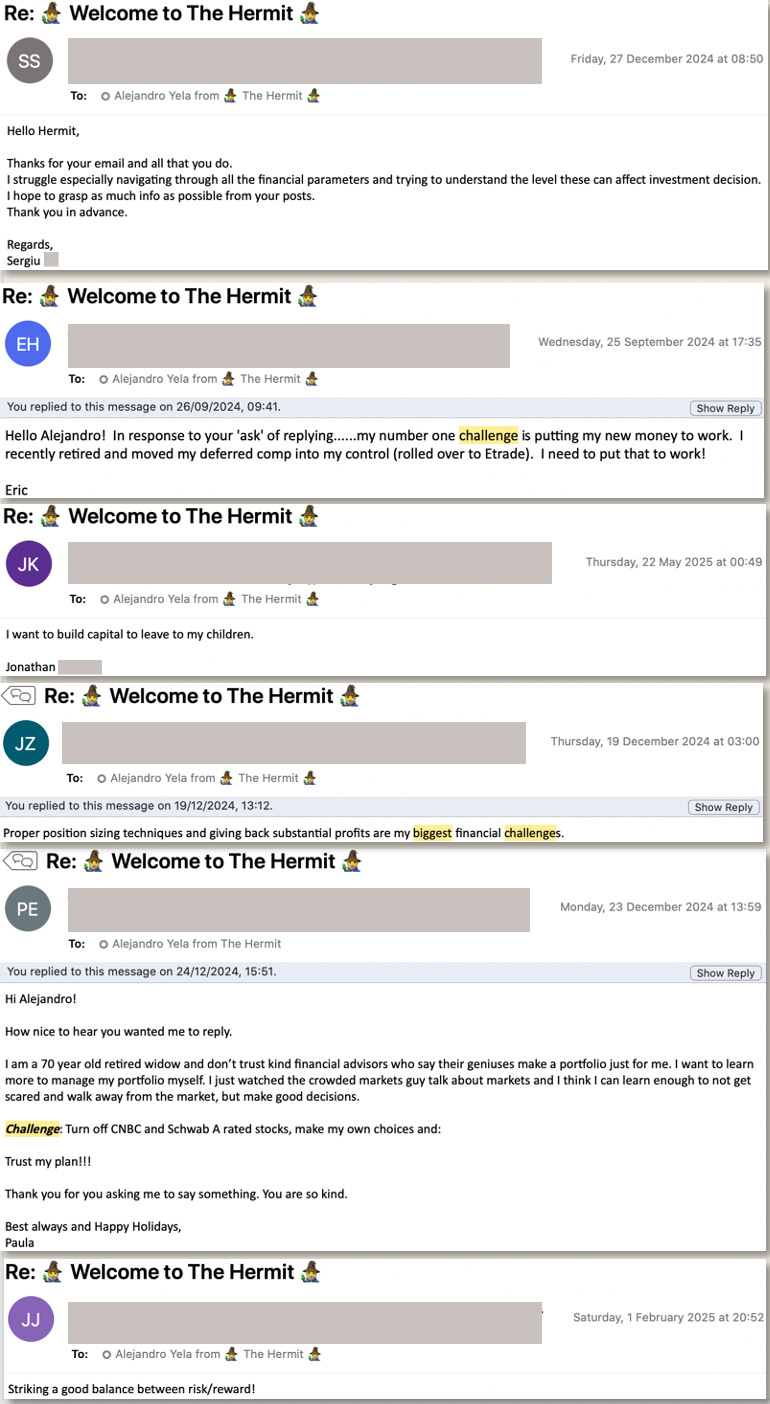
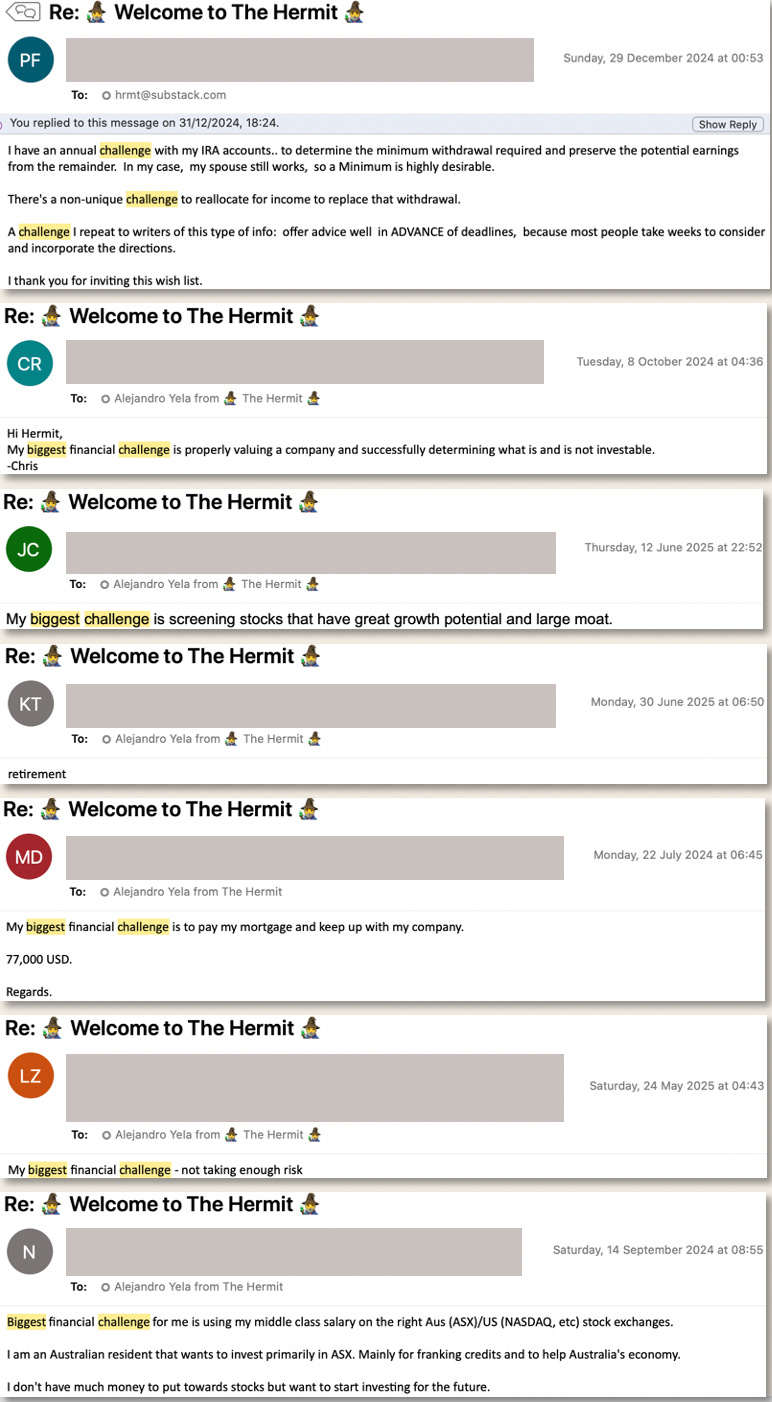
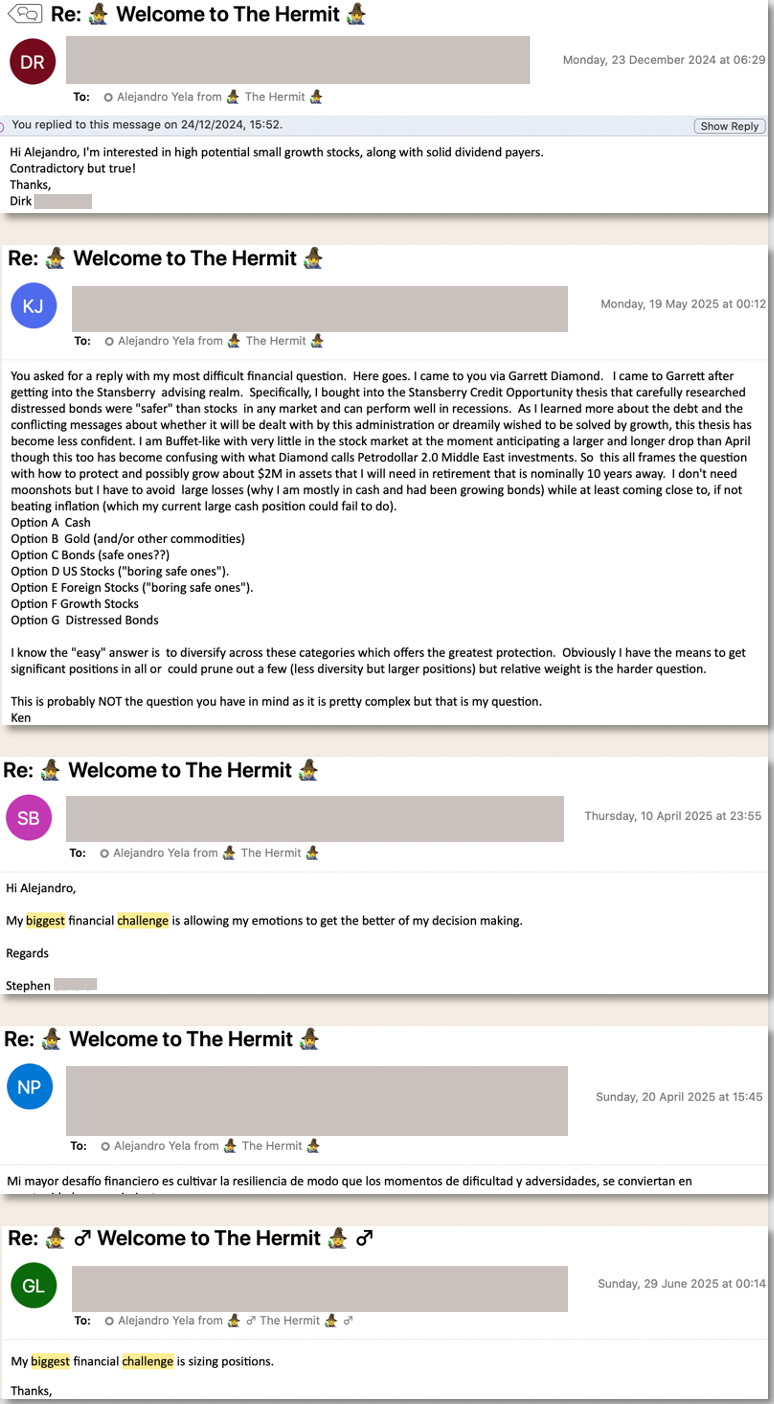
If we had to distill the biggest challenges you face, they tend to fall into five core buckets:
Emotionally handling downturns. Staying calm when markets drop
Planning for retirement or future generations. Figuring out how much, by when, and for whom
Identifying worthwhile opportunities. Separating noise from signal
Sizing positions. Knowing how much to allocate, and to what
Paying off debt. Balancing growth with financial clean-up
This post breaks down exactly how to blend ETFs, individual stocks, and “mental reps” into a hands-on portfolio.
The last one you will ever need and the one we've been using for the better part of the decade.
It’s built around three key layers:
1.- Short-term safety
2.- Mid-term curiosity
3.- Long-term conviction
We’ll walk you through a simple three-step progression, one that builds up to the mechanics of our All-Weather Portfolio.
Along the way, you’ll get sample allocations (w/ factsheets and ISINs), real-world examples, and a battle-tested action plan for when markets go to sh*t.
This isn’t one of those “compounding over 40 years” or “if you’d invested in the ’80s” fairy tales.
This post is about building a real personalized plan. One you can understand, commit to, and set up within 24 hours.
It’s our take on a very structured and disciplined yet simple learning system.
Important notes:
👉 Don’t move to the next step until you can confidently check all the boxes for the one before it
👉 Be sure to read and understand fully the list of common mistakes (at the bottom)
👉 Understand that this is our complete framework for your entire net worth, not just your stock portfolio
As professionals, we at The Hermit follow this framework with modified weights, but that’s because investing is our business. So we’ll allocate more towards individual names while keeping the portfolio coherent.
As a retail investor, you’re not spending all day analyzing companies, managing risk, and tracking catalysts… and that’s perfectly fine.
If all this feels familiar, you’re exactly who this post is for.
This content is intended for informational purposes only and should not be taken as investment advice. Please do your own research or consult with a professional advisor before making any financial decision. You will find a full disclaimer at the end of the post.

1. Do You Need The Cash Tomorrow?
If you’re not willing to own a stock for ten years, don’t even think about owning it for ten minutes.
— Warren Buffett
This plan is only worth doing if you’re willing to commit for at least a decade. Anything shorter and you’re just dipping your toes, not building lasting wealth or understanding.
💵 No Savings, No Strategy
Let’s be blunt: this entire exercise is pointless if you’re not saving money.
If you can’t commit to saving at least $100 a month, don’t waste your time setting up portfolios or picking assets.
Instead, focus all your energy on boosting your income:
Get better at your craft
Ask for a raise
Promote your services
Build a side hustle
Sell your time more effectively
In short: grind until you have investable capital. You can’t grow what doesn’t exist.
🛑 Expect Setbacks… and Prepare for Them
Life is what happens to you while you're busy making other plans.
— John Lennon singing 1980’s Beautiful Boy (Darling Boy)
Your car breaks down. A medical bill shows up. Your boiler explodes.
These things are not excuses… they’re part of life. So plan for them.
Make sure you have an emergency buffer or a separate savings account to cover unexpected costs.
Don’t tap into your portfolio to deal with life. That defeats the whole purpose.
🏖️ When You’re Already Living Off Your Capital…
Suppose you're already deep into retirement and relying on your savings as your primary source of income.
In that case, the All-Weather Portfolio may not be appropriate for you, at least not with the majority of your capital.
In your case, the priority should shift from long-term growth to reliable cash flow.
That means allocating most of your savings toward income-generating assets:
High-quality bonds with staggered maturities
Dividend-paying stocks
Cash equivalents that support near-term liquidity
The goal is to create a payment timeline that delivers predictable income every 1 to 3 months, aligning with your lifestyle needs.
Your best bet might be to stay conservative, preserve capital, and live comfortably off the yield.
If this applies to you, this post is not for you.
Here’s our take on super safe cash equivalents and when you should use each one:

👇 If you answered all of the above with a big fat “I’m Ready!”, it’s time to move on to the next section and start compounding.

2. Do You Owe Money?
The most important rule of trading is to play great defense, not great offense. You can always stay in the game as long as you don’t blow up.
— Paul Tudor Jones
Here’s a hard truth: you can either compound for yourself, or for someone else.
Think about it… mortgages, credit cards, student loans, car loans…
Each of these is a structure designed to tap into your future self and funnel money to someone else.
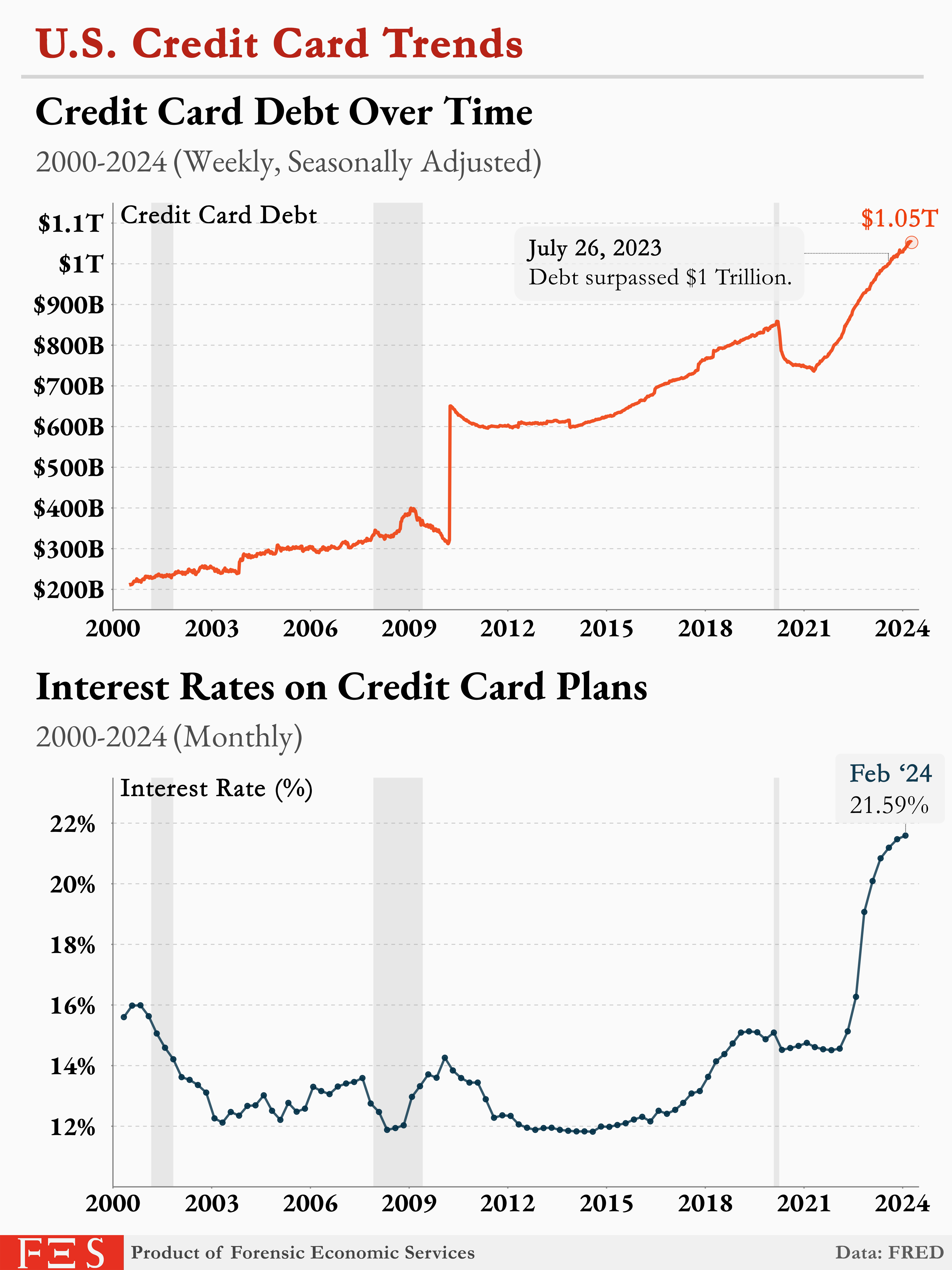
Some of these debts, such as credit cards or certain personal loans, can carry interest rates of 29% or higher.
That’s market-crushingly bad.
If you're carrying high-interest debt, then the best “investment” you can possibly make isn’t in stocks, crypto, or gold.
It’s in paying that off.
Why?
Because a guaranteed 29% return (essentially what you get by eliminating 29% APR debt) is better than anything else you’ll find in the public markets.
Before you start building a portfolio, ensure you're not inadvertently fueling someone else's compounding engine.
👇 If you answered the of the above with a big fat “I’m Ready!”, it’s time to move on to the next section and start implementing.
3. The All-Weather Portfolio
The concept of diversification makes sense to a point, but it’s easy to overdo. If you look at Berkshire, Charlie and I operated mostly with five positions. If you’ve got a harem of 40 women, you never get to know any of them very well.
— Warren Buffett (with Munger’s clear influence)
The framework is simple:
We’ll select a small set of products we understand and allocate to them consistently, month after month.