


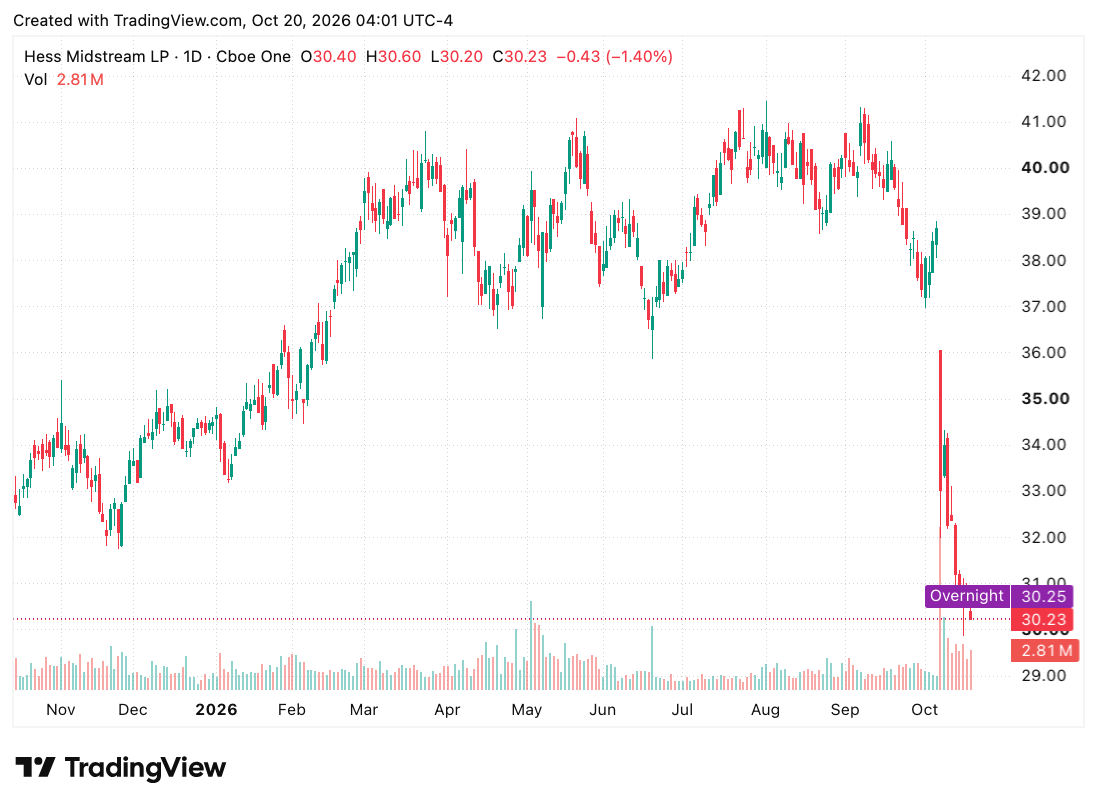
A double-digit selloff on a business that prints cash? Say no more. Thanks Yegor !
As you know, we tend to hang out upstream where the operational drama (and expected volatility) lives, but sometimes there’s charm in moving down the chain into the toll roads of energy infrastructure.
In this case, you get rock-solid (pun intended) visibility, fee-based contracts, and a very juicy 10%+ yield that pays you handsomely while management finishes spending capital that will flow straight back to equity holders a few years down the line.
Let’s break this one down, run the numbers, and see if this dip is an actual bargain or a falling knife.
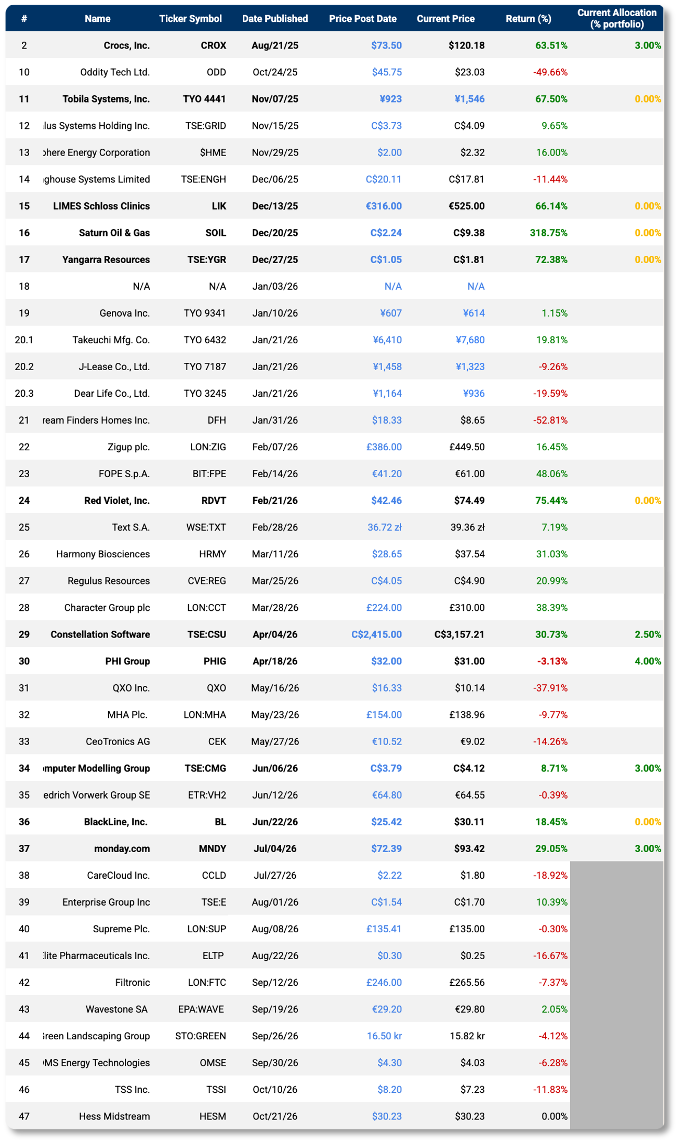
As we now do every week for transparency, here is our list of past Pick of the Week posts and their returns since publishing:
All picks (equally weighted): +17.51%

Pick of the Week. A curated series of high-conviction research on companies currently under our microscope. We screen for specific dislocations where the market has mispriced the balance sheet or earnings power (or both).
None of the following should be construed as investment advice. Please consult a financial advisor before making any investment decision. You will find a full disclaimer at the end of this post.

🛢️ Hess Midstream LP ($HESM)
⭐ Overall Grade: 8.0 / 10
Hess Midstream LP (HESM) is a fee-based infrastructure player built around crude oil, natural gas, and produced water handling.
Historically, it served as the captive midstream arm for Hess Corporation’s core acreage across the Bakken and Three Forks plays in North Dakota.
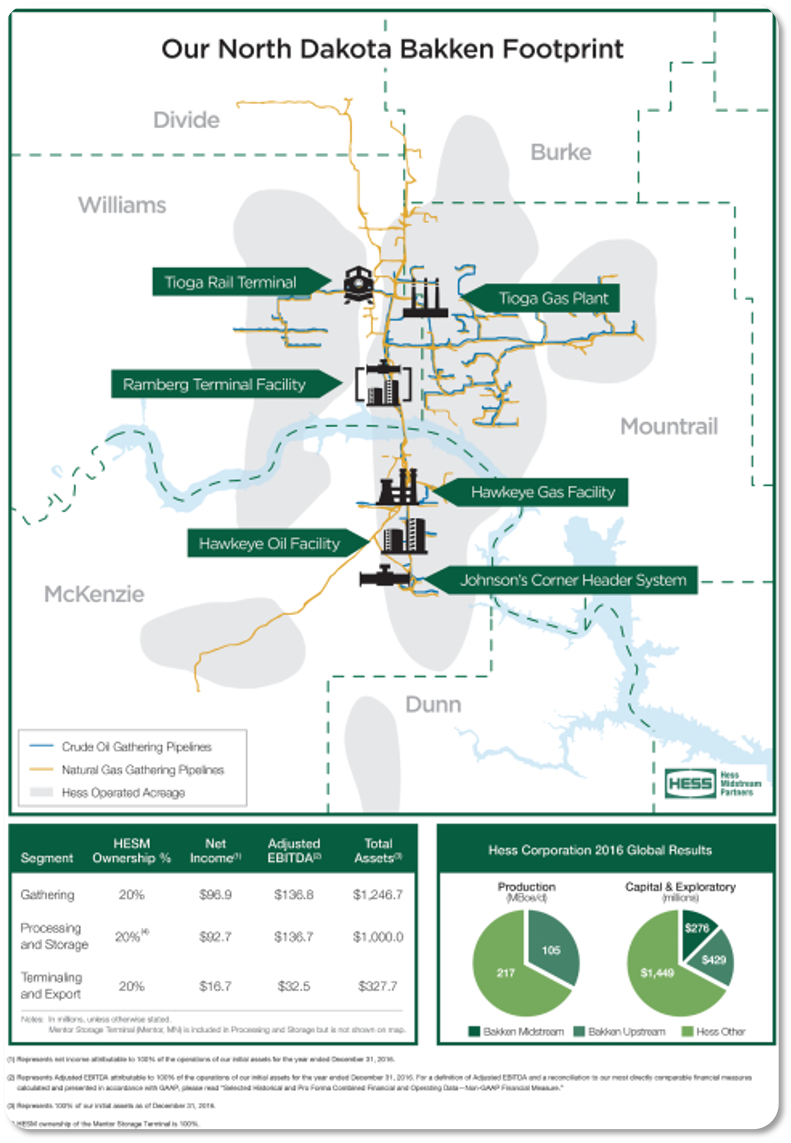
Its operational setup covers the full hydrocarbon chain: gathering pipelines that pull production directly from the wellhead, processing plants (anchored by the Tioga Gas Plant) that strip out NGLs, and terminal/rail export assets that route barrels out to coastal refineries or long-haul pipes like DAPL and Enbridge.
The economic engine behind HESM has always been its contract architecture: 100% fee-based contracts with zero direct commodity exposure, baked-in CPI inflation escalators, and three-year rolling Minimum Volume Commitments (MVCs) guaranteeing around 80% of revenue. More on all of these later.
The #1 takeaway for this company’s business model:
Even if crude trades at $40 or drillers tap the brakes, HESM collects its toll.

The Business Model Explained
At its foundational level, Hess doesn’t produce, buy, or trade oil, gas, or natural gas liquids (NGLs). It operates solely as an integrated midstream tollbooth.
When an upstream operator drills a well, HESM provides the plumbing to take messy, raw wellhead output, process it, extract the valuable components, and deliver pipeline-spec crude and dry gas to interstate markets.
The business is divided into three interconnected segments:
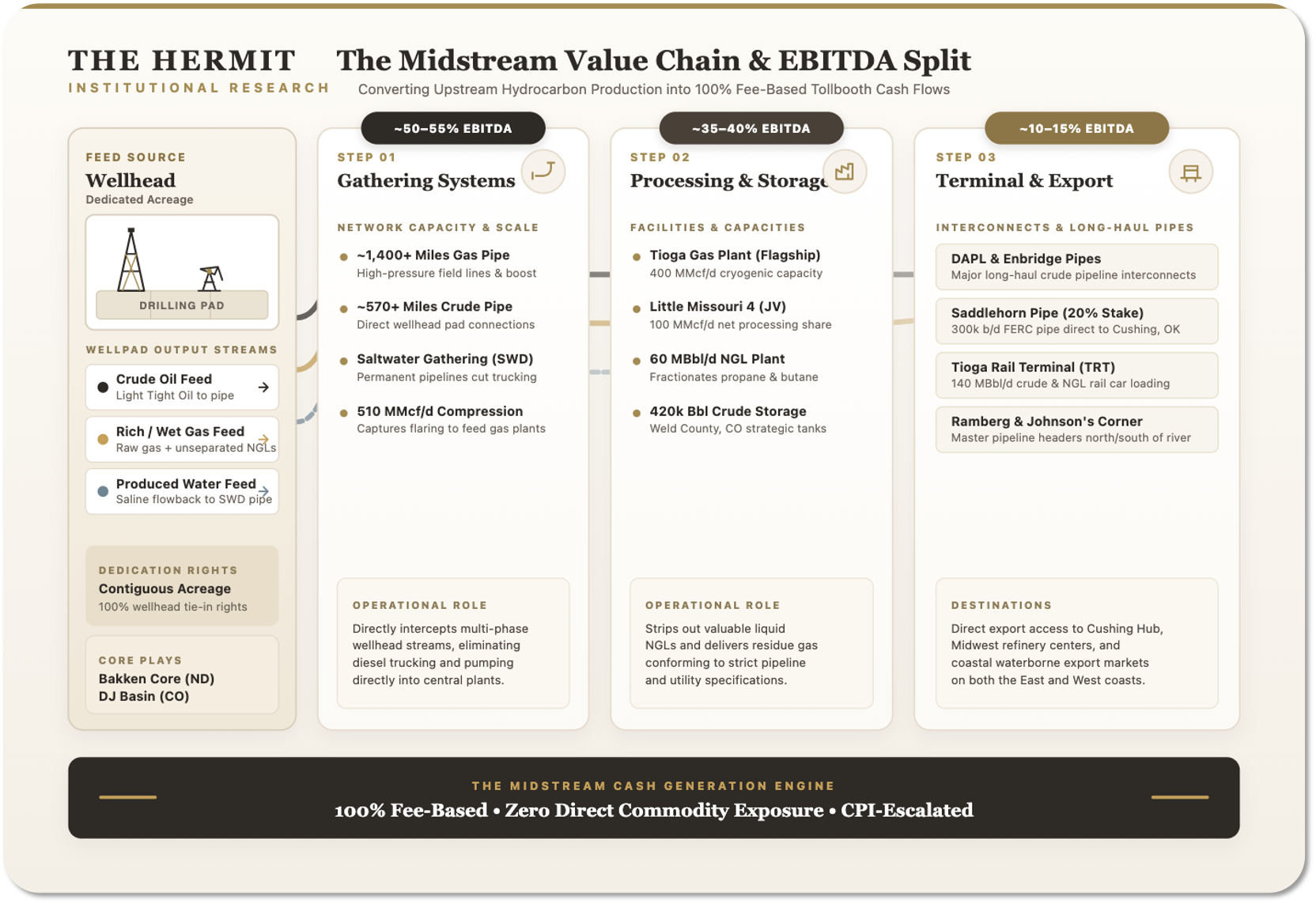
Midstream Unit Economics
What made HESM a Wall Street cash-generation darling regardless of the cycle was how it structured its agreements with its sponsor:
Zero Commodity Price Exposure: HESM bills on a pure fee per unit (e.g., dollars per thousand cubic feet of gas gathered, or dollars per barrel of crude terminaled). If West Texas Intermediate (WTI) drops from $80 to $35, HESM’s unit tariff remains identical.
CPI Inflation Escalators: Tariffs adjust annually based on inflation benchmarks (subject to contractual caps), ensuring that rising electricity, steel, and labor costs are passed directly down the pipe to the upstream operator.
Dedicated Acreage: Rather than hunting for customers in the open market, HESM holds massive, contiguous acreage dedications across North Dakota, meaning all future barrels drilled on those lands must legally flow through HESM infrastructure.
As you can probably tell by now, this company is quite easy to understand. The base case of returning capital to shareholders through a tollbooth business model is as straightforward as it gets.
But the company, more accurately the stock, comes with a few caveats and one BIG question mark.
For starters, their October 2026 deal with Chevron changes the narrative in two major ways. Firstly, HESM is picking up Chevron’s DJ Basin gathering/storage assets in Weld County, Colorado, plus a 20% stake in the FERC-regulated Saddlehorn pipeline.
Secondly, Chevron is relinquishing its General Partner (GP) stake and exiting its ownership, converting HESM into an independent C-Corp-style midstream operator with full public board governance beginning in 2028.
In exchange, HESM gave Chevron tariff cuts in the Bakken (resetting agreements to fixed-fee with an 80% Minimum Revenue Commitment through 2033) and extended terms all the way to 2045.