


Welcome back dear fellow 🧙♂️ Hermits 👋
🧙♂️ First time here? → This 3-Minute Crash Course Will Save You Hours
🇦🇷 Argentina Is Heating Up → Dive Into the Latest Reforms & Market Signals
🧗 Planet MicroCap Hidden Gems → Our Top Five

📌 Brief
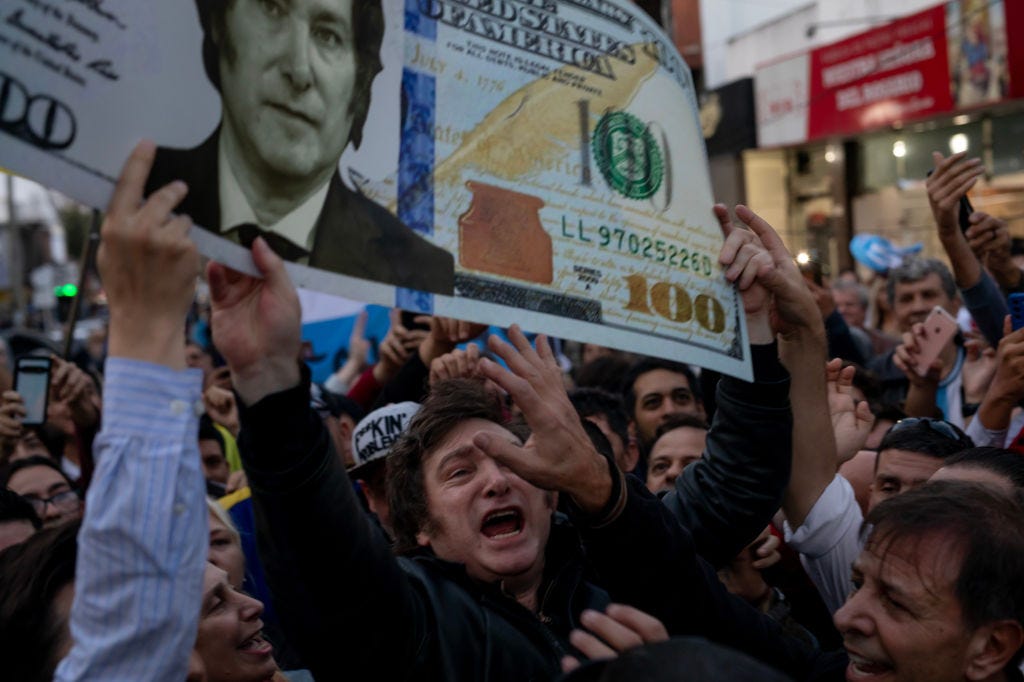
Argentina is undergoing what can only be described as a quietly radical transformation. Under President Javier Milei, the country has taken its first real steps toward effective dollarization by unlocking legal and regulatory barriers that once prevented individuals and businesses from deploying their substantial USD savings.
Argentines hold an estimated $400 billion in dollar assets, but that wealth has remained dormant for decades due to fear of government overreach.
Now, a sweeping set of reforms lets citizens use those dollars without reporting requirements, while restoring financial privacy across real estate, banking, and utilities. Interest rates have also plummeted from 133% to around 30%, dismantling the Central Bank's distortionary LELIQ scheme and finally allowing credit to flow again.
Inflation is slowing, lending is picking up, and key macro indicators (like the EMBI+ spread) suggest sovereign risk perception is falling fast.
That said, Argentina’s story is still in motion. While the reforms are bold, they’re not yet locked in, especially with legislative elections looming in October. Milei’s ability to reshape fiscal and penal codes, permanently de-risk dollar mobilization, and entrench the new monetary model depends on securing a broader political mandate.
Encouragingly, La Libertad Avanza’s recent surge from 5% to 30% in Buenos Aires elections points to a dramatic shift in public sentiment. If sustained, this momentum could mark a tipping point. We're watching two indicators in particular: GDP growth, which could break past 10% annualized, and poverty, which we hope will fall from 38.1% to nearer 20%.
Argentina’s trajectory still has risks, policy bottlenecks, FX constraints, social tension, but the playbook being written here might just become a global case study in restoring confidence, credibility, and capitalism from the ground up.

We cannot not report on this extraordinary event in Argentina, we just saw THE effective dollarization of the economy, more concretely, the opening of regulation that enables individuals (and companies) to deploy these dollars.
“Your dollars, your decision.”
- Manuel Adorni (Presidential Spokesperson)
As you know, we’re extremely interested in what’s happening in Argentina, mainly because 7% of our portfolio is riding the wave Milei’s pushing.
We’re not macro experts… hell, we’d argue there are very few legit ones out there and way too many people bullshitting their way through it.
That said, we love following the story, because what’s playing out could (and probably should) be the standard playbook, the BLUEPRINT for the rest of the world.
📖 Context
Monetary freedom is advancing in Argentina. Let’s look at the numbers:
All the pesos circulating in Argentina total 47 trillion pesos, which at current exchange rates equals less than $40 billion USD.
Meanwhile, Argentines collectively hold $400 billion in USD assets, 10x more than all pesos issued by the Argentine Central Bank.
Even just in physical USD cash, like under mattresses or in safe deposit boxes, Argentines hold about $271 billion, 6x more than the total peso monetary base.
We all know that Argentina is already de facto dollarized. The problem, however is that this cash cannot be effectively deployed because of regulation. These savings have not turned into investments and therefore have remained dormant and unproductive for the last few decades.
These dollars are not being productively invested in Argentina because citizens fear government overreach or expropriation. The State’s parasitic behavior pushes people to hoard cash, which is contrary to capitalism.
People often mix up consumerism and capitalism, but they’re not the same thing (not even close).
To share a common ground: Capitalism is basically about choosing between spending now (present consumption) or saving for later (deferred consumption). The more you put off spending, the better off you (or your country) tend to be.
And that is because that money doesn’t just sit there. It gets invested, builds stuff, grows businesses, employs people, and eventually makes everyone richer. If you ask us, this is exactly what makes capitalism the greatest system to have ever been created. This and compounding ofc 😊
🏛️ New Policy: Javier Milei’s First Big Reform Step
The Milei government has taken a decisive step:
→ Allowing Argentines to use their USD savings freely
→ Without the tax authority (AFIP/ARCA) snooping on those transactions.
Extraordinary Privacy Reforms:
Credit Card Spending:
Credit card companies no longer report ALL peso/dollar transactions to tax authorities.Used Car Purchases:
Dealerships no longer need to report used vehicle sales (buyer, method of payment, etc.).HOA / Property Management Fees:
Property managers no longer report monthly fees above 32,000 pesos (~$30) to the tax office.Utility Bills (Electricity, Water, Phone):
Companies no longer need to submit household consumption data to detect "suspicious spending".Real Estate Transactions:
Notaries no longer report property sales, buyers, sellers, or amounts.Bank Transfers:
Previously, any transfer over 1 million pesos (~€1,000) was reported to tax authorities.
Now, this threshold is raised to 50 million pesos (~€39,000).Cash Withdrawals:
Any amount withdrawn used to be reported (even $10).
Now, only withdrawals above 10 million pesos (~€8,000) must be reported.Bank Account Balances:
Previously, balances over 1 million pesos (~€750) were reported.
Now the threshold is 50 million pesos (~€39,000).
Remaining Risk: Tax Audit Window
Even though Milei’s government promises not to audit undeclared USD use,
→ Argentine tax law still allows audits for up to 5 years.
This means:
If Milei loses the presidency in 2027, a Peronist government could retroactively punish citizens who moved undeclared dollars now
To fully eliminate this risk, Argentina must change tax laws
But Milei’s party doesn’t yet control Congress
National Legislative Elections (in October)
If Milei’s party wins a majority, it could:
Reform fiscal and penal codes
Grant permanent legal amnesty for citizens who mobilize USD now
Trigger a massive shift of USD into the real economy
Supercharge Argentina’s long-term growth
Until then, the recent policy shift is a major first step, but not a full solution.
Buenos Aires Legislative Elections (in May)
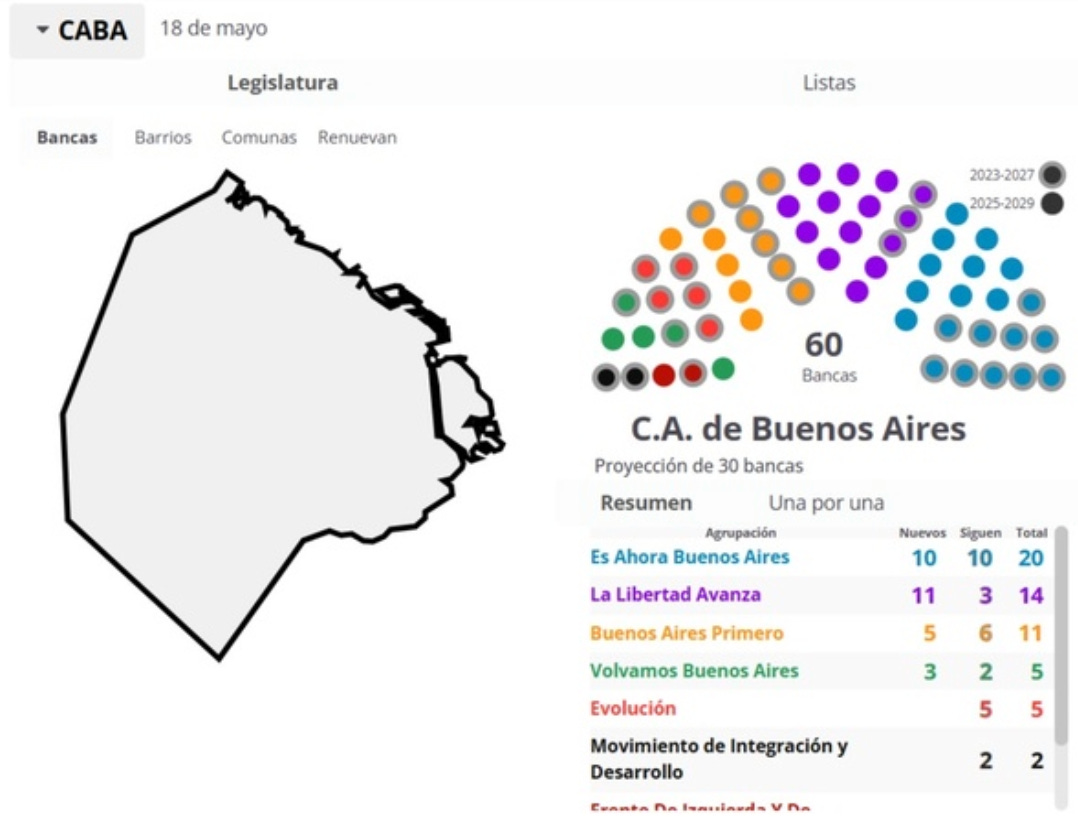
However, we’ve recently witnessed something pretty remarkable: in Buenos Aires, La Libertad Avanza jumped from just 5% of the vote to a staggering 30% (most voted party). That’s not a small shift; that’s a political earthquake.
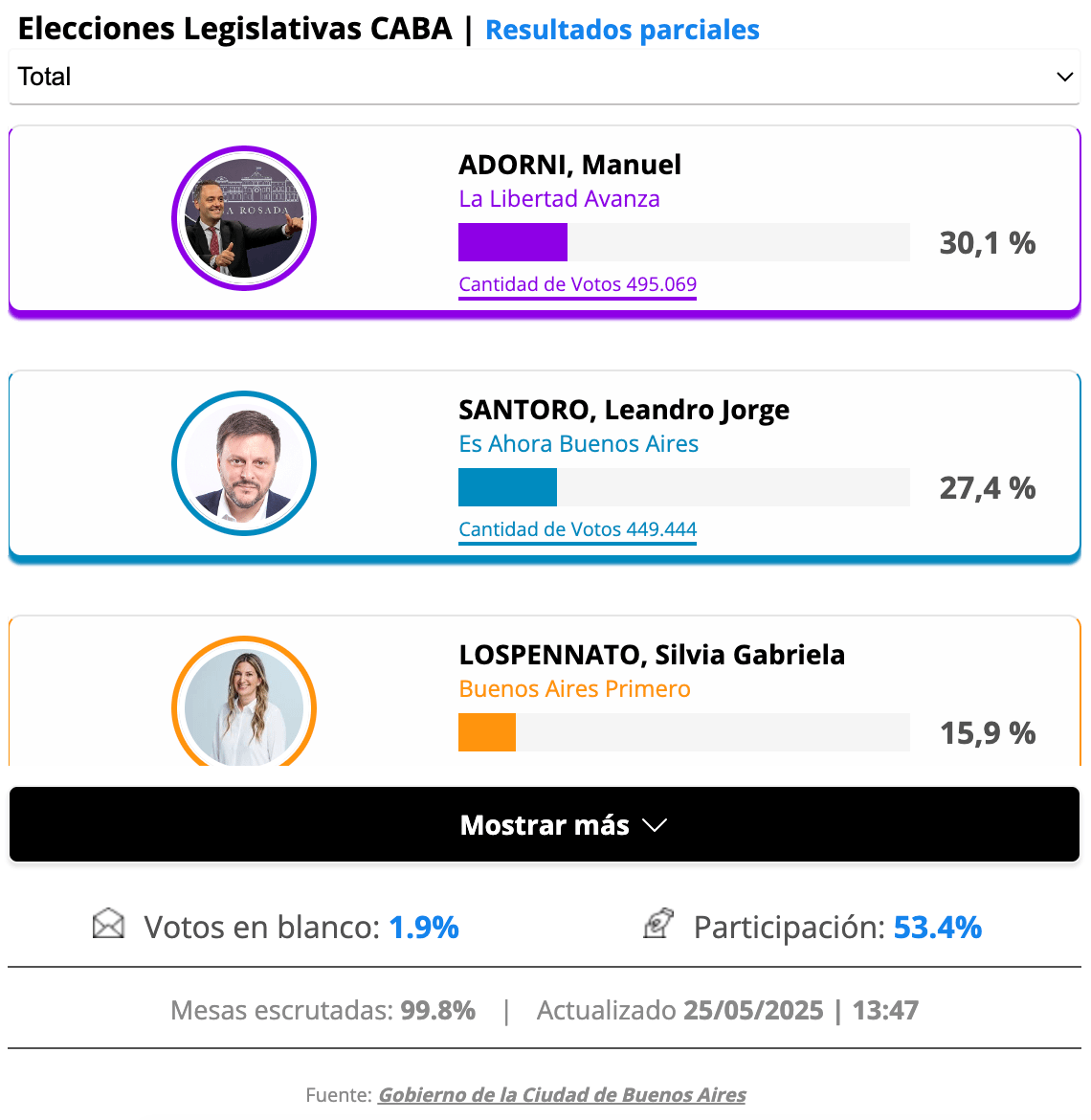
It shows just how fast the narrative is changing on the ground, and how much traction Milei’s message is getting with ordinary Argentines. We speculate this equates to growing belief that maybe, just maybe, there’s a better way forward.
Hope.
🔻 Milei’s Interest Rate Policy
When Milei took office, the Central Bank was paying a staggering 133% annual interest on its liabilities. That rate has since dropped to around 30%, a dramatic shift in monetary policy.
This change effectively dismantled the infamous LELIQ scheme, a system where banks would take depositors’ money, immediately park it in Central Bank instruments, and collect interest higher than what they were paying out.
Recent changes have led to no real financial intermediation, preventing the merry-go-round of banks earning easy returns from the Central Bank instead of funding the real economy.

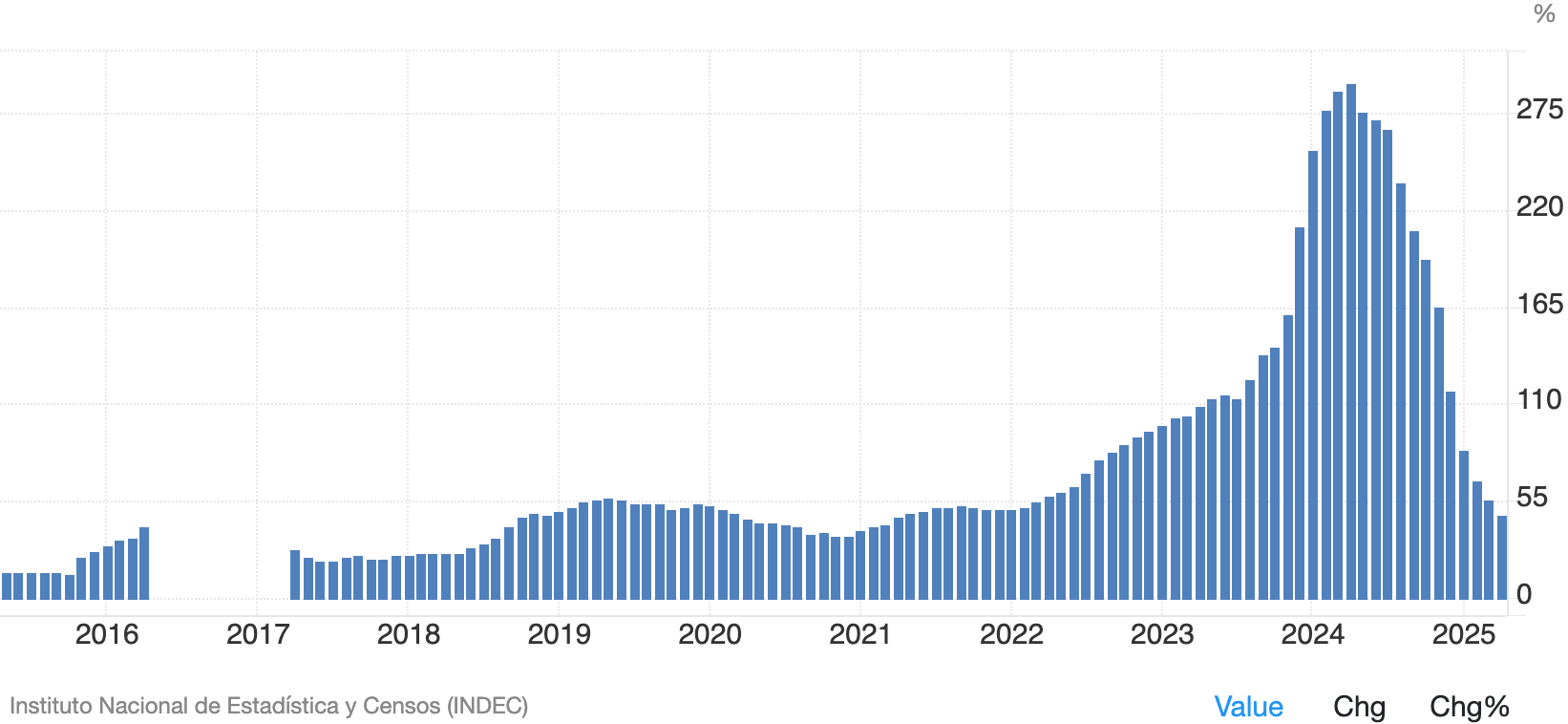
It’s worth noting that the average interest rate in Argentina from 1979 to 2025 was a staggering 63.98%. Today, rates are down to just 29%, less than half the long-term average. That’s a seismic shift in the cost of capital.
Now, with that perverse incentive gone, banks are finally lending again. Credit is beginning to flow to individuals and businesses, and we’re seeing a rise in mortgage and auto loans, which is starting to boost private consumption and investment. The gears of real economic activity are turning once more, and that’s exactly what healthy monetary systems are supposed to encourage.
Broader Impacts
One of the most immediate benefits of lower interest rates is the reduction in the cost of financing public debt. Under the previous regime, banks were earning 133% annually from the Central Bank, so they had zero incentive to buy treasury bonds unless those bonds paid equally absurd rates.
Now, with improved state solvency and more rational interest rates, debt yields are coming down, paving the way for a more sustainable fiscal framework.
Why Could Milei Cut Rates Without Triggering Inflation?
This is the key question. Peronist governments couldn’t cut rates, not because they didn’t want to, but because they couldn’t afford to. Both the Argentine treasury and the Central Bank were seen as insolvent. Had they slashed rates without first restoring confidence, it would’ve sparked a collapse in demand for pesos and a runaway spike in inflation.
Milei, however, took a different route. He made it a precondition to fix the fiscal mess before touching rates. Within his first month in office, Argentina posted a budget surplus, dramatically improving the perceived solvency of the state. That shift in credibility is what made it possible to bring rates down without trashing the currency.
The Underlying Economic Logic
This all comes down to expectations. When people believe that inflation is coming down, they don’t need to be paid 133% just to hold on to pesos.
Lower inflation expectations = lower required interest rates
That’s how trust is restored. Citizens no longer need absurdly high returns just to feel safe, and the financial system regains its ability to function normally. It’s basic, but powerful: credibility first, then stability, then growth
🧮 Free float
Argentina’s Central Bank is shifting its monetary strategy by allowing interest rates to be determined by market forces, rather than setting them administratively as part of an inflation-targeting framework.
Central Bank Vice President Vladimir Werning announced this transition during a speech at the Annual Congress of the Argentine Institute of Financial Executives (IAEF). Werning emphasized that interest rates will now respond to supply and demand dynamics, marking a departure from the previous regime where the Bank actively “calibrated” rates in response to inflation expectations.
Werning also signaled encouraging inflation data, noting that high-frequency indicators from early May suggest that the disinflation trend observed in April is continuing. The Central Bank’s REM survey forecasts April inflation at 3.2%, down from 3.7% in March, although still above the 2.6% initially expected by analysts in March, highlighting ongoing volatility in inflation forecasting.
To bolster its international reserves, the Central Bank plans to secure another repo agreement with international banks, adding to a US$1 billion repo secured in January.
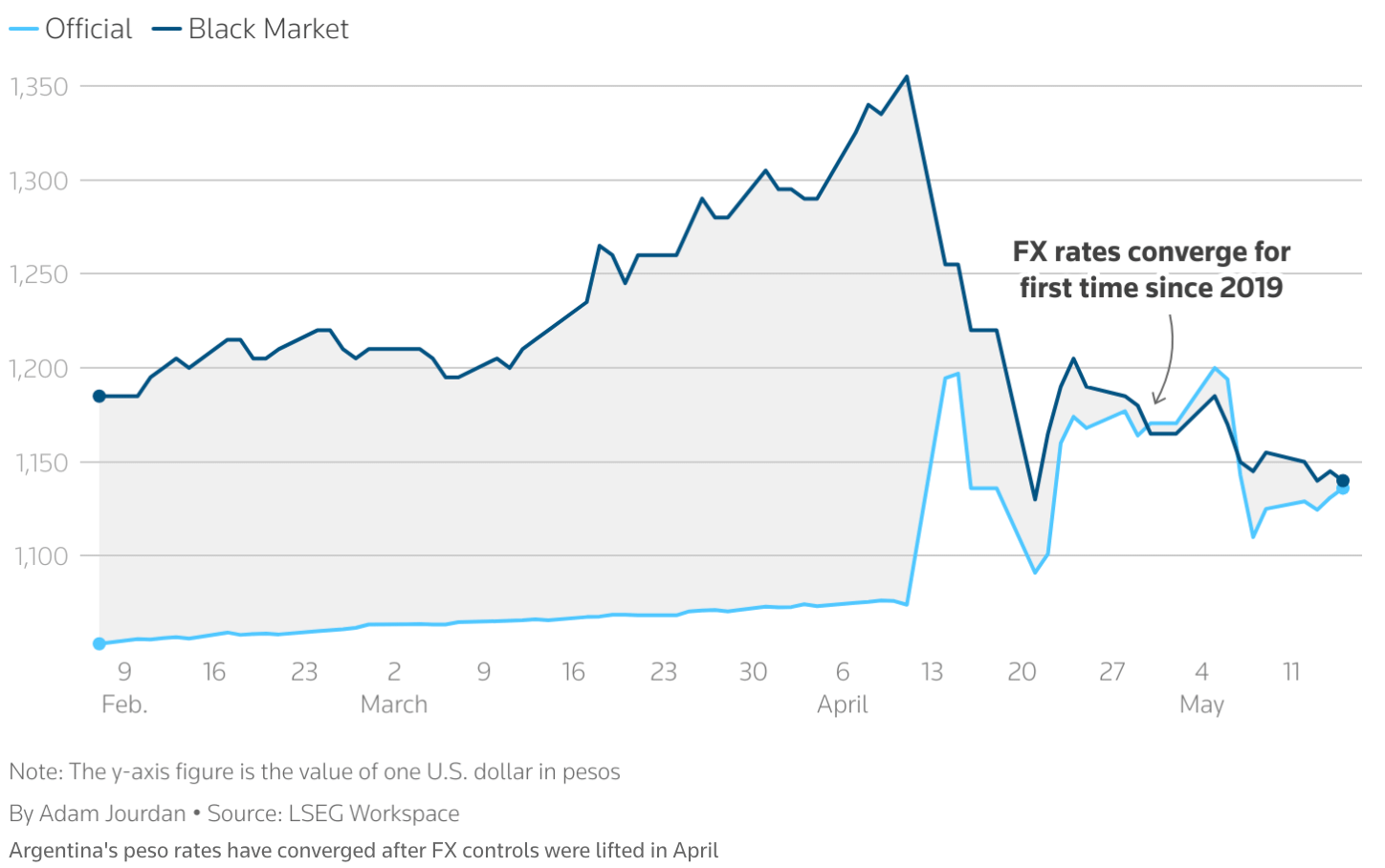
These short-term borrowing instruments allow the Bank to temporarily increase reserves without buying dollars directly in the FX market, a key consideration given the current currency band agreement with the IMF, which permits dollar purchases only when the exchange rate remains between AR$1,000 and AR$1,400.
Despite eligibility, the government has chosen not to intervene in the FX market, aiming instead for reserve accumulation through non-disruptive means.
Looking forward, Werning characterized 2025 as a “transcendental year” for structural reforms, asserting that political factors like elections will not derail the economic agenda.
Echoing Economy Minister Luis Caputo, Werning described Argentina as entering “Stage Three” of its stabilization plan (paraphrased):
A phase where opportunities outweigh risks, focused on sustained growth, market-based competition, and tangible economic freedoms. This stage reflects a broader commitment to transition from emergency stabilization to a more durable and liberalized economic model.
🧨 Riesgo Pais (JPMorgan EMBI+)
The J.P. Morgan Emerging Markets Bond Index Plus (EMBI+) is a benchmark that measures the total return performance of external-currency-denominated debt instruments issued by emerging market countries.
Introduced in the early 1990s, the EMBI+ expanded upon the original EMBI by including a broader range of debt instruments, such as U.S. dollar-denominated Brady bonds, loans, and Eurobonds.
To be eligible for inclusion, instruments must have a minimum face value of $500 million and meet stringent criteria for secondary market trading liquidity.
In the context of Argentina, the EMBI+ serves as a critical indicator of the country's sovereign credit risk.
The index reflects the spread between the yields of Argentine sovereign bonds and U.S. Treasury bonds of comparable maturity. A higher spread indicates greater perceived risk associated with Argentine debt.
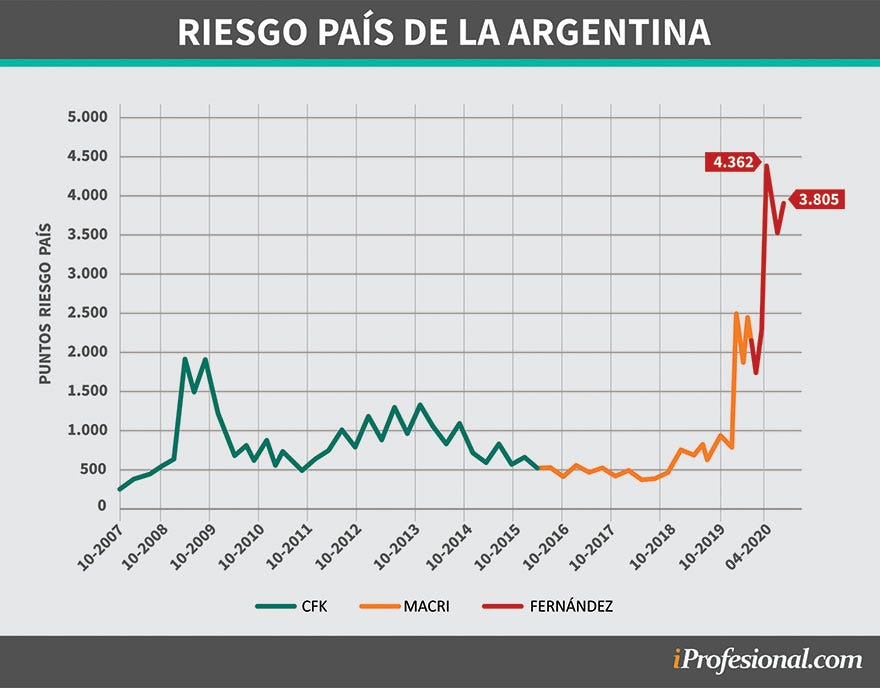
Historically, Argentina's EMBI+ spread has experienced significant fluctuations, often correlating with periods of economic instability, inflation, and political uncertainty. For instance, during times of fiscal deficits and currency devaluations, the spread has widened, signaling increased risk to investors.
Conversely, when the government implements credible economic reforms and stabilizes macroeconomic indicators, the spread tends to narrow, reflecting improved investor confidence.
Monitoring the EMBI+ is essential for investors and policymakers alike, as it provides insights into the country's access to international capital markets and the cost of borrowing. A declining EMBI+ spread can facilitate lower borrowing costs for Argentina, enabling the government to finance expenditures more sustainably.
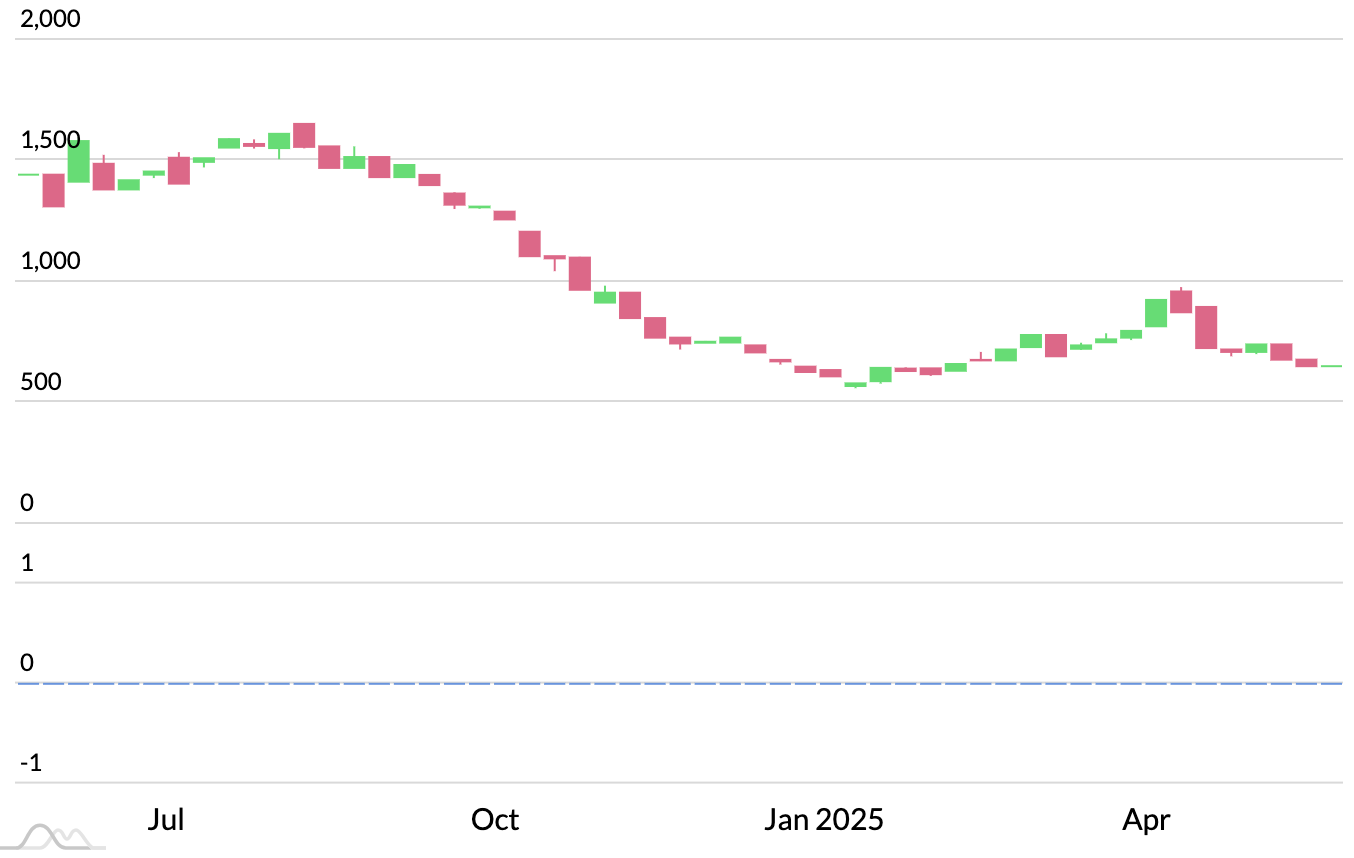
Mid-2024 to October 2024:
The graph starts at a very high level, around 1,500 basis points (15%), indicating severe investor concern over Argentine sovereign debt. Over the following months, the spread consistently declines, reflecting a reduction in perceived sovereign risk.October 2024 to January 2025:
The downward trend accelerates. The EMBI+ spread drops below 600 bps, a sharp improvement in sentiment, likely reflecting market optimism around Javier Milei’s early economic reforms, fiscal tightening, and a budget surplus.January to March 2025:
There’s a short-term rebound. The spread rises again, possibly due to political noise, uncertainty around congressional support for reforms, or slower-than-expected implementation of structural changes.April to May 2025:
The spread gradually declines again, stabilizing around 500–600 bps, a massive improvement compared to mid-2024 levels, though still high by global standards.
Our Take
The EMBI+ spread acts as a proxy for sovereign default risk, higher values mean investors demand more yield to hold Argentine debt. The evolution suggests that markets have rewarded Milei’s early efforts, especially fiscal discipline and the end of LELIQ incentives.
However, the mid-term spike reminds us that Argentina’s path is not linear, and risks still exist (legislative bottlenecks, social backlash, or dollar shortage concerns).
👀 What We're Watching Closely
Ley de Bases
The Argentine government, led by Javier Milei, is preparing to implement two key decrees that could mark the end of the extraordinary powers granted under the “Ley Bases” (Foundations Law) passed in 2023.
The first decree aims to repeal hundreds of thousands of historical regulations, decrees, resolutions, and circulars, which are described as “the largest deregulation in Argentine history.”
This effort, driven directly by the President and technically supported by Federico Sturzenegger, seeks to compile only currently useful and applicable rules into a final “digest,” eliminating outdated norms or those that benefit special interests.
The biggest challenge lies in the lack of digital records: only 70,000 out of 700,000 decrees are digitized, so much of the work must be done manually and under time pressure, since the delegated powers expire on July 9.
In parallel, the second decree focuses on restructuring the State, not only by reducing personnel but also by modifying functions and eliminating or merging agencies, based on Article 3 of the same law, which provides public emergency powers enabling functional reforms across government departments and agencies.
Article 3 includes the ability to:
…modificar o eliminar las competencias, funciones o responsabilidades dispuestas legalmente cuyo mantenimiento resulte innecesario.
This plan could include dissolving or restructuring Vialidad Nacional (National Highway Agency) by merging it with Corredores Viales and the National Road Safety Agency to eliminate duplication of tasks.
Although the government claims some of the reforms could proceed without the special powers, the goal is to advance everything before the legal deadline.
Poverty & Capital
We’re expecting to see meaningful progress on multiple fronts. The two key indicators we’re tracking are GDP growth and poverty levels. As U.S. dollars begin flowing more freely through the formal economy, we anticipate a sharp boost in growth, potentially north of 10% annualized.
On the social front, we’re watching for poverty to drop significantly, from 38.1% in the second half of 2024 to somewhere closer to 20%, assuming policy execution stays on course and capital re-enters the real economy.
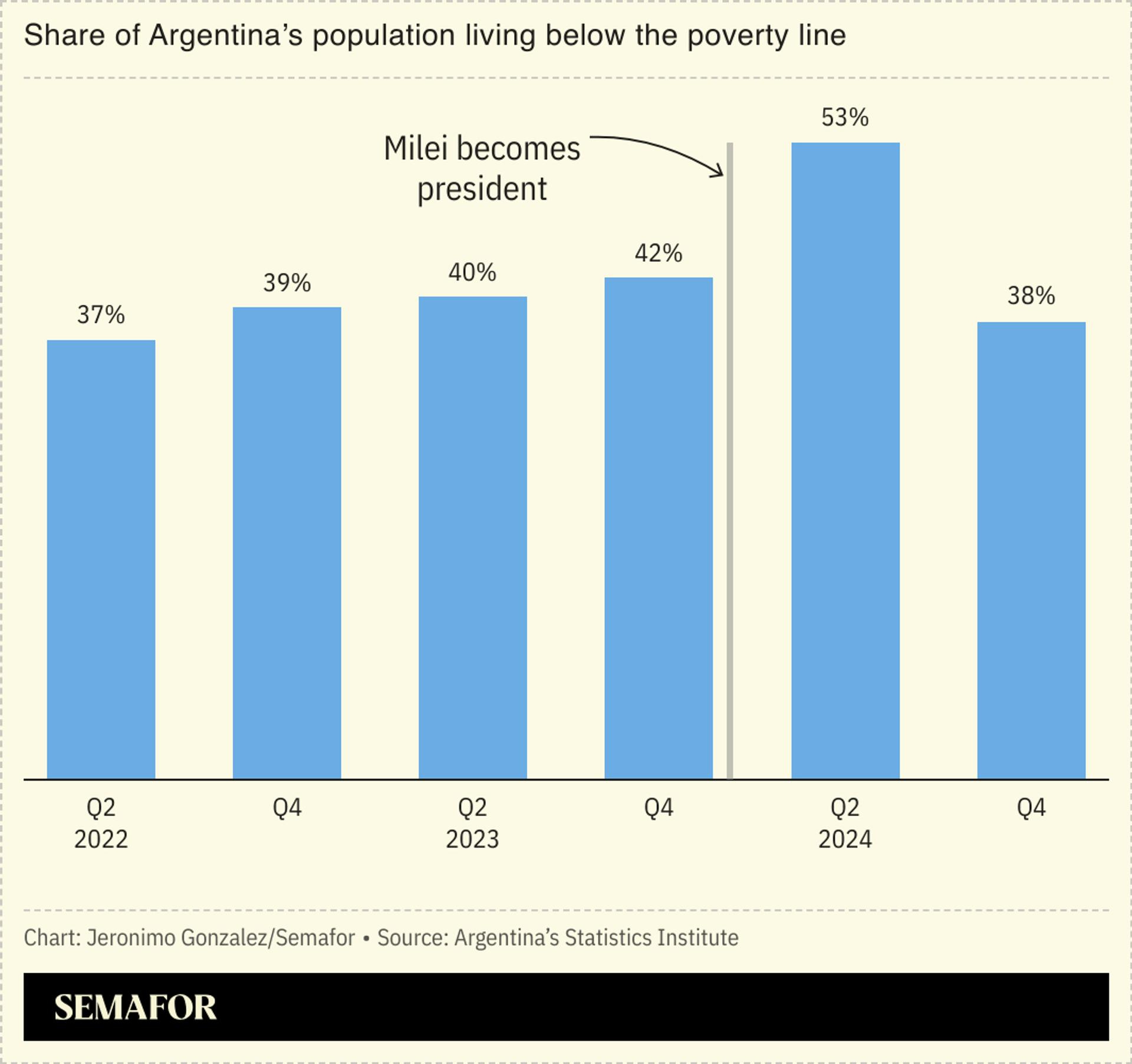
We’ll be keeping a close eye on how things unfold. Argentina’s getting there, and if Milei manages to secure control of Congress in October, that would be a powerful signal that the trajectory is solid and the reforms are here to stay.
All of this, of course, hinges on maintaining a sustained budget surplus, which will require further cuts to government spending. But unlike Milei’s first year decline, driven almost entirely by public sector austerity, the second year is shaping up to be powered by the private sector, thanks to a far more liberated and very investment-friendly economy.
At that point, we wouldn’t blame anyone for seriously considering a move to Argentina. It’s starting to look like a place with a real future.
🙏 Feel free to ❤️ and comment so that more people can discover and enjoy this Substack 😇
It's great to get a broader perspective. I'll recommend this one to my readers for sure!
Great piece, enjoyed it and I’m hopeful for Argentina that this time is different.