



Pick of the Week. A curated series of high-conviction research on companies currently under our microscope. We screen for specific dislocations where the market has mispriced the balance sheet or earnings power.
The Selection Criteria:
Asset Arbitrage: Trading at a discount to tangible liquidation value.
Backlog Disconnect: Future contracted revenue ignored by the market.
Hidden Margins: Structural profitability masked by temporary noise or CAPEX cycles.
The Structure:
The Business: A concise operational overview.
The Dislocation: The specific structural reason the opportunity exists.
The Valuation: A stress-tested snapshot including downside risks (”Red Flags”) and our proprietary score.
None of the following should be construed as investment advice. Please consult a financial advisor before making any investment decision. You will find a full disclaimer at the end of this post.


📵 Tobila Systems, Inc. ($4441)
Founded in 2004 and listed on the TSE Standard Market, Tobila Systems is Japan’s quiet but essential gatekeeper against fraud and nuisance calls.
Headquartered in Nagoya with a lean 103-person team (over half engineers), its mission is ambitious and simple: “reduce special fraud damages to zero”
The company has built a fraud and spam filtering database (they own the asset), fed by police data, 15+ million user call logs, and in-house research, making it the de facto infrastructure for blocking scams across Japan’s telecom networks.
The business today rests on three pillars:
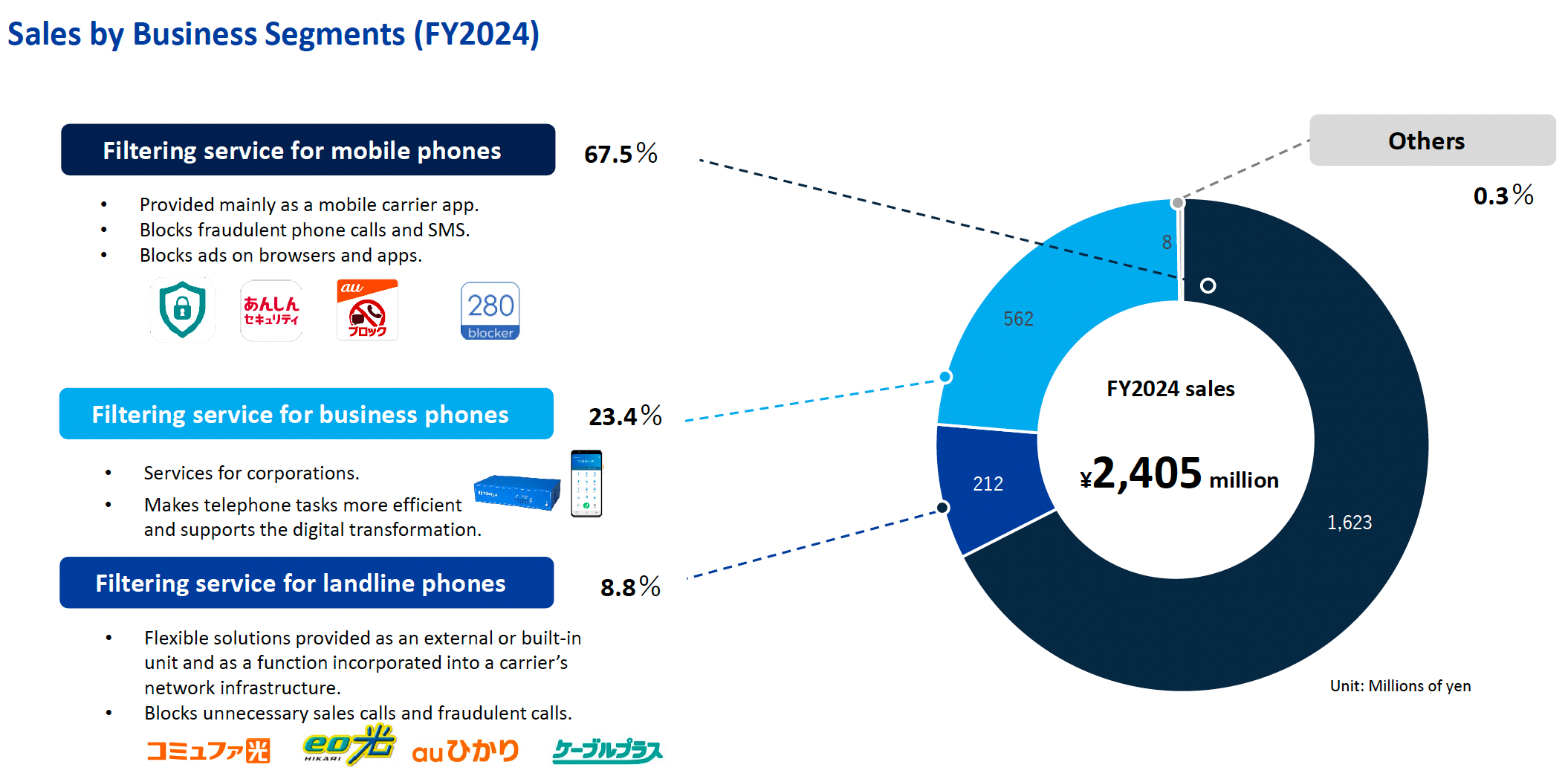
Mobile filtering (67.5% of FY2024 sales), offered as an optional service bundled with NTT Docomo, KDDI, SoftBank, and Rakuten;
Landline filtering (8.8%), still important for Japan’s aging households;
And the fast-growing business phone segment (23.4%), including hardware-based TobilaPhone Biz and cloud-based TobilaPhone Cloud.
This mix generates highly recurring revenues and a 30%+ operating margin, but management’s sights are firmly on the next horizon: scaling business phones and layering in new database-driven businesses by FY2028.
🎯 Why Do We Like It?
Recurring, cash-rich core. Tobila effectively gets paid upfront, and it has no massive capex requirements. It’s pretty asset-light and cash-rich.
A moat built on data. The company’s fraud/spam database pulls from police feeds, 15 million user logs, and daily in-house research. The more it’s used, the smarter it gets… a self-reinforcing loop that’s hard to replicate.
Distribution through giants. NTT Docomo, KDDI, and SoftBank aren’t just partners, they’re freaking catapults that push Tobila’s app to millions of end-users. Without the carriers, Tobila wouldn’t scale. With them, it becomes infrastructure… arguable core infrastructure.
Clear path forward: Business Phones. Today ~23% of sales, management wants this to nearly double its share by 2028. The market for PBX/Cloud PBX is ~¥80bn, and Tobila’s Biz/Cloud suite offers sticky, recurring revenue that can turn into a long-term growth engine.
Balance sheet optionality. In general, Japanese companies are conservative, and this is no exception. ¥2.8bn in net cash, 30%+ operating margins, and a steady dividend floor of ¥20/sh mean investors are paid to wait while the company executes. We don’t expect them to go full “shareholder value is the only thing that matters” anytime soon.
💰 What’s It Worth to Us?
At today’s ¥1,096, the market is pricing Tobila at ~12× FY25 EBIT, ~3.4× EV/Sales, and a very misleading ~6.5× EV/FCF. At first glance, that doesn’t seem like much of a stretch for a company that spits out cash, sits on ¥2.8bn of net cash, and owns some fairly powerful intangible assets (essentially Japan’s anti-scam filtering).
However, the company’s heavy reliance on a handful of clients, combined with the quirks of its revenue model, make the setup less bulletproof than the multiples suggest. In short, Tobila carries two major flaws we need to keep front of mind:
The first flaw is Tobila’s dependency on carriers and phone manufacturers. If one of them decides to internalize the filtering service (the way Google has already done via Chrome) the rug can get pulled overnight. In that scenario, revenues could collapse by 50% in a single year, and it might take half a decade just to claw back to breakeven.
The second flaw lies in Tobila’s presale levels, booked as unearned revenue, which represent roughly 80% of its liabilities and 40% of the entire balance sheet. On the surface it’s recurring contracts paid in advance, but… in a weak year, it becomes a double-edged sword. If renewals fall off, the company still has to shoulder fixed costs, and the revenue shortfall can swing quickly into losses.
Our base case says fair value is closer to ¥1,600/share if they keep compounding the way they have been.
It’s worth noting our conviction at this price isn’t particularly high. The stock fails to meet our downside protection criteria and, once cash flows are normalized, the free cash flow yield settles closer to 10%, short of our 15% hurdle.
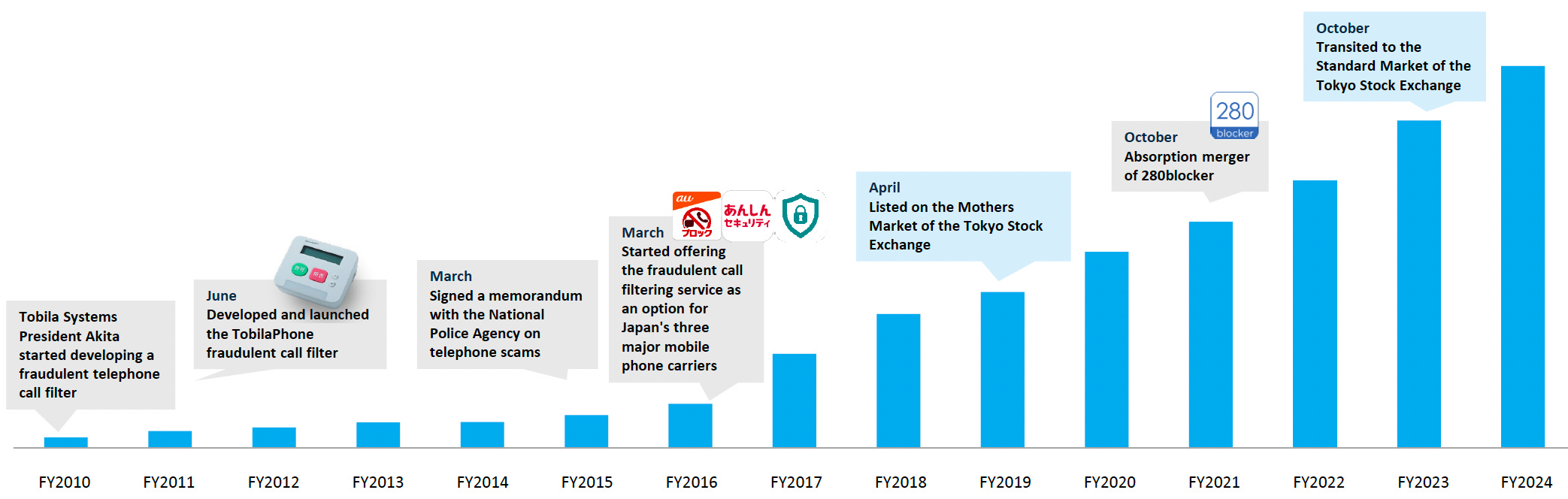
If the medium-term plan clicks, Solutions ramps, agencies push Biz/Cloud, and margins stay north of 30%, then ¥2,200 could happen.
However, if adoption stalls and costs creep, you’re probably looking at ¥900-ish on the downside in the short term.
So we’re currently seeing pricing of the “meh” outcome.
We’ll stress this point again, as (we feel) it’s very important: If industry standards shift, the business could face a sharp collapse. But if the status quo holds, Tobila should keep compounding, steadily adding # users and capturing more $ revenue per user.
Overall grade: 7.5/10
🙏 Feel free to ❤️ and comment so that more people can discover and enjoy this Substack 😇